Weak policies, laws, and regulations heighten risk of depleting Maldives’ natural resources
27 އޯގަސްޓު 2026 | ބުރާސްފަތި 11:20Research has revealed that marine pollution in the Maldives, coupled with amendments to Environmental Impact Assessment (EIA) regulations, poses significant threats to both the environment and the economy. The degradation of coral reefs due to land reclamation and plastic waste is adversely affecting the fisheries and tourism sectors. In light of these challenges, the establishment of robust environmental protection policies has become an absolute necessity for the pursuit of sustainable development

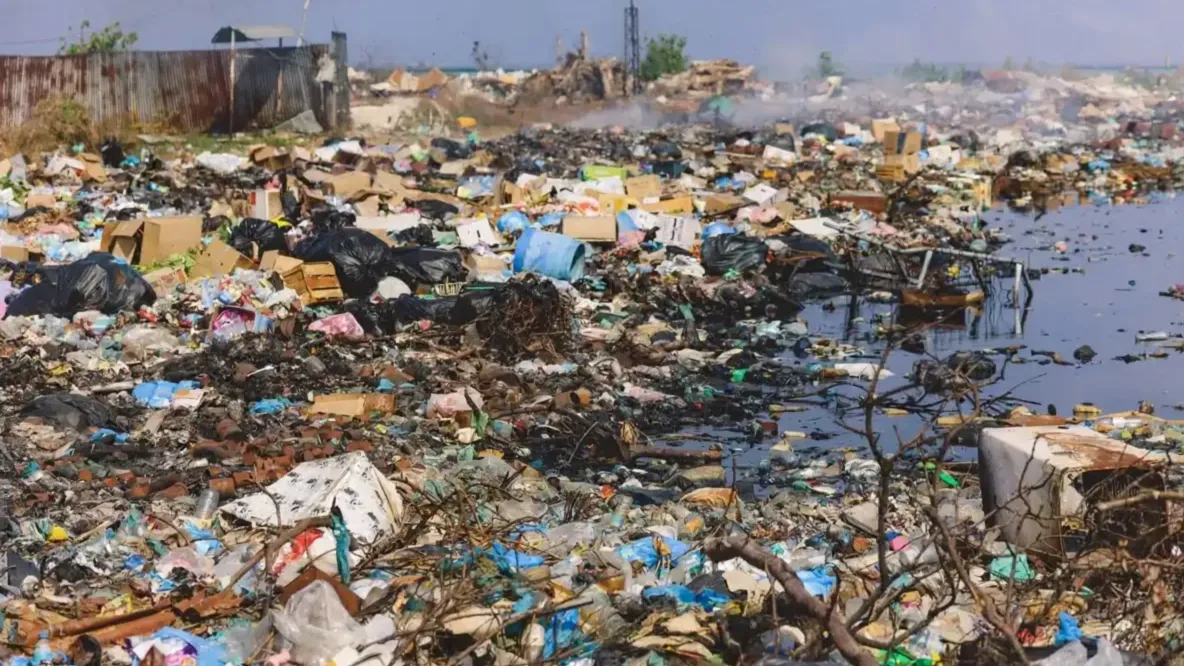
Ecological Problem from Fuming Waste Dump on the Coastline of Maafushi Island, Maldives | Alamy
The World Bank has made it painfully clear why the natural assets of the Maldives are collapsing, pinpointing a catastrophic mix of runaway marine contamination, relentless coastal construction, reckless resource exploitation, and heating oceans.
It is a spectacular act of self-sabotage, considering that tourism and fisheries generate half of the nation's GDP and provide half of its jobs, both entirely hostage to the well-being of marine and coastal habitats.
Drowning in a tide of trash and policy reversals
Land-based refuse is flooding straight into the surrounding sea at a terrifying pace. Pushed by anemic waste infrastructure, unchecked tourist expansion, a swelling population, and urban sprawl, the country churns out over 860 metric tons of garbage every single day, with plastics dominating the pile.
This debris routinely ends up in the sea, choking wildlife, destroying reefs, and infiltrating the human food supply with toxic consequences.
The previous administration under former President Ibrahim Mohamed Solih at least attempted to counter the deluge by enacting legislation to eradicate single-use plastic bottles and curb plastic bag usage.
However, the current administration led by President Dr. Mohamed Muizzu has casually dismantled those restrictions, wiping out the rules and even loosening regulations so industrial island waste can be shipped directly to inhabited islands.
Poisoning the waters beyond the plastic plague
The disaster extends far beyond beverage containers. Coastlines and coastal waters are choked with raw sewage, wastewater, discarded fishing gear, and toxic chemicals.
This relentless toxic soup degrades water quality and further decimates fragile reef networks. For a population relying directly on the sea for survival, sustenance, and everyday income, allowing water quality to rot is not just an ecological issue; it is a societal breakdown.
Gutting protections for nature’s natural armor
Coral reefs serve as the nation's foundational ecological and financial spine, housing marine life, drawing holidaymakers, and acting as free natural barriers against violent storm surges.
Despite these vital roles, the state has actively gutted standards for Environmental Impact Assessments (EIAs), amending rules to hand out blanket exemptions to favored ventures.
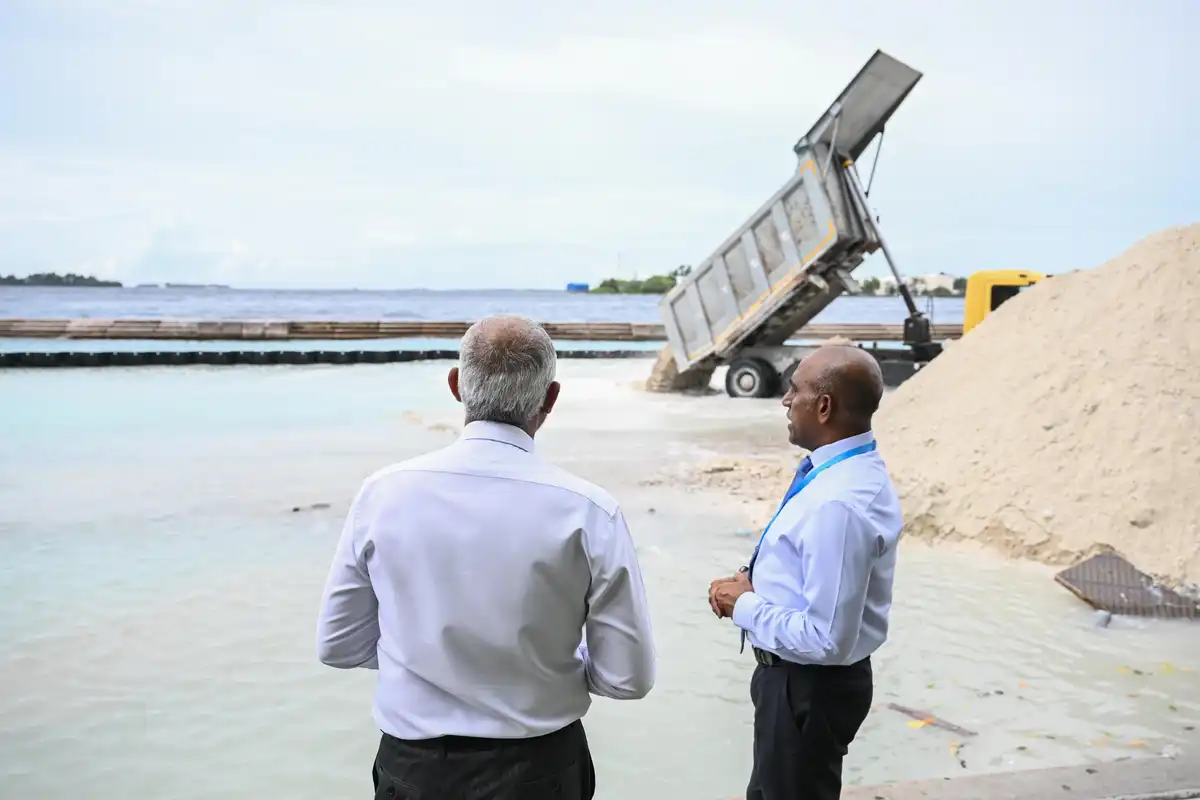
Predictably, major state-backed enterprises, particularly disruptive land reclamation schemes, have simply plowed ahead without any EIA oversight whatsoever.
Reefs pushed past the breaking point
While officials demonstrate complete indifference to conservation, ocean warming is steadily bleaching the reefs to death.
Uncontrolled building worsens the nightmare through physical devastation and contamination, stripping the coral of any ability to naturally heal. The World Bank notes that exceeding a two-degree Celsius increase over pre-industrial baselines could essentially wipe out the nation's shallow-water corals. Catastrophes in 1998 and 2016 illustrated the brutality of bleaching; although patchy recovery followed, scientists warn that accelerating climate disruption will make these events harsher and more relentless, denying reefs the window required to recover.
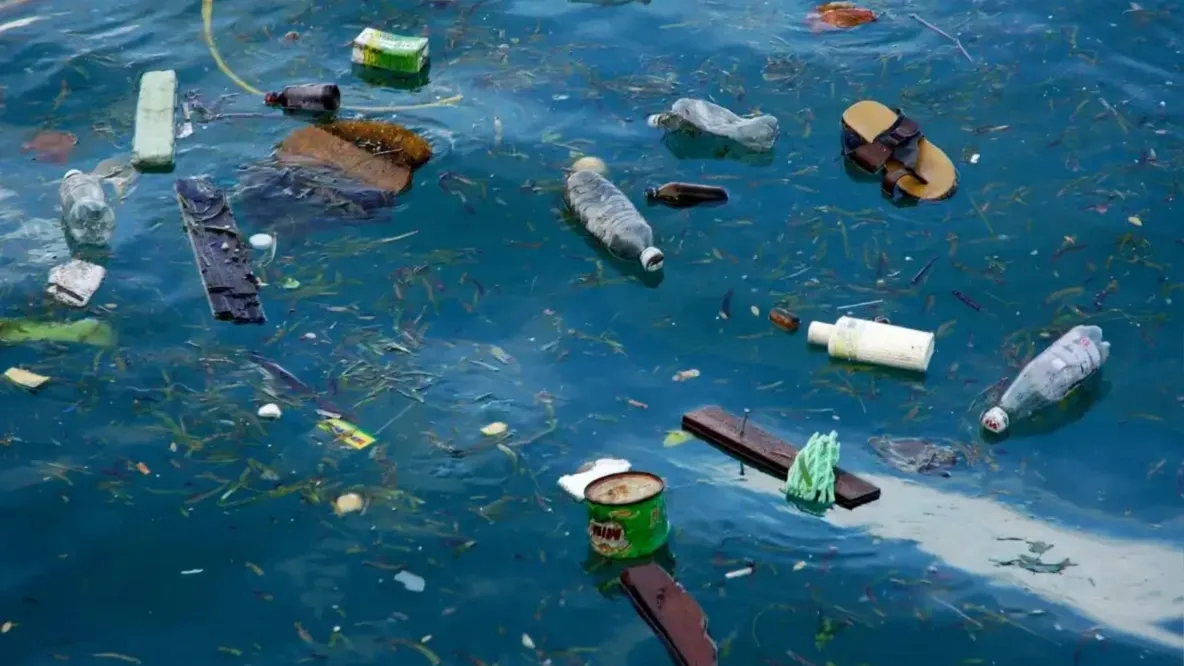
Plastic pollution - bottles and trash floating in the sea, Maldives. | Alamy
Collapsing the core economy
The fisheries sector is heading directly into the storm. Fluctuating water temperatures, rising acidity, and plummeting oxygen levels are scrambling the ranges and populations of marine species. Tuna harvesting, reef fishing, and broader fishing practices are deeply rooted in the Maldivian economy and heritage.
Damaging these ecosystems imperils food security, livelihoods, and export profits, with recent World Bank data highlighting that erratic ocean conditions will trigger severe disruptions across the fishing industry.
Tourism faces an identical trajectory. International visitors do not travel across the globe for spoiled coastlines, dead coral, and filthy water.
Once the reefs vanish, the shorelines wash away, and the lagoons turn murky, the country's luxury appeal will dissolve, dragging employment and state revenue down with it.
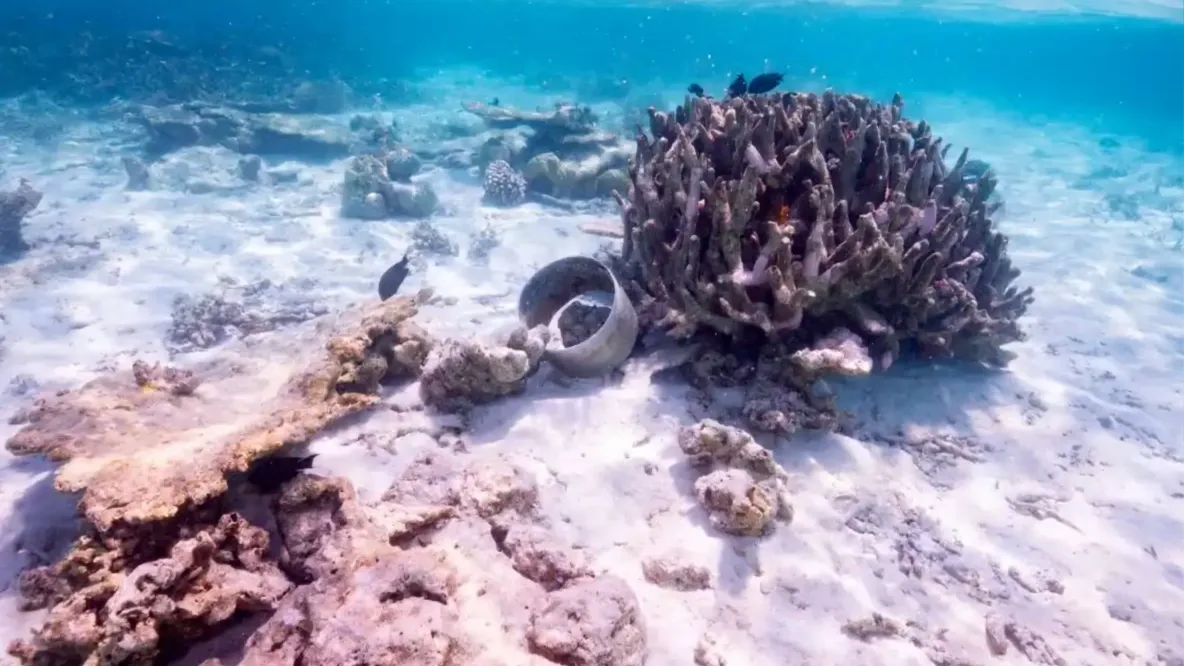
Trash on the ocean floor in the Maldives. | Alamy
Citizen outcry against official apathy
Fed up with state neglect, the public is sounding the alarm. In August 2026, domestic activists highlighted rampant shoreline erosion, plastic floods, and the destruction of wetlands and reefs caused by runaway infrastructure. Campaigners in Addu City publicly challenged land reclamation projects devouring designated mangroves and wetlands, while youth coalitions across Malé and Hulhumalé staged cleanups and anti-plastic campaigns.
Band-aids cannot fix a bleeding nation
Occasional beach cleanups will not halt this collapse. The nation requires an ironclad operational structure: uncompromising policies, reliable legal institutions, functional garbage collection and recycling networks, capable sewage plants, rigorous coastal oversight, and hardline marine pollution monitoring. EIAs for land reclamation, luxury resorts, and mega-projects must be exhaustively carried out and strictly enforced.
Marine Protected Areas offer a genuine lifeline to revive crushed reefs and depleted fish stocks, provided they are actually maintained rather than existing only on paper. Decision-making must be stripped from centralized bureaucracy and shared with local residents, fishermen, hospitality operators, and younger generations who understand that conserving nature is synonymous with their own survival.
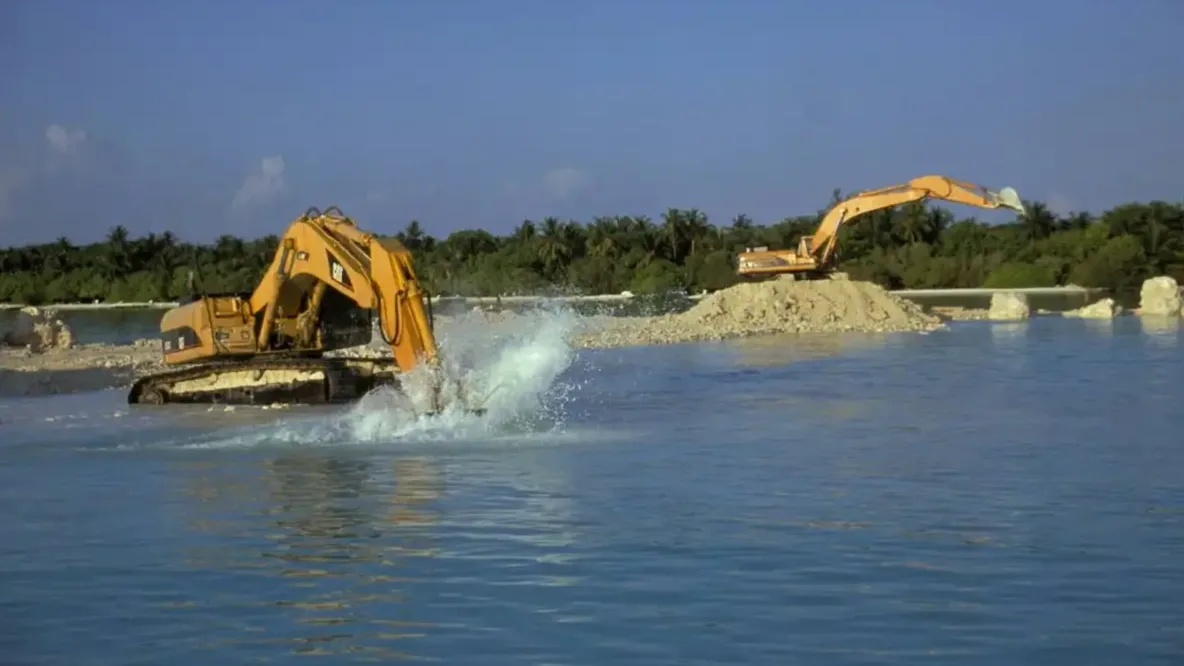
Cranes dredging coral reef in an island. | Alamy
Paying the ultimate price for shortsighted greed
Looming over everything is the existential reality of climate change.
With the World Bank forecasting sea-level rises of up to 0.9 meters by 2100, collapsing reefs and surging waters will inflict devastating economic trauma. United, nationwide mobilization is urgently required to minimize harm and safeguard ecosystem resilience.
The dilemma is obvious: economic advancement cannot be achieved by cannibalizing the natural world. Scrapping protective environmental laws for immediate profits is a disastrous dead end.
If natural assets continue to be destroyed by toxic runoff, reckless development, and climate threats, the general public, commercial enterprises, and upcoming generations will pay the heavy price.
Shielding the ocean is not a casual conservation preference; it is the fundamental prerequisite for the survival, wealth, and identity of the Maldives.