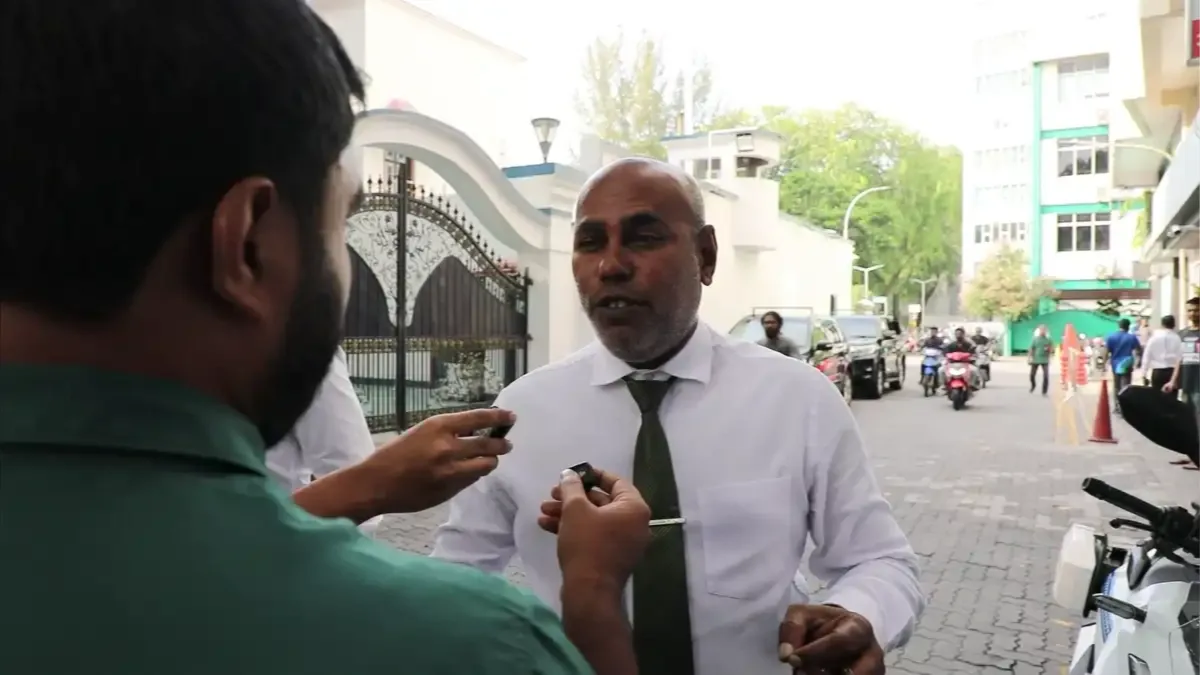
Respected national figures entangled in state politics as public alarm grows
2 ނޮވެމްބަރު 2026 | ހޯމަ 12:42There is growing concern that appointing distinguished military and legal professionals, who have earned respect through their national service, to political positions compromises their integrity and diminishes their public standing. Many observe that involving figures such as Moosa Ali Jaleel and Ahmed Shakir in political affairs undermines the prestige and honor they have previously attained

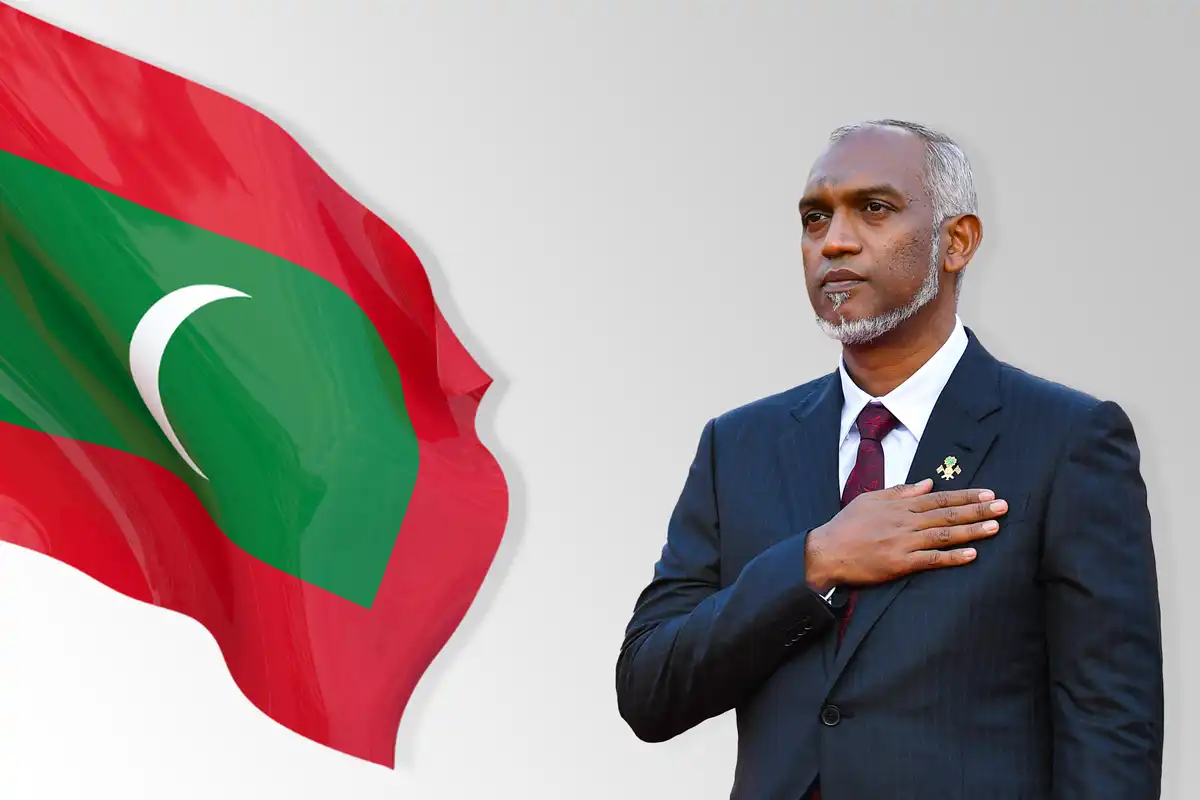
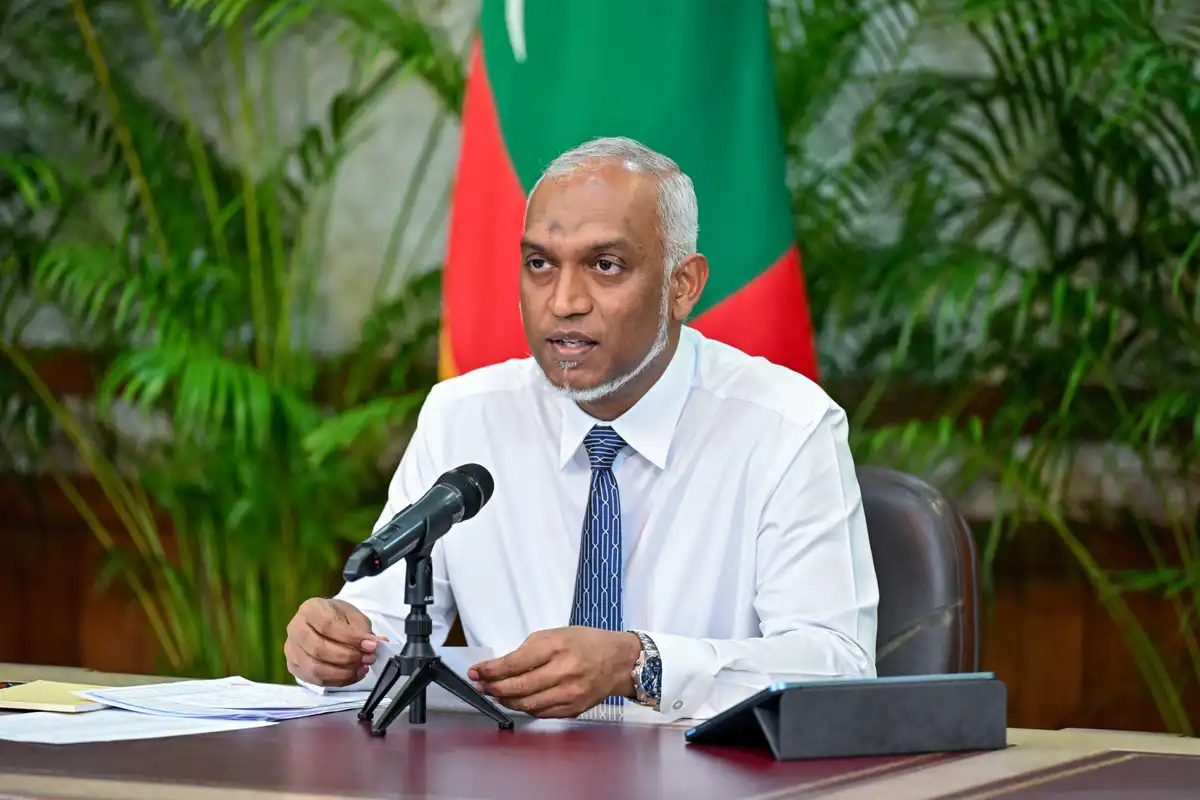
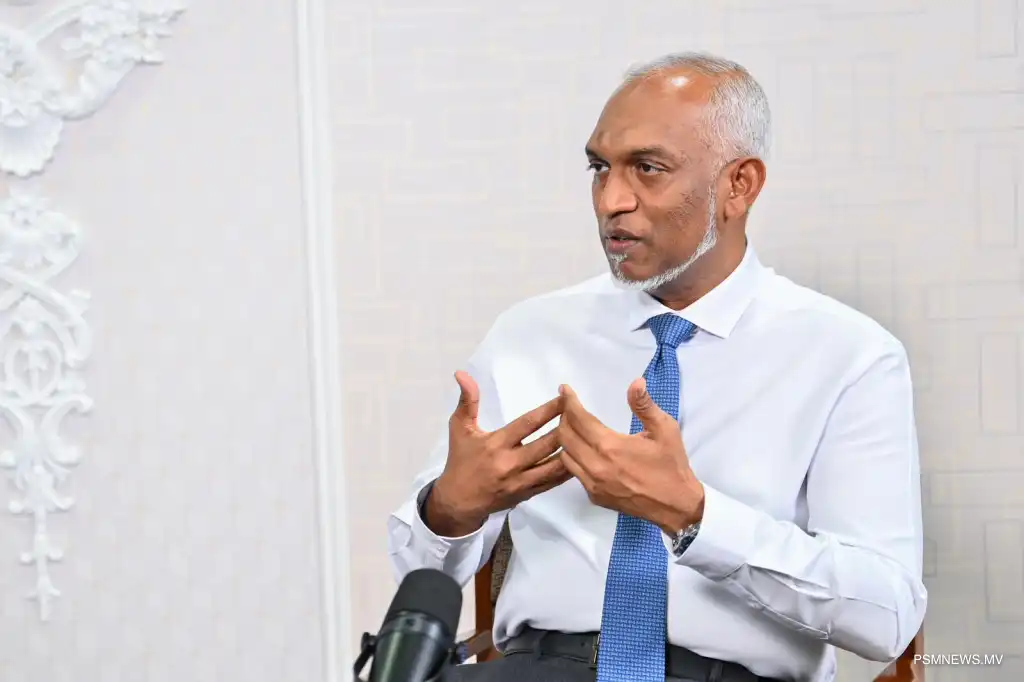
President Dr. Mohamed Muizzu and the National Flag | President's Office
Unease is spreading regarding the calculated maneuvers orchestrated by President Dr. Mohamed Muizzu’s leadership, moves increasingly viewed as eroding the favorable standing and prestige of various venerated Maldivian personalities.
A significant number of commentators suspect that President Muizzu is consciously thrusting citizens who previously secured widespread public devotion and deep honor across decades of devoted public duty right into the raw partisan arena, practically orchestrating the steady reduction of their standing.
The experience of Major General (Retired) Moosa Ali Jaleel stands out as a glaring demonstration of this trend. Recognized as a formidable national figure, Moosa Ali Jaleel committed over 32 years to armed service, notably leading the military as Chief of Defence Force between 2008 and 2012. His career outside the ranks later encompassed duties as Maldivian High Commissioner to Pakistan from 2014 to 2015, alongside an appointment as Minister of Defence and National Security during 2015. To acknowledge his courage and contributions during the armed defense of the republic throughout the November 3, 1988 terrorist assault, President Muizzu conferred the Order of Military Honour (Nishaan Askareege Verikan) upon him at the Victory Day event in November 2024.
However, Moosa Ali Jaleel’s respected military aura and public identity became hopelessly compromised once President Muizzu chose to push him forward as the candidate for the governing People’s National Congress in the Malé City Mayoral contest.
Following his loss in that ballot, forcing an acclaimed veteran into competitive partisan mudslinging eroded the admiration formerly held for him across segments of the public, exposing him directly to the harsh bitterness and open condemnation typical of partisan warfare.
This development vividly highlights how President Muizzu has reduced a dedicated state servant to an expendable chess piece, staining an otherwise celebrated legacy.
Equally damaging has been the routine placement of senior retired military personnel into management roles across State-Owned Enterprises, a practice that has similarly diluted the esteem enjoyed by other prominent individuals.
A prime case involves Major (Retired) Mohamed Najah, whose assignment to an executive position at Fenaka Corporation dragged him directly into the storm of civilian frustration and partisan backlash aimed at that firm, casting an unfortunate cloud over Najah’s unblemished years in uniform.
Repeatedly taking people who spent honorable lives in national duty and installing them at the helm of politicized, dysfunction-ridden corporations has continually compromised their personal prestige.
Spotlight has fallen fresh upon the naming of Al-Ustadh Ahmed Shakir to preside over the specialized review panel constituted by President Muizzu to evaluate the country’s handling of the International Tribunal for the Law of the Sea decision concerning the maritime boundary dividing Mauritius and the Maldives. Al-Ustadh Ahmed Shakir holds a sterling reputation characterized by uprightness throughout the legal profession and the judiciary.
Even so, designating him to oversee a panel handling an intensely disputed and politically fractured controversy has sparked concerns that this represents just another scheme to entangle an ethical individual within partisan theater.
Positioning revered and principled figures at the face of such inquiries, which are typically engineered to further the regime’s immediate motives or undermine predecessor governments, threatens to plant suspicion among the public concerning their genuine impartiality and uprightness, progressively shredding their broad stature.
Mobilizing revered veterans of the defense and judicial branches who never previously wavered in their service, simply to advance executive priorities and drown them in partisan squabbling, inflicts profound harm on their dignity and standing.
It remains deeply alarming that President Muizzu’s playbook converts historical figures and respected public servants into mere administrative tools, systematically draining away the deep devotion and admiration they once enjoyed across the country.