SAARC Nations Discuss Declining Fisheries in Maldives
3 ޖުލައި 2026 | ހުކުރު 10:00During a regional meeting held in Malé, jointly organized by the SAARC Agriculture Centre and the Ministry of Fisheries of the Maldives, discussions focused on the vital importance of collective action to ensure the sustainability of marine fisheries in South Asia. To effectively address the challenges posed by climate change and illegal fishing, participants called for the establishment of a robust regional framework, moving beyond isolated national efforts toward a more integrated regional approach.
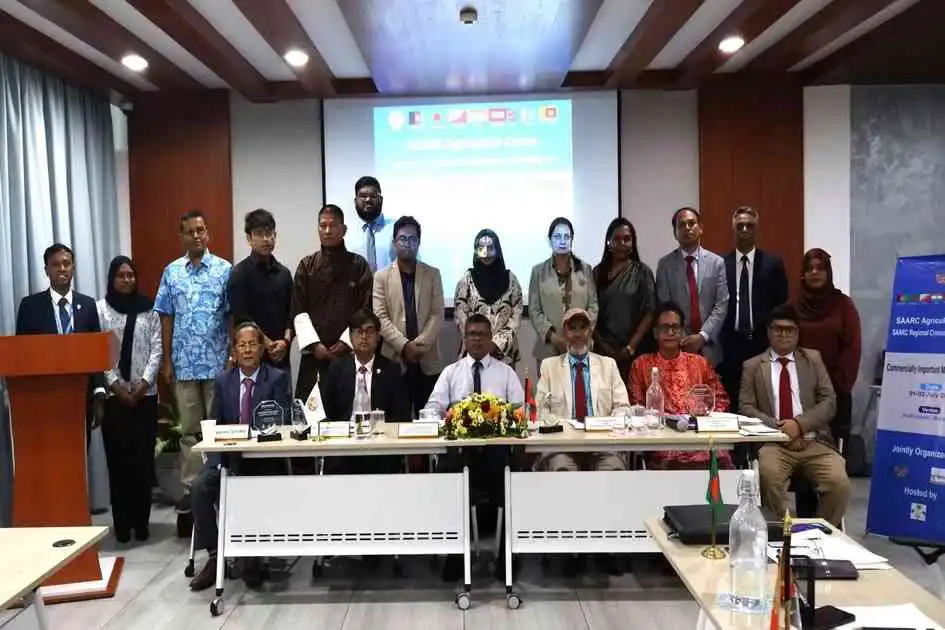
Member states of the South Asian Association for Regional Cooperation (SAARC) have convened in the Maldives to deliberate on solutions for the threats facing marine biodiversity and the declining fish populations within the fishing industry. | theclimatewatch
South Asian nations have convened in Male' to address the critical threats facing food security and coastal livelihoods, driven by declining tuna stocks, overfishing, and the impacts of climate change. The discussions also focused on finding solutions to the challenges posed by weak regional fisheries governance.
South Asian policymakers, fisheries experts, and development partners have gathered in Male' to address the challenges of managing the shared resources of the Bay of Bengal and the Indian Ocean, amid growing concerns over declining fish stocks and the impacts of climate change.
The two-day "SAARC Regional Consultation Meeting on Commercially Important Marine Finfishes," which commenced on July 1, 2026, highlighted the critical importance of strengthening regional cooperation to protect fish species vital for food security and coastal livelihoods, as well as other high-value marine species.
The meeting was jointly organized by the SAARC Agriculture Centre (SAC), the Maldives Ministry of Fisheries, Agriculture and Ocean Resources, and "Shushilan," a non-governmental development organization based in Bangladesh. These discussions are expected to significantly contribute to the development of a regional roadmap aimed at enhancing collaborative fisheries management, promoting sustainability, and ensuring food security across South Asia.
Delegates at the meeting highlighted that South Asia's marine ecosystems are facing significant pressures due to overfishing, illegal, unreported, and unregulated (IUU) fishing, and the escalating threats posed by climate change to marine biodiversity.
In his remarks, Professor Dr. Mohammad Abdul Wahab of the Bangabandhu Sheikh Mujibur Rahman Maritime University stated that individual efforts by countries in this region would not be sufficient to resolve the issue.
He stated that regional challenges, such as the depletion of resources, illegal fishing, and biodiversity loss driven by climate change, require a collaborative response that transcends national borders. Furthermore, he called for urgent collective action to prevent permanent environmental and economic damage.
Amid growing calls for the establishment of a regional fisheries framework, the opening session of the meeting focused primarily on the importance of a structured regional system to enhance the management of transboundary marine resources.
Dr. Mohammed Harunur Rashid, Director of the SAARC Agriculture Center, stated that individual national efforts are no longer sufficient to address the rapid changes in maritime conditions and the existing gaps in cross-border law enforcement.
He proposed the establishment of a specialized regional platform under the auspices of SAARC to oversee marine fisheries. He called for this initiative to facilitate information sharing, harmonize policies, and strengthen law enforcement cooperation among member states.
In addition to environmental concerns, the meeting addressed the vital role of fisheries in sustaining the coastal economies and food systems of South Asia.
As discussions continue, delegates are reaching a consensus that the Bay of Bengal and its interconnected maritime zones constitute a unified environmental and economic ecosystem that cannot be managed in isolation.