Middle East turmoil drags regional growth: Afghanistan and Maldives slump to bottom of Asia’s economic rankings
11 ޖުލައި 2026 | ހޮނިހިރު 13:43The ADB predicts South Asian growth will be led by India and Bhutan, while Pakistan faces a downgraded 3.7 percent expansion due to high energy costs and Middle East conflict. Pakistan also struggles with 8.3 percent inflation, the region's second highest. Consequently, several nations have frozen or raised interest rates to ensure stability.

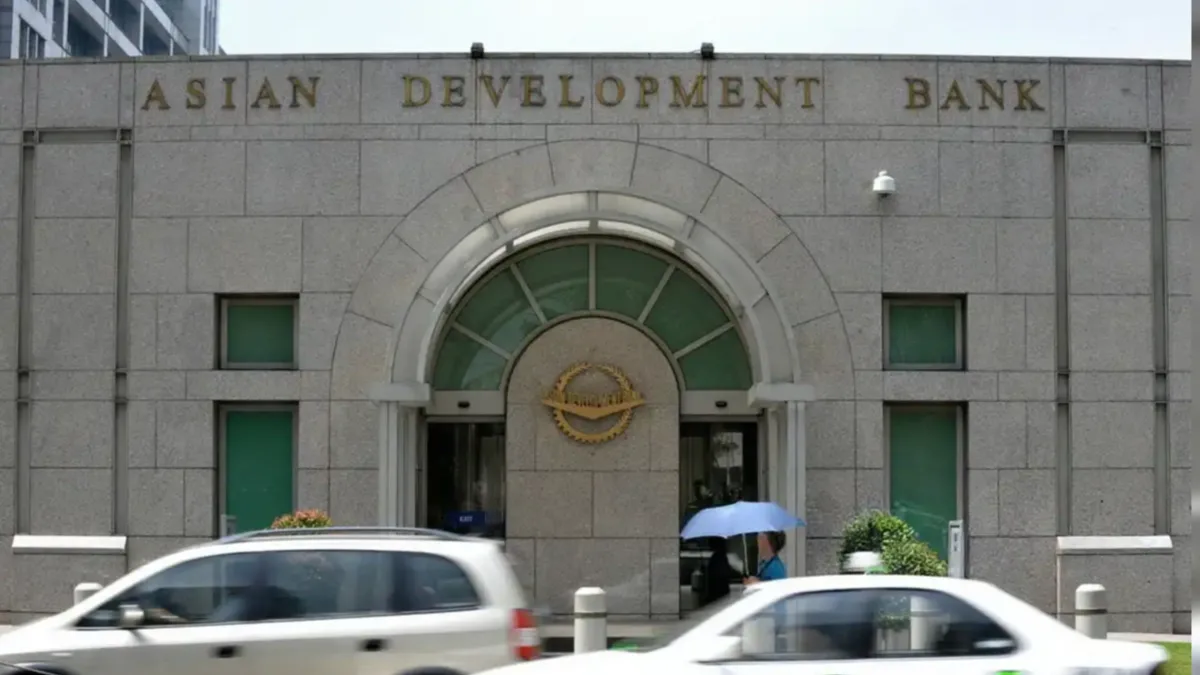
Manila headquarters of the Asian Development Bank | getty images
The Asian Development Bank (ADB) has announced that overall economic progression throughout Asia and the Pacific is set to slow down to 4.9 percent in 2026, dropping from the 5.5 percent expansion predicted for 2025.
This downward modification is a direct result of the wider economic consequences stemming from active military conflicts in the Middle East.
In its premier twice-yearly report, the "Asian Development Outlook," the financial institution notes that India will likely spearhead progress in South Asia with a predicted 7.3 percent growth mark, while Bhutan trails just behind at an anticipated 7.2 percent.
Conversely, Pakistan is stuck with the third weakest growth velocity in that specific area at a projected 3.7 percent. The absolute lowest growth rates in the entire region belong to Afghanistan and the Maldives, with both nations expected to expand by a meager three percent.
The report from the organization elaborates that expensive energy costs alongside strain on incoming foreign money transfers have forced a reduction in Pakistan's economic expansion prediction for the 2027 fiscal calendar to 3.7 percent. This matching figure mirrors the exact expansion speed seen in the prior fiscal period. The drop represents a nearly one full percentage point reduction from the initial 4.5 percent projection the institution had published back in April for the current fiscal cycle.
Further, ongoing adverse effects from the Middle Eastern fighting have pushed Pakistan's expected inflation mark for the 2027 fiscal year up to 8.3 percent. This leaves the country with the second most severe inflation rate in the region, sitting just behind the 8.8 percent projection calculated for Bangladesh. The statistical evidence indicates that Pakistan is wrestling with much larger economic hurdles than Afghanistan, Bhutan, the Maldives, Nepal, and Sri Lanka. Meanwhile, India's inflation is expected to stay steady at four percent even with the indirect fallout of international warfare. A primary reason for India's steady prices is that its administration refrained from imitating Pakistan's strategy of hiking taxes on diesel and petrol.
Looking back at the previous fiscal year, inflation rates within Armenia, Georgia, Mongolia, Nepal, Pakistan, the Philippines, and Vietnam stayed higher than desired goals during the opening months of 2026.
Because of this situation, the central banking authorities in those specific countries reacted by freezing current interest rates or implementing hikes to secure general economic balance.