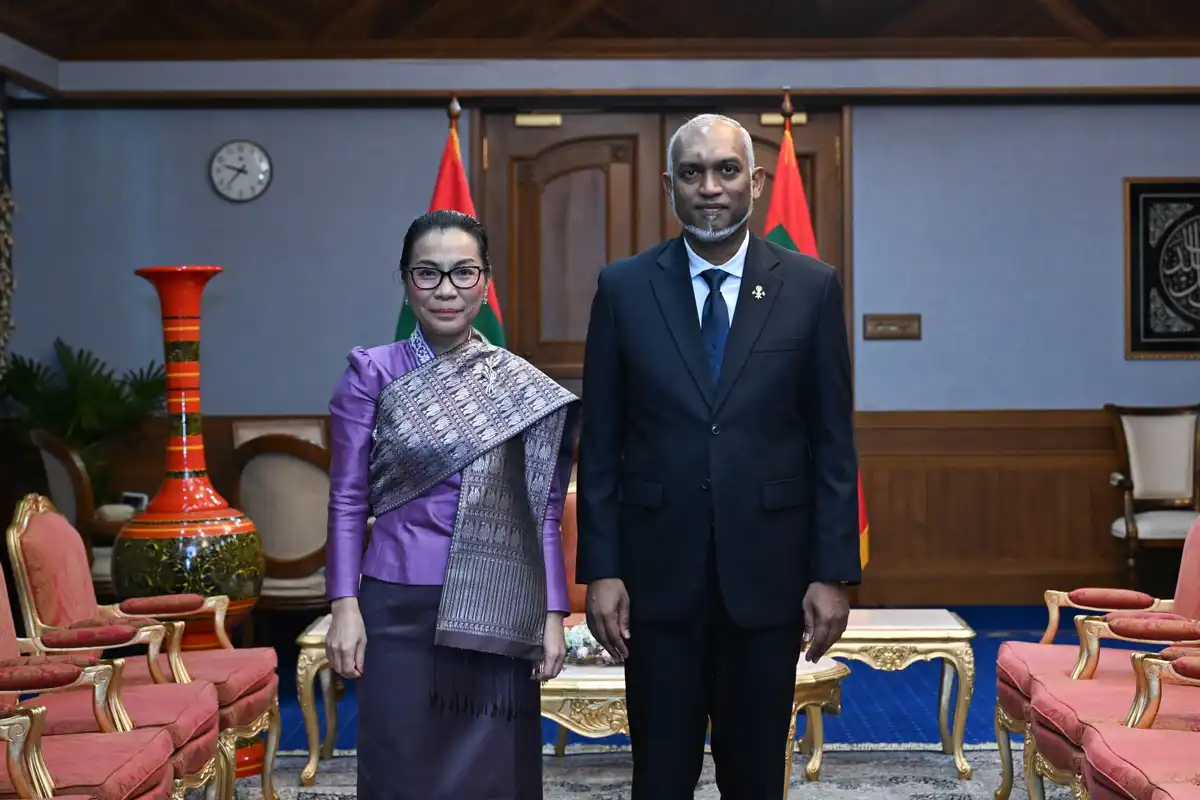
India agrees to provide digital infrastructure to 24 countries, including the Maldives
30 ޖުލައި 2026 | ބުރާސްފަތި 08:09India has commenced practical efforts to export its Digital Public Infrastructure (DPI) model to 24 countries, including the Maldives. Under this initiative, agreements have been signed to provide technical assistance and training for implementing services such as the Unified Payments Interface (UPI) and DigiLocker abroad. The project aims to empower developing nations to expand their digital services by leveraging India's proven technological framework.

A fruit vendor in Baramulla, Jammu and Kashmir, India, displays a Paytm UPI QR code at his stall to facilitate digital payments. | getty images
India has announced that it has signed agreements to provide its Digital Public Infrastructure (DPI) model to 24 foreign countries, including the Maldives. The Indian government emphasized that this initiative marks a transition from mere pledges of cooperation to practical implementation. Work has already commenced on establishing the "DigiLocker" system in Kenya and Cuba. Furthermore, efforts are underway to expand India’s Unified Payments Interface (UPI) to 10 international markets. Discussions are also ongoing with Laos, Seychelles, Venezuela, Armenia, Fiji, Guyana, and Colombia regarding the implementation of platforms such as e-Sanjeevani, e-Office, and e-Hospital.
India’s Ministry of Electronics and Information Technology informed the Lok Sabha on Wednesday that it has signed an "Implementation Framework" and a Non-Disclosure Agreement (NDA) with Kenya to establish a DigiLocker system in the country. Additionally, work has commenced on developing a foundational DigiLocker platform for Cuba. Under these agreements, the collaboration will focus on capacity building, the exchange of technical knowledge and expertise, and providing consultancy services. The partnership also includes conducting joint workshops, feasibility studies, and the implementation of pilot projects.
The nations partnering with India in this initiative include Kenya, Cuba, Colombia, Sri Lanka, Brazil, the Maldives, Mongolia, Seychelles, Armenia, Fiji, Venezuela, Ethiopia, and Tanzania. The objective of providing these systems to foreign nations is to promote "India Stack"—a comprehensive suite of identity, payment, and service delivery platforms—as a vital developmental tool for emerging economies, particularly those across the Global South.
Under the Indian Technical and Economic Cooperation (ITEC) program, India conducted a specialized training course for a Cuban delegation in December 2025, focusing on Digital Public Infrastructure (DPI) such as DigiLocker. Furthermore, delegations from Kenya, Rwanda, Nepal, Indonesia, and South Africa have engaged with institutions like the Unique Identification Authority of India (UIDAI) and the National Payments Corporation of India (NPCI) to exchange expertise. Currently, UPI-based merchant payment systems are operational in Bhutan, France, Mauritius, Nepal, Qatar, Singapore, Sri Lanka, the UAE, and Cambodia. Additionally, cross-border person-to-person (P2P) remittance systems have been established with Singapore, Nepal, and Greece. In the latest developments, UPI payment services were launched in Cambodia in June 2026, while the real-time remittance link with Greece has also recently gone live.