Maldives' race to the financial bottom
6 ޖުލައި 2026 | ހޯމަ 01:58The Asian Development Bank predicts the Maldives will be South Asia's slowest-growing economy in 2026, with a mere one percent growth rate. This stagnation stems from a struggling tourism sector, high fuel costs, and depleted foreign reserves that limit government intervention. While neighbors like India and Bhutan project robust growth near seven percent, the Maldives faces rising inflation and urgent needs for structural healthcare reforms to avoid further financial decline.


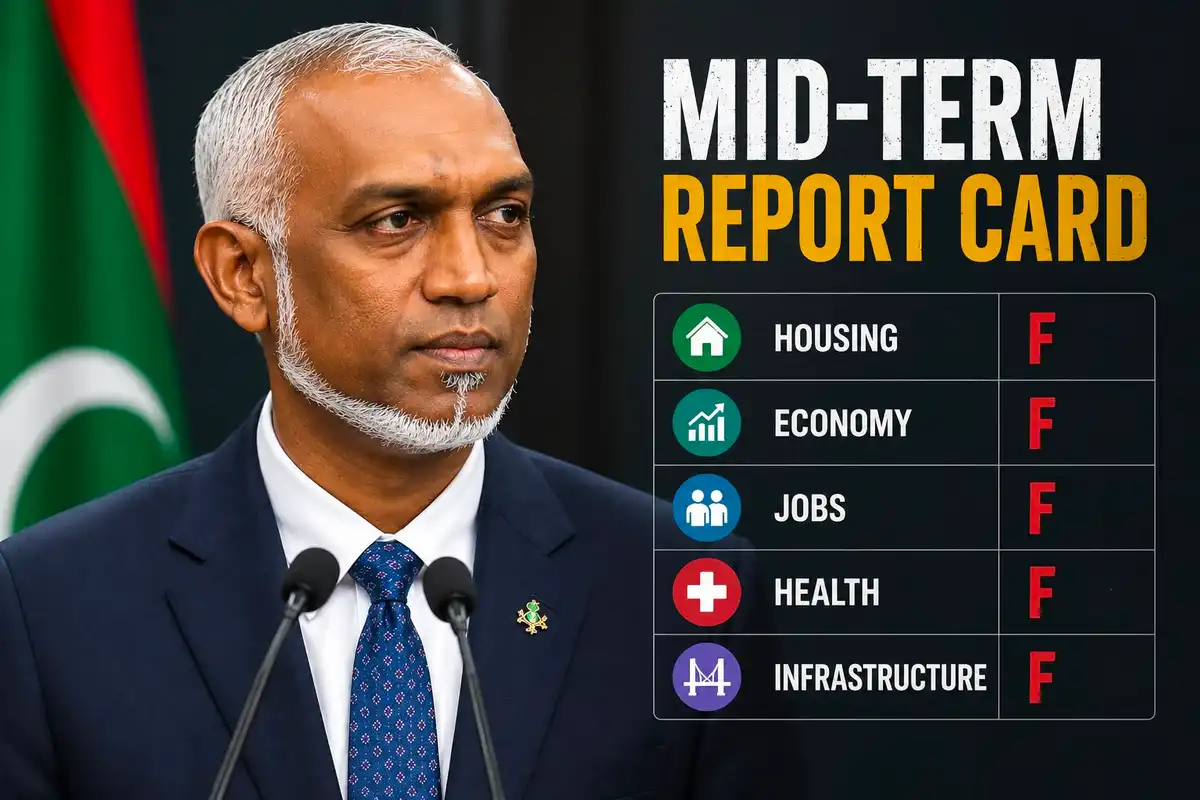
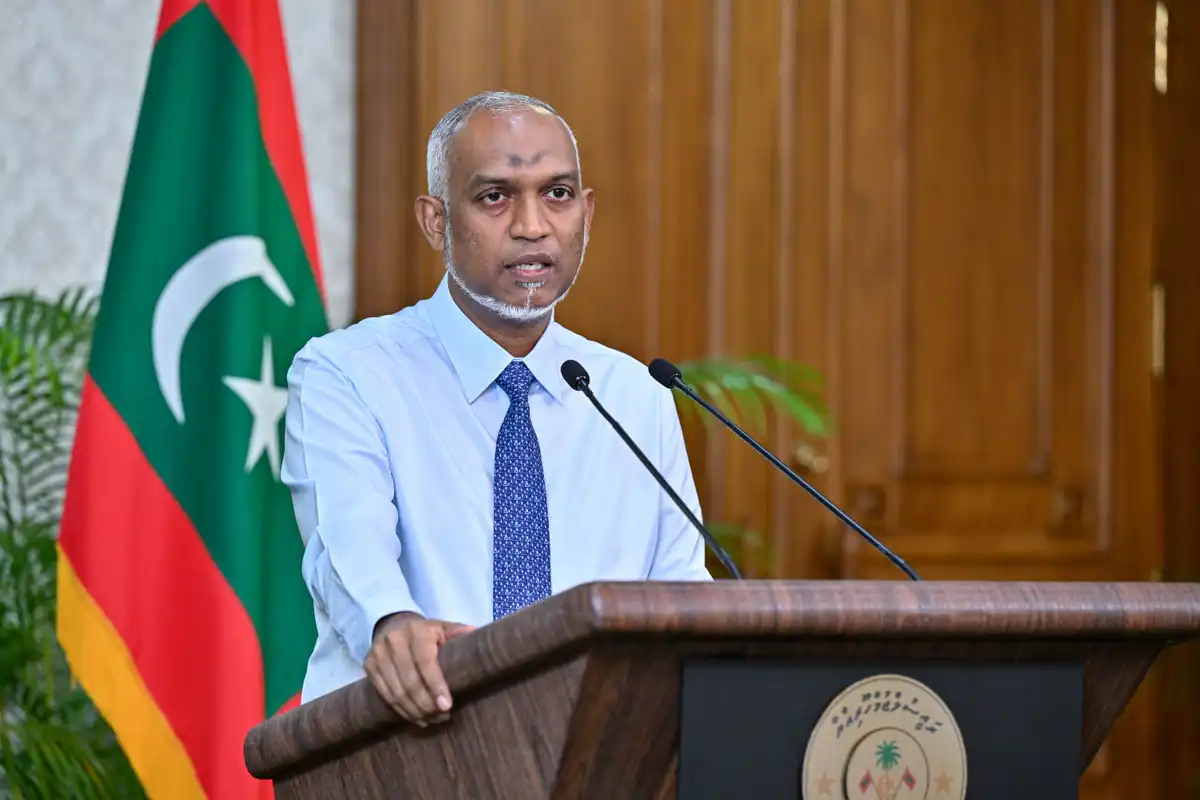
Maldives' President Mohamed Muizzu - ADB says urgent reforms are essential to restore fiscal sustainability. | getty images
The illusion of prosperity has officially shattered.
Despite the brief high of a tourism rebound and a fleeting bounce in the fisheries sector during 2025, the Asian Development Bank’s latest "Economic Forecasts for Asia and the Pacific" report serves up a harsh reality check for 2026, predicting that the Maldives will officially anchor itself as the biggest economic laggard in the entire South Asian region.
Even though the state managed to scrape together enough cash to fully pay off its USD 500 million Sukuk on April 2, the celebratory mood is dead.
The year ahead looks incredibly grim, with economic activity grinding to a screeching halt. The culprits behind this stagnation are entirely predictable: a paralyzed fisheries sector, a bleeding tourism industry taking heavy hits from ongoing Middle Eastern turmoil, and the relentless squeeze of skyrocketing fuel prices.
Making matters worse, the government’s hands are completely tied. Dwindling foreign currency reserves and a stifling lack of fiscal breathing room have thoroughly crippled any desperate attempts to revive the economy. Instead of relief, citizens are facing a double punch of climbing inflation and surging commodity prices, both driven by costly fuel imports and chaotic, mismatched exchange rates running rampant in the local market.
To pull itself out of this self-inflicted tailspin and survive long-term, the bank insists that deep structural overhauls are no longer optional. The state must urgently figure out how to provide universal healthcare while completely rebuilding its health insurance framework into something that is financially viable for the long haul.
When the dust settles, the numbers tell a humiliating story. Maldives is slated to crawl across the finish line with a pathetic one percent growth rate, locking in its title as South Asia's worst performer. Compounding the pain, local inflation will stubbornly hover right around five percent.
Meanwhile, the rest of the neighborhood seems perfectly capable of navigating global turbulence. India is busy showing off its resilience, projecting a strong 6.9 percent growth rate for the 2026 fiscal year, powered by healthy domestic consumption, better access to financing, and the sweet relief of slashed American tariffs on Indian exports. With continuous domestic reforms, lucrative European Union trade deals, and incoming pay bumps for state workers, India is on track to surge to 7.3 percent growth by the 2027 fiscal year.
Even the region’s traditionally troubled economies are leaving the Maldives behind. Pakistan is gearing up for a major acceleration, riding the wave of relaxed monetary policies and a surge in investor confidence sparked by its 2025 sovereign credit rating upgrade, which is finally letting private investment breathe. Over in Bangladesh, the new government's tight regulatory moves and financial system reshuffling are laying the groundwork for a prosperous future, while Bhutan is riding high on its massive new hydropower facility projects to secure dominant growth across both 2026 and 2027.
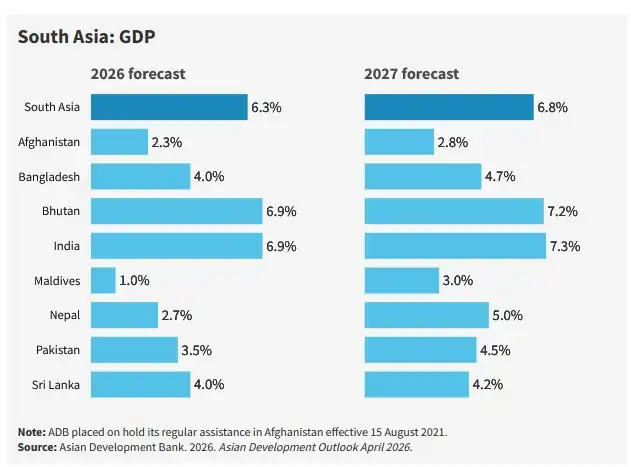
GDP growth in the subregion is projected to ease from 6.8 percent in 2025 to 6.3 percent in 2026 before returning to 6.8 percent in 2027. | ADB
By the end of the year, Bhutan and India will triumphantly share the top spot in South Asia at a comfortable 6.9 percent growth. Sri Lanka and Bangladesh will comfortably follow in second place, both coasting at roughly four percent.
The absolute depths of this embarrassment, however, is that the Maldives' microscopic one percent trajectory cannot even match the pace of Nepal or war-torn Afghanistan, both of which are still expected to expand by more than two percent.