President Muizzu says the burden of unpaid elderly care will be eased
11 ޖުލައި 2026 | ހޮނިހިރު 11:32In his message marking World Population Day, the President emphasized the importance of investing in the well-being of the youth and establishing a "care economy" to support the elderly. He further announced that the 2030 census will be conducted using a hybrid methodology to ensure that national policies are formulated based on accurate demographic data.

Women seated at the Artificial Beach in Malé, 15 October 2003. | getty images
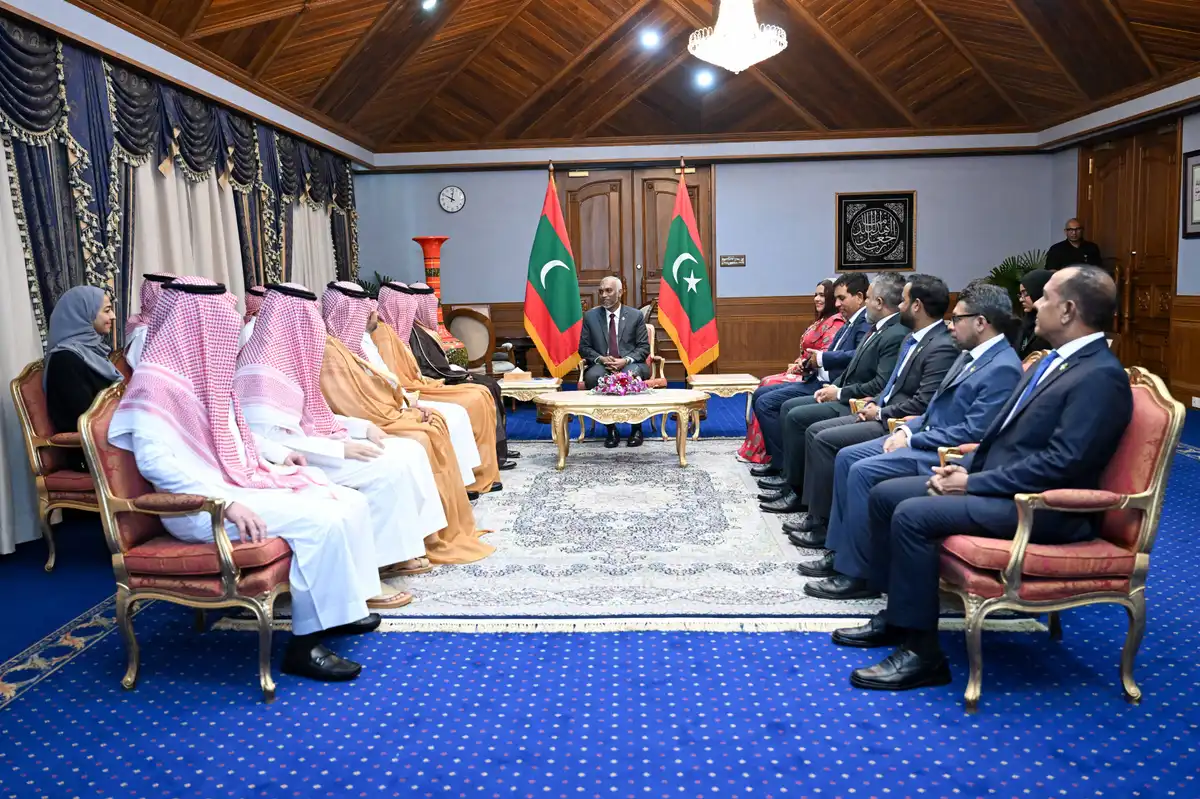
President Dr. Mohamed Muizzu has stated that investing in the health of the youth is essential to sustain healthcare systems and support the elderly, as the Maldives heads towards a demographic shift with a growing aging population. The President made these remarks in his message on the occasion of World Population Day.
President Muizzu stated that while the government is prioritizing youth development, it is equally important to prepare for the nation's growing elderly population. He highlighted that by instilling healthy habits in today’s youth and protecting them from chronic illnesses, the onset of age-related diseases can be delayed. This approach, he noted, will ensure the development of a productive workforce and a supportive generation for the future.
In this regard, the President stated that high-quality healthcare and necessary social support would be guaranteed for the elderly. He further noted that these measures would alleviate the burden of unpaid caregiving on families, particularly for women and girls. President Muizzu emphasized that by strengthening such care services, human dignity can be upheld, allowing the elderly to remain part of the workforce. He added that these efforts would help build a more resilient, inclusive, and prosperous Maldives.
The President emphasized that sustainable development does not depend solely on population size, but rather on the extent to which a nation empowers its youth to reach their full potential. Noting that the Maldives is currently undergoing a significant demographic transition, President Muizzu highlighted that with youth comprising approximately 39 percent of the population, the government remains committed to prioritizing high-quality education and the creation of meaningful employment opportunities for young people.
He emphasized that alongside human development goals, it is essential to ensure that development policies are formulated based on the actual needs of the community through the collection of updated demographic data. In this regard, he revealed that efforts are underway to strengthen administrative registries to ensure accurate and up-to-date population data is maintained at the local level. He further noted that these initiatives aim to enhance evidence-based decision-making, reduce administrative costs, and improve the overall efficiency of the state.
He stated that the 2030 census is intended to be conducted using a hybrid methodology, integrating administrative registries with traditional census techniques. This approach, supported by a comprehensive roadmap and legislative reforms designed to ensure no one is left behind, aims to modernize the data collection process.