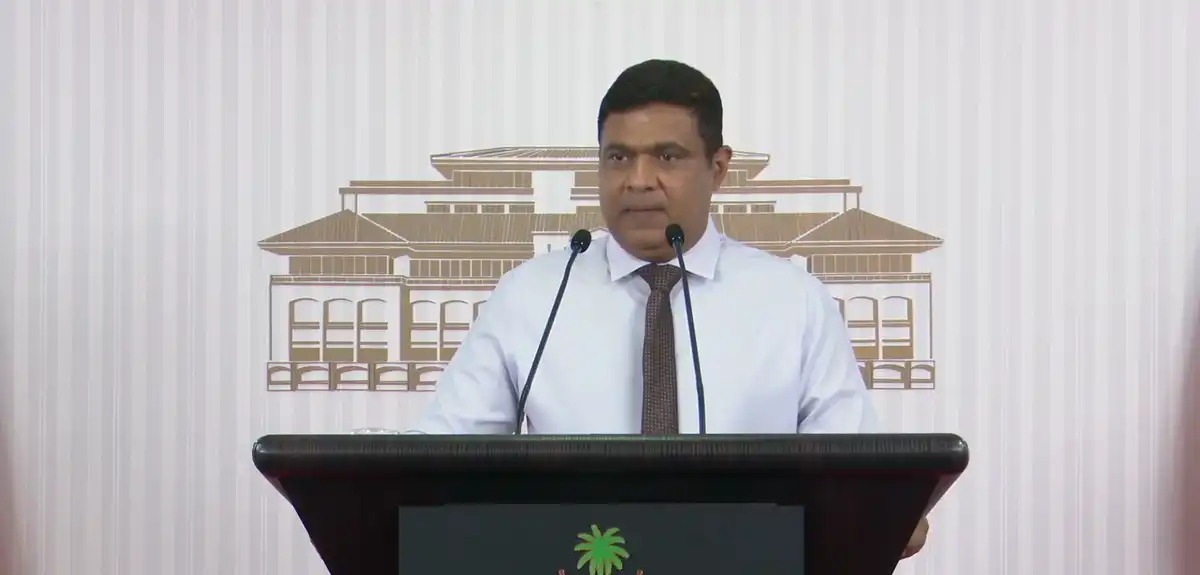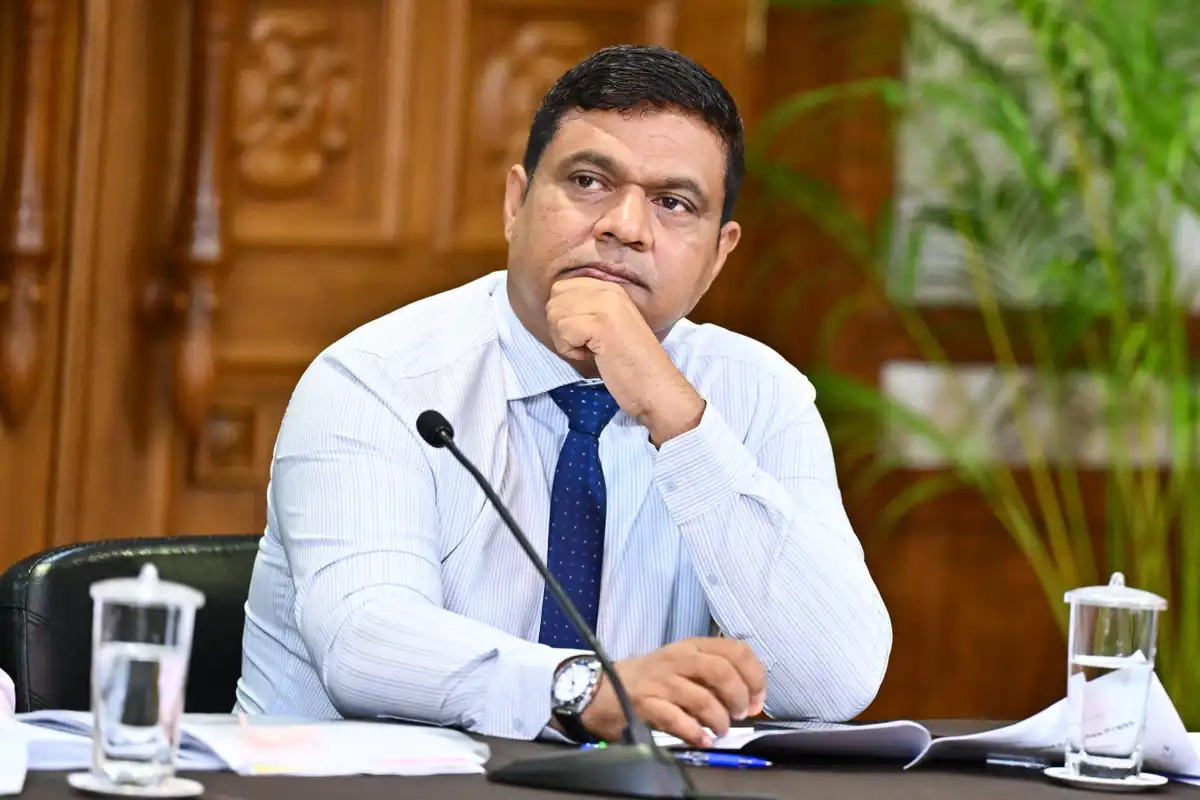
Speaker oversteps into the executive cabinet while visiting Pakistan
28 ސެޕްޓެމްބަރު 2026 | ހޯމަ 10:26During Abdul Raheem’s official visit to Pakistan, the discussions held regarding direct flight connectivity, trade, and investment raise concerns of a legal conflict of interest, as the People’s Majlis appears to be assuming executive responsibilities designated to Cabinet Ministers

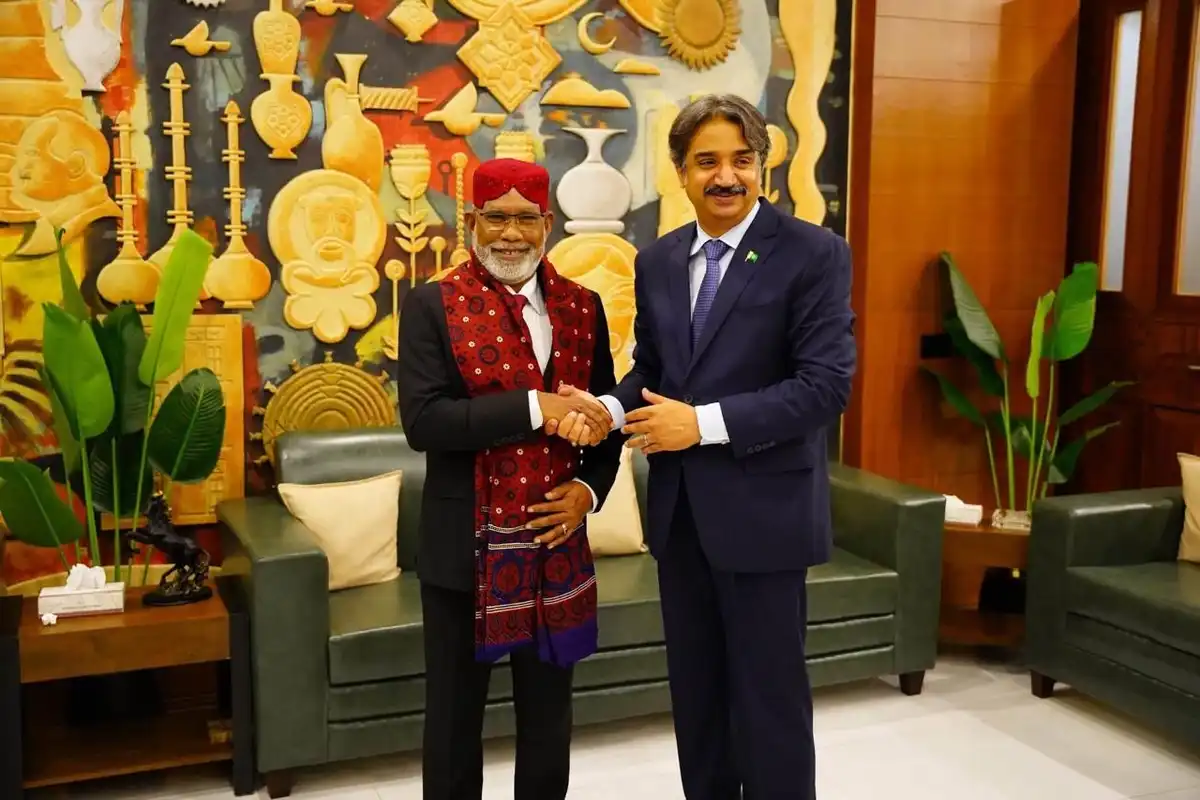
Speaker Abdul Raheem (L) meets with a senior official of the Federation of Pakistan Chambers of Commerce and Industry | Daily Times
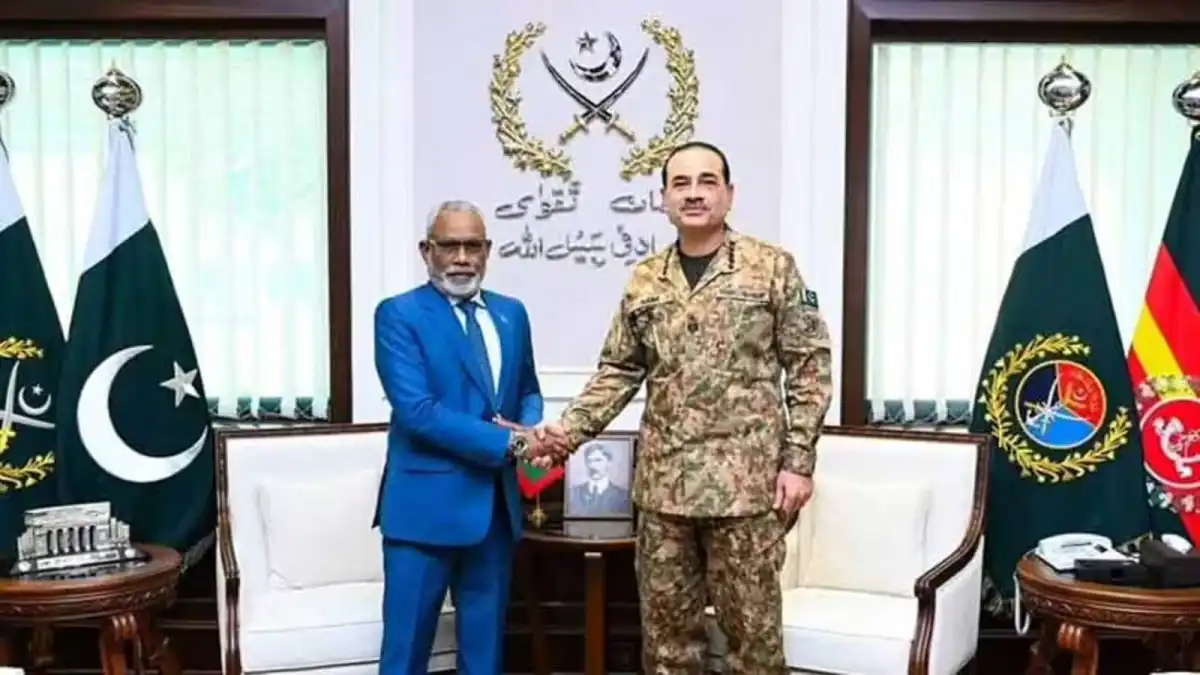
Speaker of the People’s Majlis Abdul Raheem Abdulla is currently on an official trip to Pakistan, however, the high-level talks he is holding regarding direct flights, commerce, and foreign capital raise sharp doubts over who is actually running the state.
One has to wonder what has become of the basic constitutional boundaries and statutory purviews assigned to the cabinet ministers legally charged with running these exact portfolios.
An official release issued by Pakistan International Airlines revealed that the carrier's chief executive sat down with the visiting Maldivian legislative contingent to deliberate inaugurating nonstop routes linking Pakistan with the Maldives.
The airline signaled that any definitive resolution would hinge on the future growth of its aircraft fleet. For his part, Speaker Abdul Raheem underlined that improved air links would offer immense windfalls to both Maldivian commerce and its tourism industry.
Hijacking the aviation desk
The management of commercial aviation belongs solely to the executive arm of the state. Under the current cabinet configuration, Mohamed Ameen heads the Ministry of Tourism and Civil Aviation. Even though a bilateral Air Services Agreement between Islamabad and Malé has sat on the books for an extended period, rolling out routine flight schedules demands formal operator designations alongside strict regulatory clearances. These duties are executive prerogatives, not playgrounds for parliamentary meddling.
This excursion leaves urgent inquiries hanging in the air. One must ask whether Ameen’s ministry or the Ministry of Foreign Affairs took any official part in these talks with the Pakistani carrier. If they did, observers deserve to know the exact terms of reference handed to this legislative mission, as well as the established procedure for subsequent actions.
Conversely, if no portfolio authorization was ever granted, the public is left guessing why the head of the legislature is masquerading as the chief diplomatic negotiator for the Maldives on matters as vital as launching new global flight corridors.
Running roughshod over the trade brief
The exact same breach clouds the jurisdiction belonging to Mohamed Saeed, the Minister of Economic Development and Trade. While addressing the Federation of Pakistan Chambers of Commerce and Industry, Speaker Abdul Raheem pitched the commercial upside awaiting Pakistani enterprises and merchandise within the Maldivian market, urging the consolidation of two-way trade and fiscal relations.
Official documentation from Pakistan’s National Assembly corroborates that the talks traversed investment, commercial exchange, travel, transport links, and commercial enterprise linkages. The catch, of course, is that Invest Maldives, the primary state organ tasked with marketing, handling, and officially recording overseas capital inflows, functions squarely beneath Saeed’s ministerial oversight.
According to Article 132 of the Constitution, cabinet officers bear the constitutional duty of aiding the President in shaping sovereign policies. These same ministers possess the exclusive mandate to oversee, execute, guide, evaluate, and harmonize public business across their defined portfolios.
Trampling constitutional turf and evading accountability
If Abdul Raheem sat across the table in these aviation and commercial bargaining sessions carrying authentic clearance from the incumbent or the competent cabinet heads, the administration owes the country a straight answer.
Without an explicit warrant, the legal basis and bureaucratic logic permitting the head of the legislature to cut deals at this rank with overseas aviation and trade counterparts requires an urgent defense.
The administration faces four unavoidable questions:
- Did the Ministry of Tourism and Civil Aviation or the Maldives Civil Aviation Authority send any formal representation to the session with Pakistan International Airlines?
- Did Mohamed Saeed’s ministry or Invest Maldives draft the investment stances floated on Pakistani soil?
- Did Abdul Raheem carry out this diplomacy armed with a dedicated directive originating from the President or the assembled Cabinet?
- Were any sovereign undertakings, promises, or concrete next steps established during the course of these sessions?
The controversy here is not whether the legislative leader has the right to champion his homeland across foreign borders. The true scandal lies in whether national aviation strategies, investment drives, and economic governance are being steered by the constitutional authorities and legal institutions specifically mandated to govern them.