Abdul Raheem plays diplomat in Pakistan while Pres. Muizzu vanishes into the background
28 ސެޕްޓެމްބަރު 2026 | ހޯމަ 10:26While the Constitution grants the president absolute authority over the conduct of the Maldives' foreign policy, the official visit of Speaker of Parliament Abdul Raheem to Pakistan has raised significant questions, particularly regarding his discussions on defense and security matters. Amidst disagreements over the expenditures and objectives of this trip, concerns are mounting that these actions fall outside the Speaker's jurisdiction and mandate

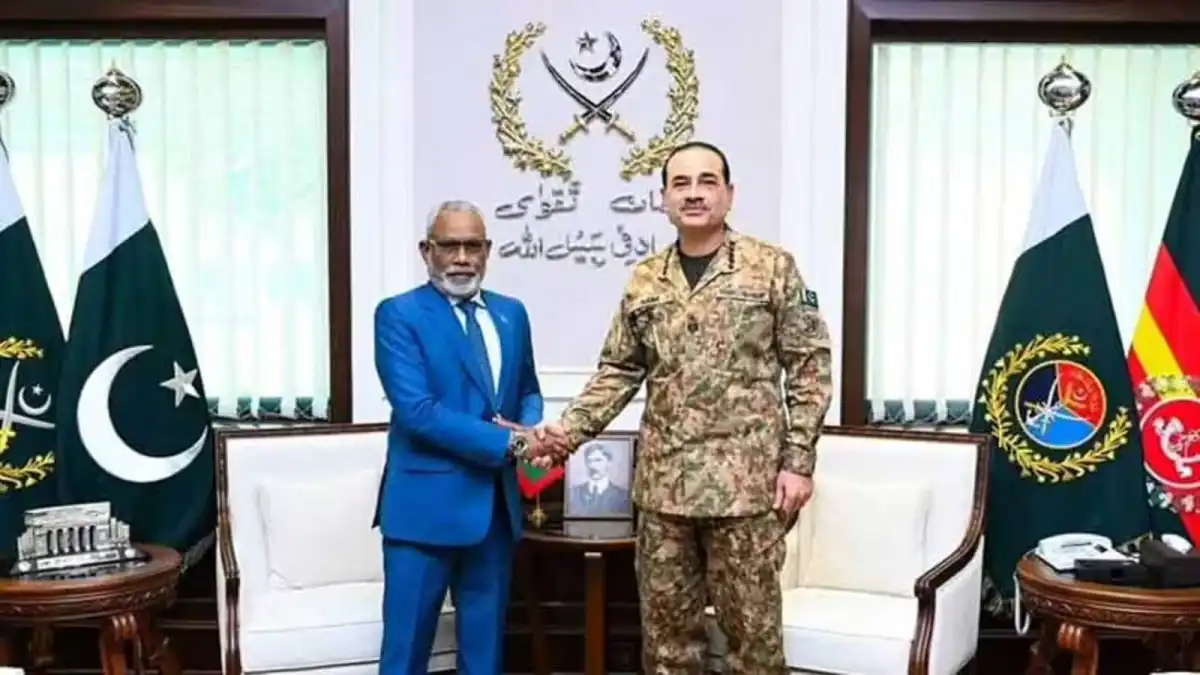
Speaker Abdul Raheem (L) meets w the CDF of Pakistan at GHQ Rawalpindi | India times
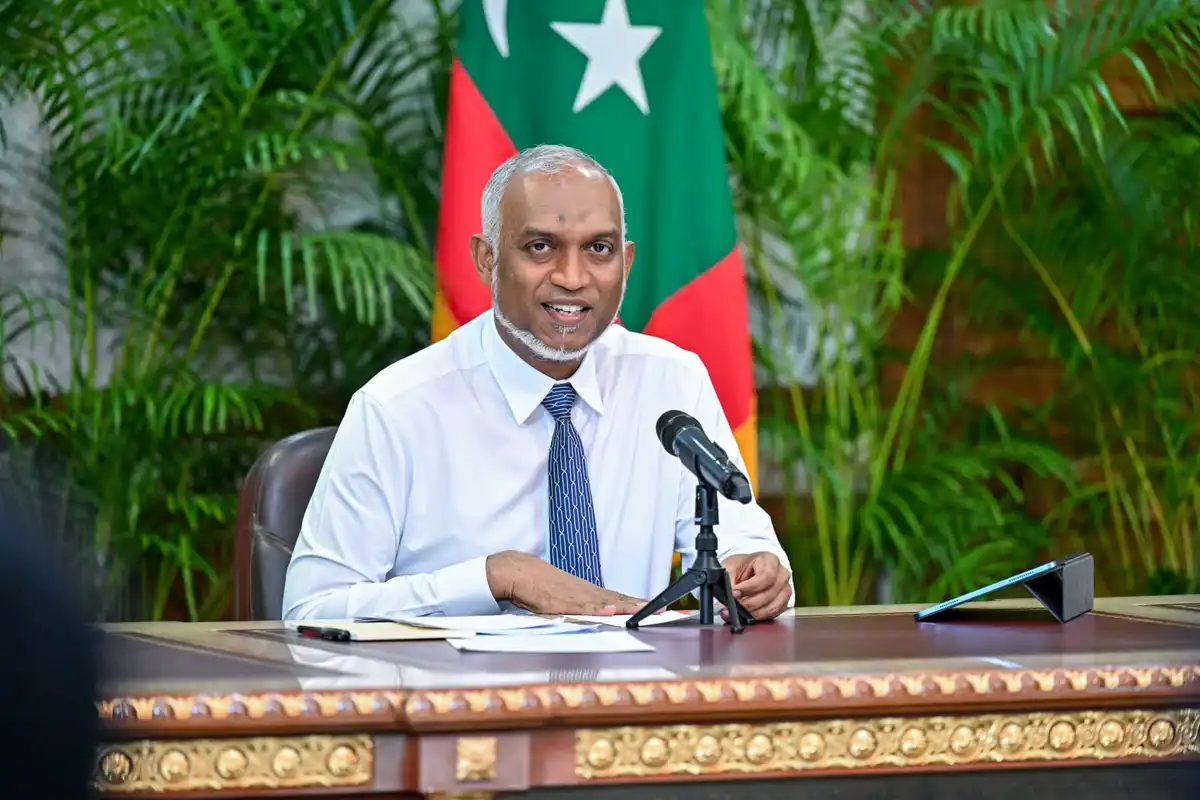
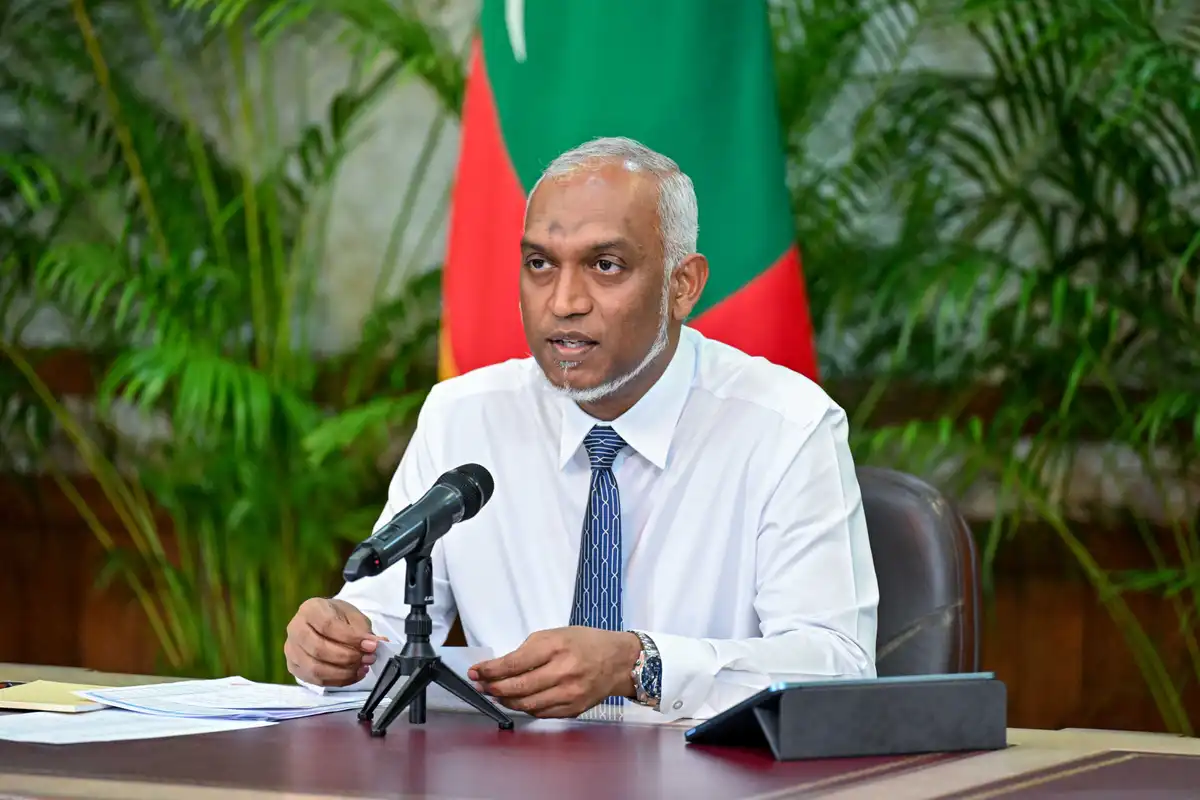
President Dr. Mohamed Muizzu has certainly not resigned from his office, nor has he stepped back from the political arena. He was visibly present on September 24 celebrating the National Day of China, and just a day earlier, on September 23, he delivered remarks at a gathering honoring the National Day of Saudi Arabia. Even so, observing recent political developments makes one wonder why people are starting to ask about the whereabouts of the head of state. However, dwelling on his physical presence misses the deeper dilemma. The truly alarming mystery centers on who is actually steering the foreign relations of the Maldives, and on whose authority, they presume to act.
While the nation's elected leader stays put at home, Speaker of Parliament Abdul Raheem Abdulla flew off to Pakistan accompanied by an extensive contingent of parliamentarians from the main ruling People’s National Congress (PNC). Over in Islamabad, public pronouncements framed the journey as a full-fledged official state visit. The itinerary quickly escaped the traditional boundaries of routine legislative networking, plunging headlong into trade negotiations, regional alliance building, defense pacts, technological cooperation, commercial ties, civil aviation, and mutual strategic defense interests between both nations.
Constitution leaves international relations solely to the head of state
The supreme law of the Maldives could hardly be clearer. Article 115 explicitly reserves the total power to formulate, execute, and direct state foreign policy exclusively for the incumbent. This constitutional mandate naturally covers the management of overseas diplomatic engagements and ties with global organizations.
Looking at the legislative branch, the Majlis Speaker is constitutionally designated to chair sittings of the People’s Majlis and manage parliamentary administration. Nowhere does the foundational legal text empower the Majlis Speaker to draft or roll out foreign policy on behalf of the Republic.
That is not to say a parliamentary leader is barred from flying abroad or rubbing shoulders with foreign legislative counterparts. Legislative diplomacy is recognized internationally as standard procedure. All the same, parliamentary pleasantries and an executive government’s formal foreign policy represent two completely distinct playing fields. That delicate line gets completely demolished the moment an official meets foreign defense leaders to talk military matters and border protection.
Unpacking the Majlis leader’s Islamabad itinerary
The tour kicked into gear on September 22, when Abdul Raheem and his legislative group held formal talks with Sardar Ayaz Sadiq, the Speaker of Pakistan’s National Assembly. The initial agenda sounded harmless enough, sticking to cross-border ties, legislative partnerships, and institutional capacity building. Things snowballed rapidly from there. The delegation pivoted into state fiscal auditing and national expenditure oversight, before gathering with the Pakistan-Maldives Parliamentary Friendship Group to barter ideas over broader economic synergy, capital financing, aviation routes, digital technology, and cultural exchanges.
The real spectacle of the tour came when Abdul Raheem arrived at General Headquarters for a high-level consultation with Pakistan’s Chief of Army Staff, General Asim Munir. Formal press releases issued in Pakistan acknowledged that this closed-door dialogue centered on global strategic security, bilateral defense cooperation, and shared geopolitical concerns.
For good measure, the Maldivian legislative head reportedly praised the Pakistani military’s contribution toward regional stability. The basic reality remains that the Constitution gives a legislative Speaker zero legal standing to negotiate or deliberate state foreign policy in such a manner.
Inevitably, uncomfortable questions demand scrutiny:
- Did anyone grant the Speaker permission to trample across these constitutional boundaries during his foreign meetings?
- Did President Muizzu have full visibility of what was unfolding?
- Did diplomats from the Ministry of Foreign Affairs have any direct hand in coordinating or attending this mission?
- Was Abdul Raheem equipped with an approved governmental briefing portfolio before he began negotiating?
- Was he speaking in his capacity as head of the legislature, as party boss of the PNC, as an unauthorized mouthpiece for the Muizzu administration, or simply acting on his own whim?
These doubts look even murkier when considering that Abdul Raheem chairs the governing PNC in addition to wielding the gavel in Parliament.
A private holiday from the capital, an official mission across the Arabian Sea
The utter contradiction in how this voyage was sold to the public on both sides borders on the absurd. Domestically, parliamentary bureaucrats informed the Maldivian press that the trip was strictly personal business and would not extract a single laari from state legislative coffers. Meanwhile, authorities in Islamabad insisted the delegation was on a formal state visit, answering an official invitation from Pakistan's own legislative Speaker.
The public deserves a straight answer from either the government or the legislature to reconcile this discrepancy. Even a self-funded traveler might be greeted with ceremonial pleasantries abroad; however, the instant an itinerary plunges into defense headquarters and security strategy, the public must know who approved it, who coordinated the meetings, and whose money made it happen. To make matters darker, several voices have openly alleged that Pakistan's intelligence apparatus, the ISI, picked up the tab.
Whispers behind heavy closed doors
If official statements raised eyebrows, leaks surrounding Abdul Raheem’s individual breakout meetings paint an even more intriguing picture. Rumors point to several explosive talking points:
- The prospect of Abdul Raheem launching his own bid for the 2028 presidential race should President Muizzu find himself unable to run.
- Solicitations for external campaign funding to back a separate political faction.
- Complaints over diplomatic friction during a prior encounter with the leader of the Indian Parliament, during which the Maldivian Speaker allegedly felt slighted.
- A proposal to form an exclusive diplomatic bloc inside the Commonwealth linking the Maldives, Pakistan, Bangladesh, and Sri Lanka.
- An agreement for a secret follow-up sit-down between the Maldivian Speaker and the Pakistani military chief in a neutral third nation.
None of these claims have been validated by authorities in Pakistan, the Maldives, Bangladesh, Sri Lanka, SAARC, or the Commonwealth Secretariat.
Reshuffling regional blocks and dodging New Delhi
The geopolitical angle behind these whispered talks warrants a closer look. The South Asian Association for Regional Cooperation encompasses Afghanistan, Bangladesh, Bhutan, India, Maldives, Nepal, Pakistan, and Sri Lanka. Out of that group, five belong to the Commonwealth: Bangladesh, India, Maldives, Pakistan, and Sri Lanka.
Cobbling together a special Commonwealth mechanism uniting the Maldives, Pakistan, Bangladesh, and Sri Lanka would effectively engineer a South Asian diplomatic vehicle that purposefully isolates India. Conflating this idea with a revitalized SAARC is fundamentally inaccurate, as SAARC operates under its own charter, administrative machinery, permanent secretariat, and established roster of member states.
The political theater of the 2028 ticket
The domestic timing adds another layer of cynicism. Only days before departing for Pakistan, the ruling PNC formally handed its 2028 presidential ticket to President Muizzu. In an ironic twist, it was party chairman Abdul Raheem himself who presented the nomination to the incumbent. Against that backdrop, rumors that he floated alternative candidacies while abroad cannot be brushed aside easily. Even without official party confirmations or hard proof to substantiate the chatter, the party base still considers President Muizzu the undisputed candidate for the 2028 contest.
Seeking clarity on executive power
The incumbent never actually left the country while these events played out, diligently performing his state duties at home. Probing where the incumbent is has never been about locating him on a map.
The real dilemma cuts to the core of institutional governance. Has the head of Parliament respected the rightful perimeter of legislative diplomacy, or has he casually usurped the executive power over defense and international statecraft that the national constitution reserves solely for the incumbent?
Full transparency is urgently needed regarding Abdul Raheem’s conduct in Pakistan:
- Under what legal mandate or capacity did he make this voyage?
- When defense and military interests were on the table, did any accredited security officials accompany him?
- Who bankrolled the travel expenses, and what was the true origin of those funds?
- Did the Speaker make any policy pledges or commitments concerning Maldivian affairs, on or off the record?
Until these ambiguities are resolved, the tension over where parliamentary outreach stops and executive foreign policy begins will keep casting a long shadow over the administration.