High Temperatures Expected Across Maldives, Straining Power Systems
28 އޯގަސްޓު 2026 | ހުކުރު 17:02The Maldives Meteorological Service has warned that the strengthening El Niño phenomenon, driven by rising Pacific Ocean temperatures, could pose significant challenges to the nation's fishing, tourism, and agricultural sectors. The agency forecasts that shifting rainfall patterns and an anticipated surge in electricity consumption over the coming months may lead to adverse economic impacts.


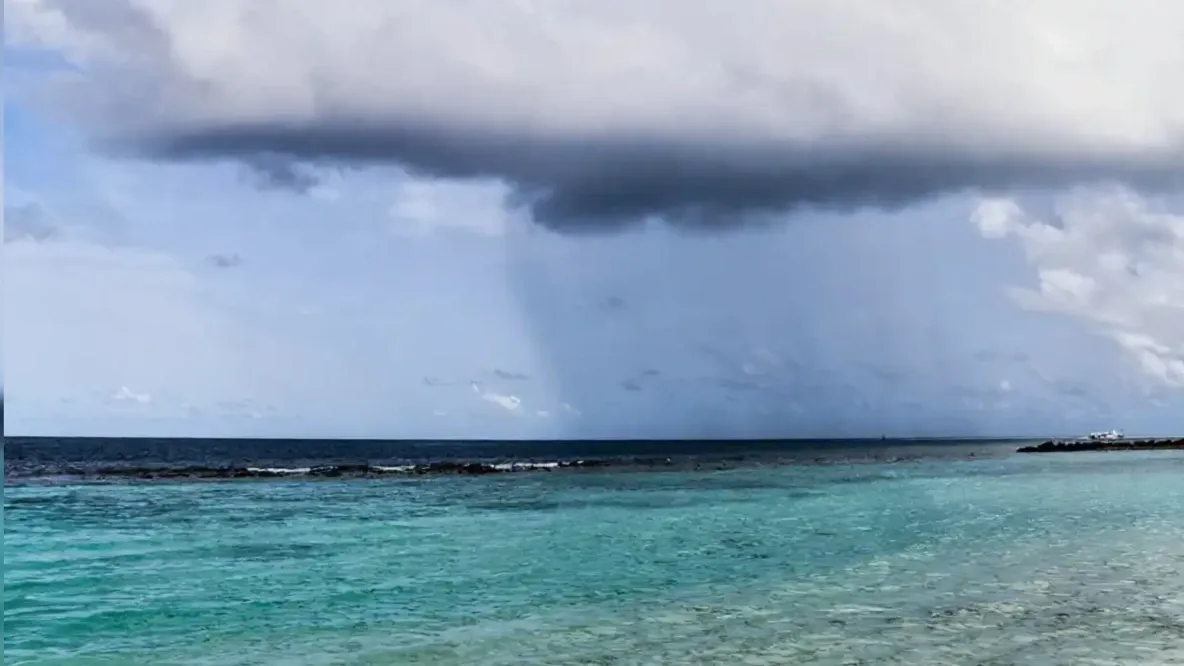
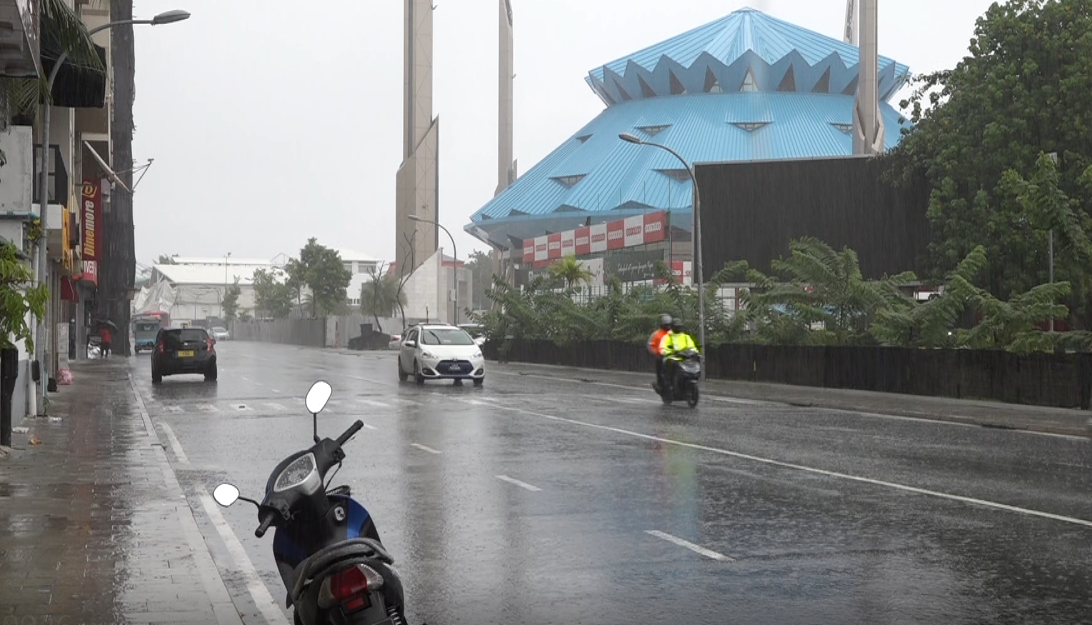
A photo taken near the Sinamalé Bridge: MMS forecasts reduced rainfall and rising temperatures from September through the end of November. | Hussein Fiyaz Moosa
The Maldives Meteorological Service has announced that temperatures across the entire country are expected to remain above average from September through the end of November.
According to the latest El Niño bulletin released by the agency, the El Niño phenomenon currently developing in the Pacific Ocean continues to intensify. Recent data indicates that sea surface temperatures in the eastern equatorial Pacific have surged to 2.0 degrees Celsius above average. Furthermore, the Niño 3.4 index reached a significant threshold of 1.8 degrees Celsius by mid-August.
Citing the Climate Prediction Center (CPC), the Maldives Meteorological Service forecasts that the El Niño phenomenon will continue to intensify through the end of 2026. The agency stated that this trend is expected to trigger significant global climate shifts, including variations in rainfall patterns, temperature fluctuations, and the frequency of storm formations.
According to rainfall forecasts, precipitation in the northern atolls is expected to be below average this September, while central and southern atolls are likely to experience higher-than-normal rainfall. However, the Maldives Meteorological Service's bulletin indicates that during October and November, rainfall is projected to exceed seasonal averages in the northern and some central atolls, whereas the southernmost atolls are expected to see below-average precipitation.
The Maldives Meteorological Service has warned that the El Niño phenomenon could pose significant threats to the country's environment and key economic sectors. Specifically, the unusual rise in sea surface temperatures threatens marine ecosystems and is likely to trigger widespread coral bleaching. The agency noted that this could adversely impact the tourism industry, which relies heavily on healthy reefs, potentially disrupting primary revenue streams.
Furthermore, the fisheries industry is projected to face significant challenges. The Meteorological Service noted that historical data from El Niño years show that changes in ocean temperatures cause shifts in the habitats of skipjack and yellowfin tuna, leading to a decline in fish catch. The office also highlighted that a reduction in the upwelling of nutrient-rich cold water from the deep ocean could potentially lead to a decrease in overall fish populations.
The bulletin also highlighted that rising temperatures associated with El Niño will increase the demand for cooling, placing significant strain on power generation systems. Furthermore, the Meteorological Service warned that shifts in rainfall patterns could disrupt agriculture and lead to a potential decline in crop yields. According to the Met Office, these challenges underscore the Maldives' extreme vulnerability to climate change, emphasizing the critical importance of proactive measures and early preparation for such environmental shifts.