Selling out national sovereignty and legal boundaries for Ras Malé housing
30 އޮކްޓޯބަރު 2026 | ހުކުރު 12:00The decision to lease a vast area of Maldivian territory to a foreign company for an extended period under the Ras Malé project has raised significant legal concerns and public apprehension. As the preliminary land allocation agreement was signed in the absence of a comprehensive legal framework to govern the project, there are widespread calls to ensure that housing initiatives are conducted in a manner that does not compromise the nation's sovereignty and independence

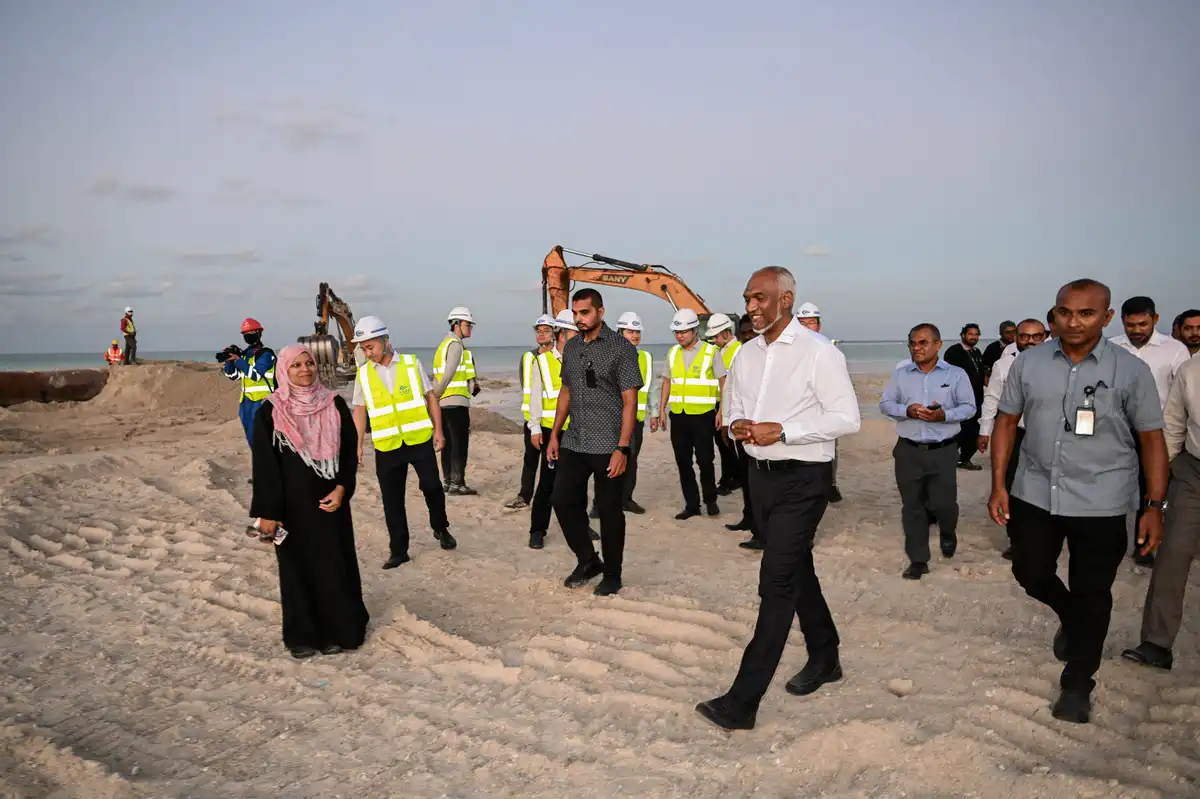
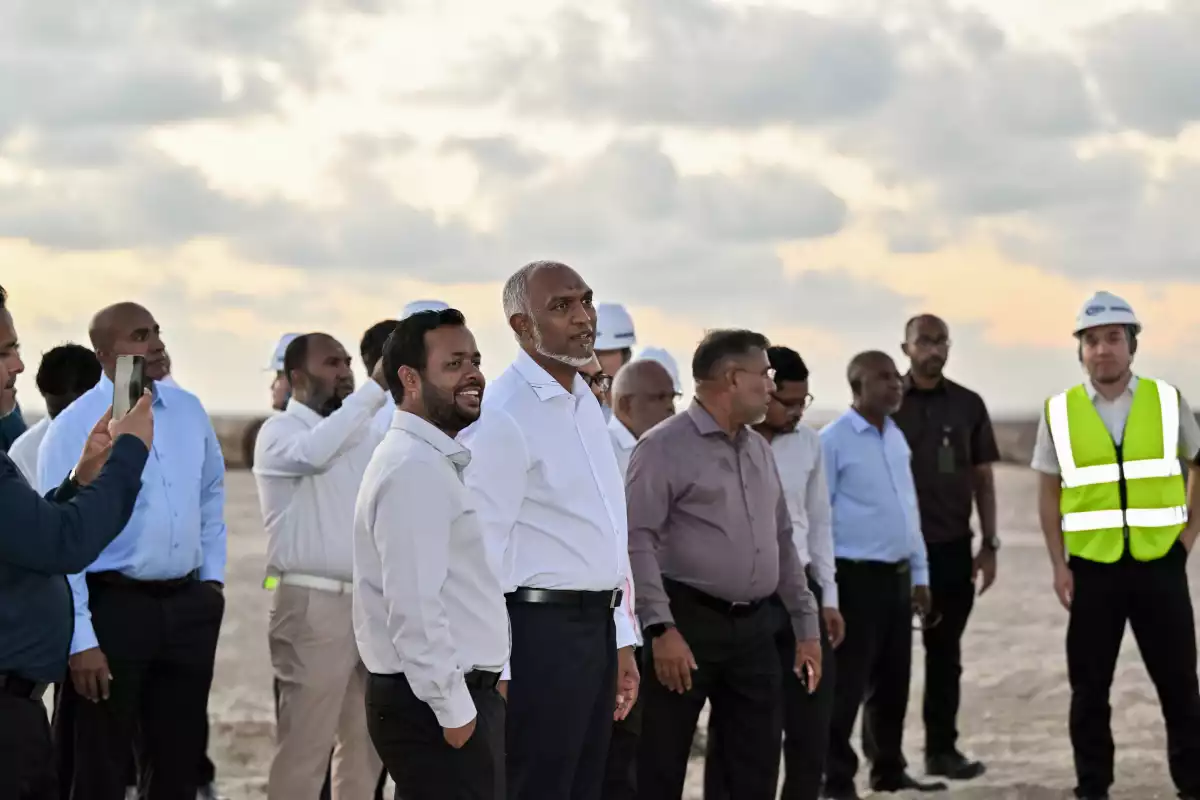
President Muizzu inspects Ras Malé reclamation work | President's Office
The constitutional mandate to alleviate the chronic housing deficit plaguing the local populace has suddenly become a convenient justification for risking the nation's self-determination and sovereign integrity, prompting justifiable public outrage demanding that the state uphold foundational boundaries.
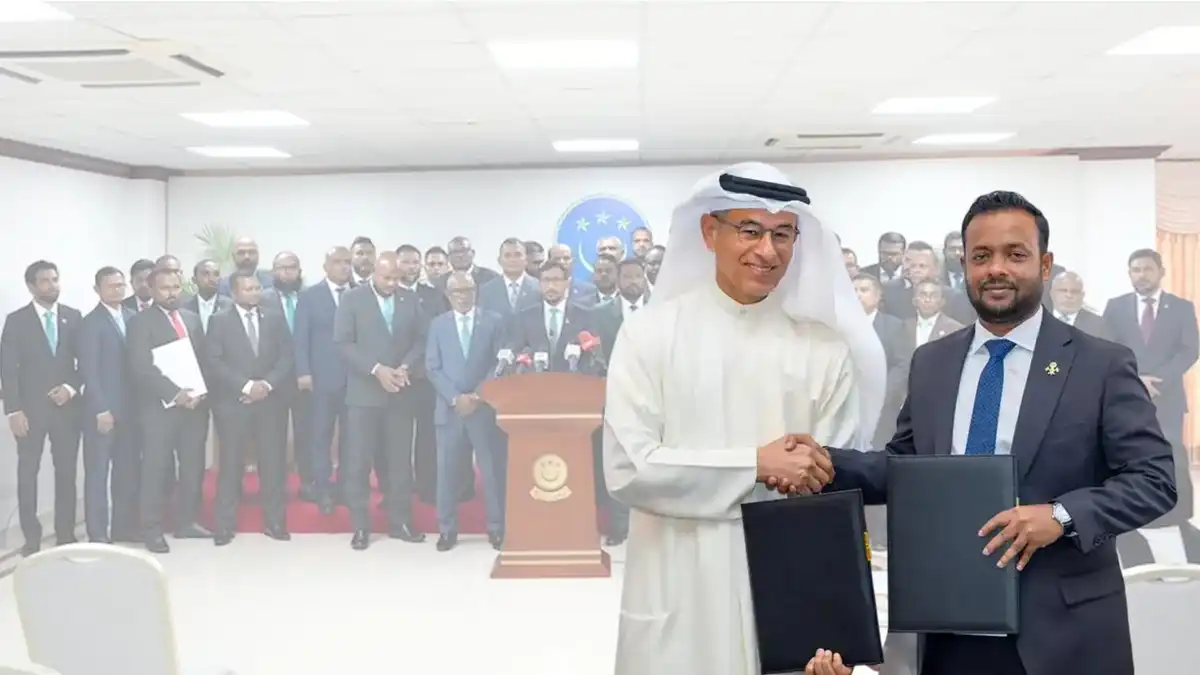
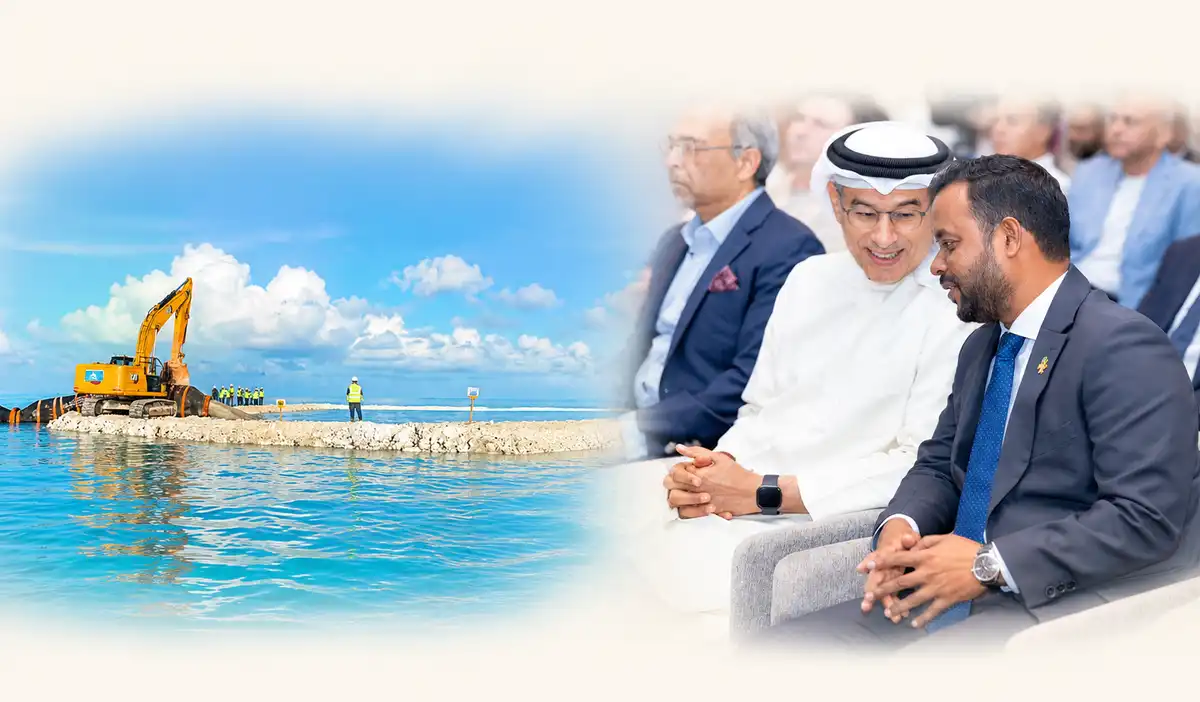
Widespread alarm is sweeping across both the legal community and ordinary citizens in response to the state’s audacious resolution to hand over extensive expanses of national territory on an extended lease to an overseas enterprise. This arrangement anchors the reclamation of Fushidhiggaru Lagoon under the banner of the Ras Malé initiative.
The supreme law of the land undeniably compels the authorities to deliver basic amenities and residential opportunities within practical limits. Even so, the executive branch enjoys no legal mandate to strip away irreplaceable sovereign assets outside established statutory safeguards merely to perform this task. Relinquishing upward of 500 hectares of territory to an external corporation, cuts directly to the core of territorial wholeness and state survival.
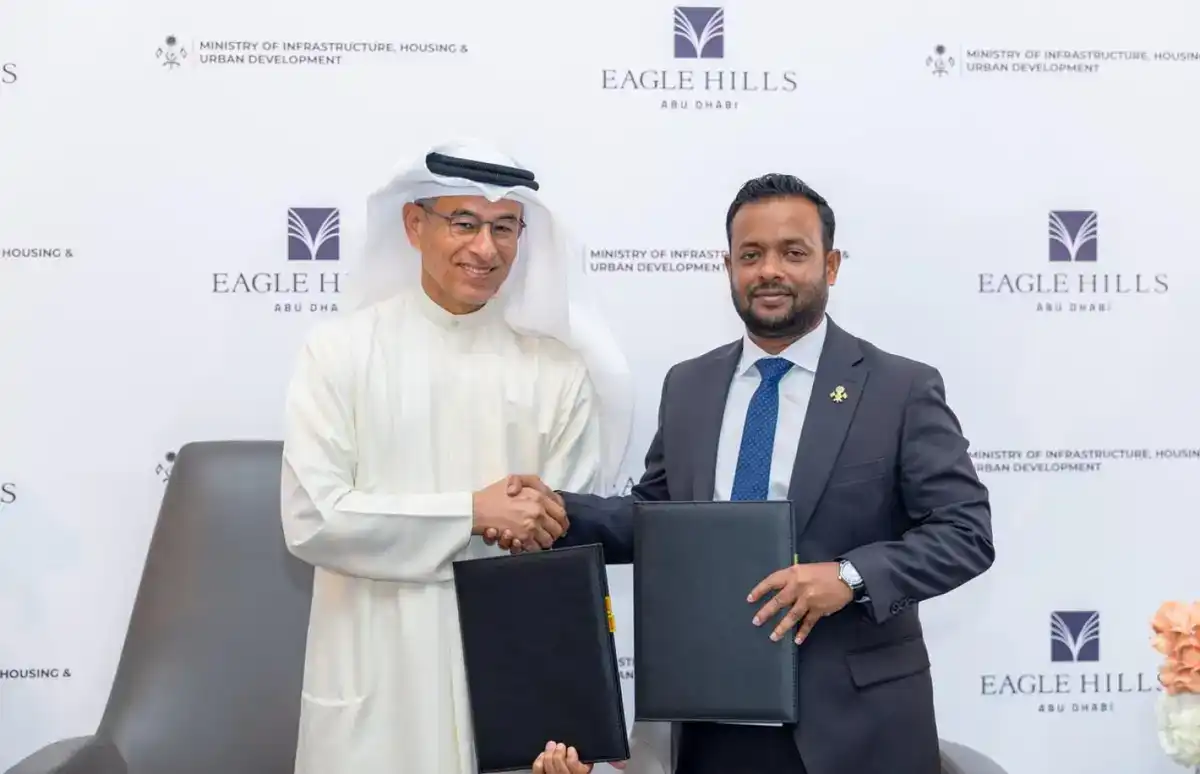
The most glaring controversies surrounding this undertaking stem straight from the procedural shortcuts being taken. Widespread consternation persists because the administration failed to publicize any clear guidelines or legal blueprint before committing their signatures to the venture’s pact.
When pushed for answers, the principal legal advisor to the state attempted to deflect scrutiny by insisting that the executed paper constitutes merely an initial letter of commercial intent. However, in the same breath, the chief law officer conceded that parliamentary approval through dedicated statute via the People’s Majlis remains mandatory to grant the legal standing required for the operation to move forward. This double-speak prompts an inescapable dilemma: exactly what jurisdiction authorized the executive to enter early pacts pledging sweeping tracts of national soil when no overarching statutory authority even exists?
No one disputes that civic expansion and shelter are pressing imperatives, nor that international capital serves as an indispensable pillar of the local economic machinery. However, economic maneuvers cannot be permitted to ride roughshod over sovereign boundaries and constitutional limits.
Land in this archipelagic state is far more than convenient financial collateral traded on an open exchange; it forms the unalterable sovereign foundation of the nation itself. Such radical resolutions demand uncompromised openness, scrutiny, and uncompromising conformity with the law.
A sitting government holds office purely to govern within the parameters set by the charter of the land. No campaign pledge for flats or visionary developmental promise can ever rank above the ultimate interests of the state and the protections enshrined in its governing text. Delivering shelter to the population and guarding sovereignty must function as unified duties, not competing alternatives. Forfeiting the latter to achieve the former invites undeniable peril for the entire country's future.