Government must accountable regarding conversion of Project Ayla into an SEZ and selection process that awarded Henley & Partners contract for residency-by-investment visa program
5 އޯގަސްޓު 2026 | ބުދަ 10:48MP Shamheed has raised serious concerns regarding the conversion of the Project Ayla resort development into a Special Economic Zone (SEZ) township, questioning the government over potential revenue losses and risks to national security. Highlighting that the move grants significant tax exemptions to wealthy foreign investors, the lawmaker warned of implications for national sovereignty and called for full transparency regarding the underlying agreements.
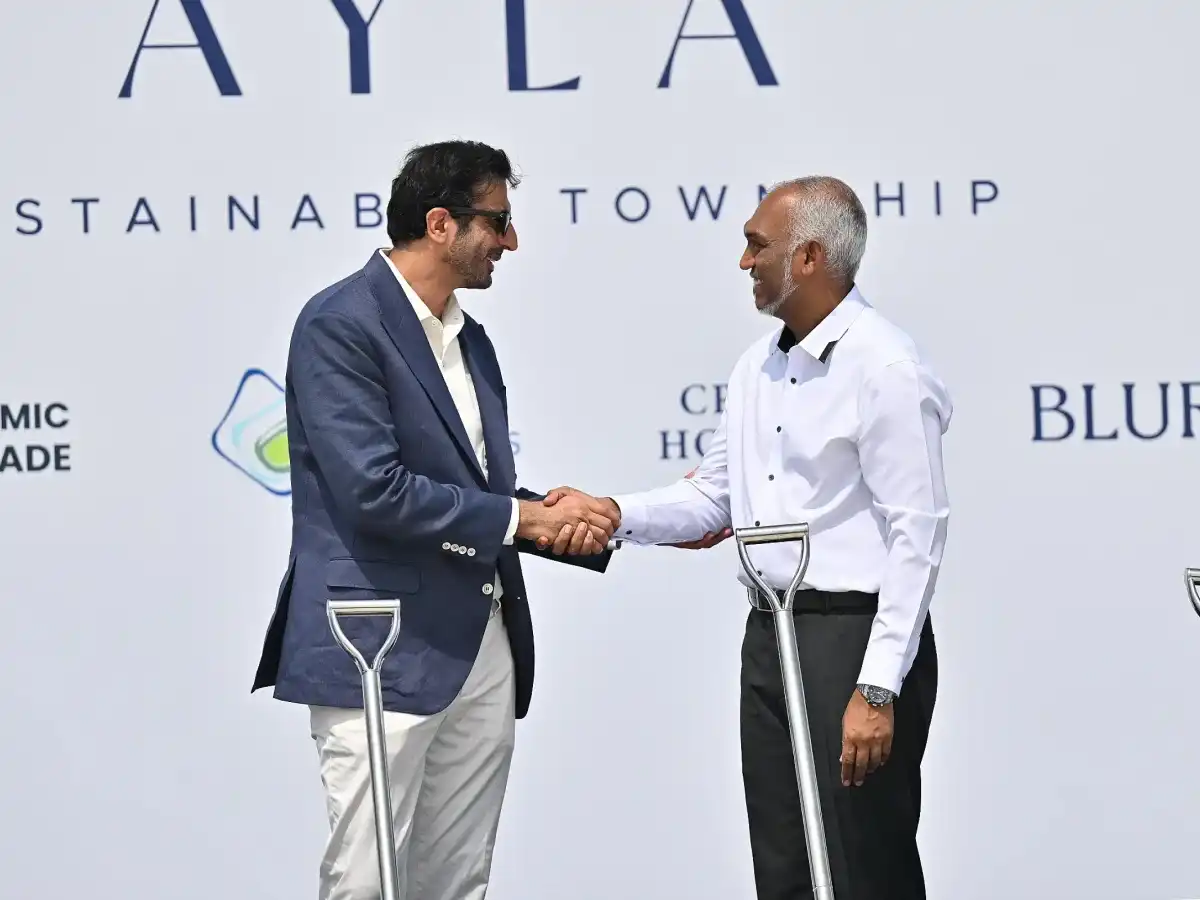
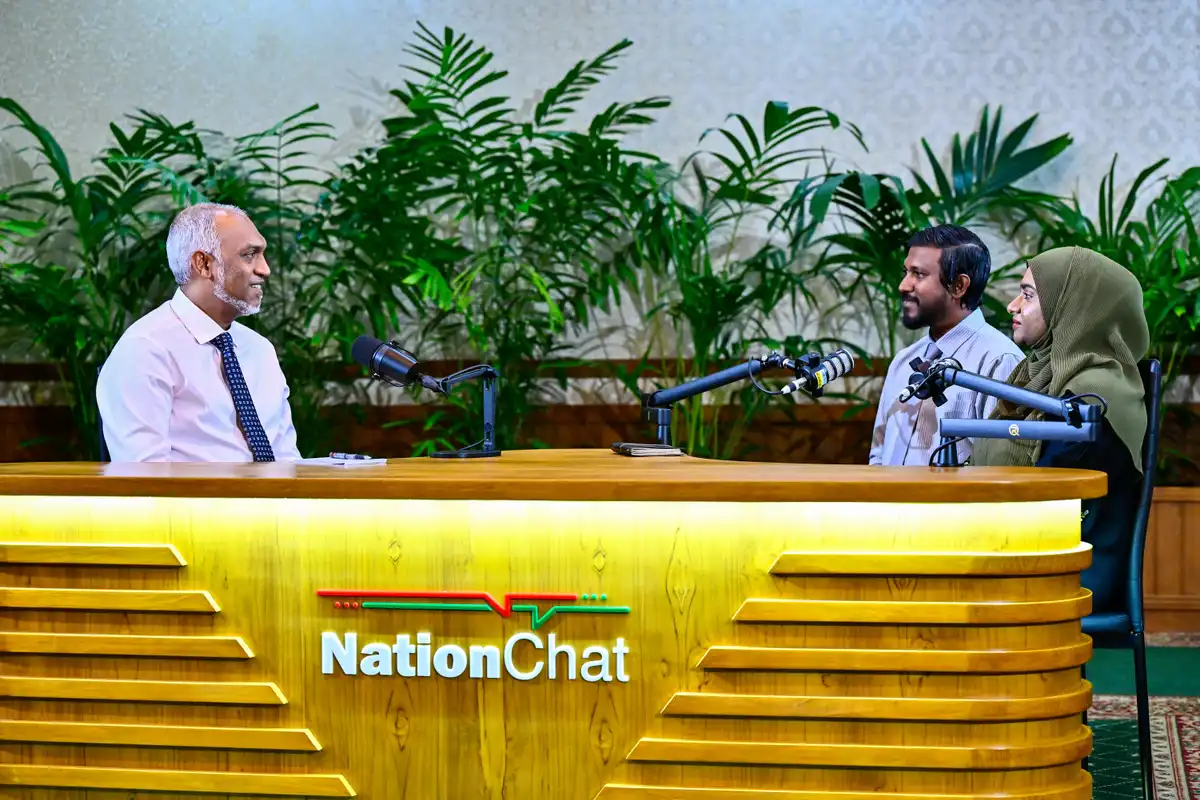
President Dr. Mohamed Muizzu attends the official launching ceremony of the "Project Ayla" tourism development project. | President's Office
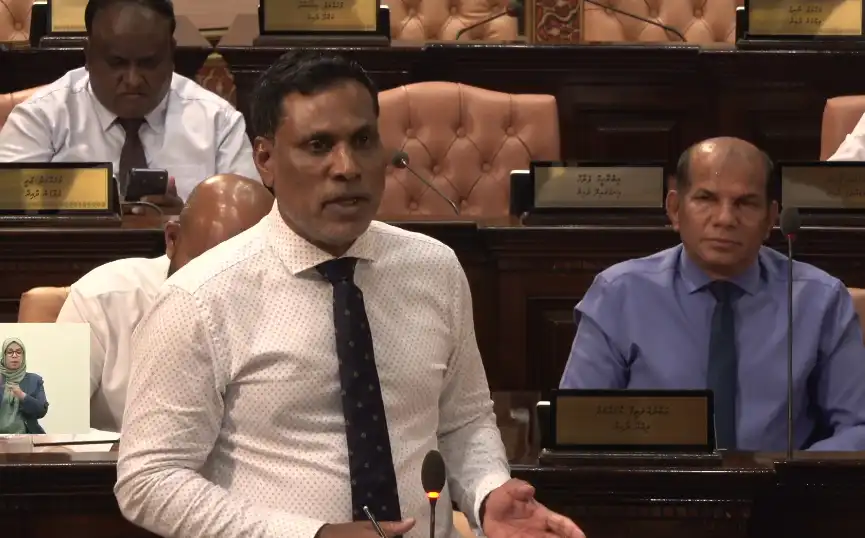
Dr. Ahmed Shamheed, the Member of Parliament for the South Hulhumalé constituency, has stated that the government must answer critical questions regarding "Project Ayla," the Special Economic Zone (SEZ) township, and the Pearl Visa program.
Dr. Shamheed noted that the previous MDP administration had originally leased this lagoon for the development of 11 islands under the "Project Ayla" initiative, which was envisioned as a 262-room "ultra-luxury" resort.
The Member highlighted that such a resort has the potential to generate between 60 to 70 million Maldivian Rufiyaa, or even more, in direct annual revenue for the government through land rent, TGST, Green Tax, and income tax.
As land reclamation for the resort development continues, President Dr. Mohamed Muizzu’s administration has amended the Special Economic Zone (SEZ) Act to introduce a new category titled "Sustainable Township."
MP Shamheed noted that less than a month after the amendment came into effect, the previously established Ayla Project was granted Special Economic Zone (SEZ) status and rebranded as a "Sustainable Township."
He stated that this matter raises serious questions for which the government must be held accountable. In a series of posts on X, Dr. Shamheed directed several inquiries toward the administration.
Was this change implemented within the legal framework?
Dr. Shamheed raised questions regarding how a 262-room resort, which had already been leased and was under active development, was converted into an SEZ township, given that Special Economic Zone (SEZ) provisions are intended for new investments and projects. He further inquired under which specific legal provision this tourism project was reclassified and which authority granted the approval.
Why was an operational, revenue-generating resort converted into a Special Economic Zone (SEZ) entitled to tax incentives?
He also questioned whether the government had conducted a financial impact assessment on the potential loss of revenue resulting from the decision to abandon the traditional resort model. He further inquired about the projected annual revenue if the site were operated as a resort compared to the estimated earnings from the current township model. He noted that industry experts believe the state will receive only a fraction of the revenue it would have gained from a resort, due to the extensive tax and customs duty exemptions granted under the Special Economic Zone (SEZ) framework. Furthermore, he asserted that the government must disclose the comparative figures for both models to allow the public the opportunity to evaluate the financial implications.
Why are foreign billionaires being granted more significant tax concessions than Maldivian citizens?
Dr. Shamheed noted that Maldivians are currently required to pay an 8 percent GST when purchasing housing from the general market. However, he pointed out that transactions within these designated townships could potentially see tax rates reduced to as low as 1 percent. He questioned why wealthy foreign investors purchasing luxury properties within Special Economic Zones (SEZs) are being offered more favorable terms than Maldivian citizens buying homes in their own country.
What will be the benefit of this to the entire Maldivian economy?
Dr. Shamheed noted that the government repeatedly characterizes purchasing property in these locations as an "investment." However, he pointed out that when an individual buys an apartment for $250,000, the vast majority of those funds go directly to the developer. He questioned how much of that money actually enters the state treasury, what portion is integrated into the Maldivian banking system, and how much of that investment is required to circulate within the broader local economy.
What is the current status of customs and border security?
Dr. Shamheed stated that Special Economic Zones (SEZs) are granted significant customs concessions. Consequently, he emphasized that the government must clarify the extent of Maldives Customs Service's jurisdiction over goods entering these townships. He also questioned whether Customs retains the legal authority to inspect warehouses, residences, and commercial premises within these zones whenever necessary. Furthermore, he called on the government to identify which authority would be responsible for monitoring goods entering through the township’s marina. He stressed that the government must provide assurances that SEZ incentives will not serve as a gateway for the smuggling of prohibited or dangerous items into the Maldives.
Who bears the ultimate responsibility for national security?
Dr. Shamheed highlighted that under this project, a distinct community will be established on Maldivian soil under the management of a private company. This development is set to include residential areas for expatriates, private schools, healthcare facilities, commercial centers, a marina, and financial services.
"Who truly knows the identity of the occupants living in every household?"
He also questioned which authority is responsible for conducting background checks, verifying the source of funds, and ensuring compliance with international sanctions.
Why was Henley & Partners selected?
Dr. Shamheed stated that the government must explain its decision to select Henley & Partners, a firm that has faced significant international criticism regarding its investment migration programs.
"Was this company selected through a competitive bidding process? What exactly is their role in this project? How much revenue does the company generate per application, and what is the state's share?" Dr. Shamheed further asserted that since this is a matter of significant public interest, the agreement between the government and Henley & Partners must be made public.
During the Maldives-Singapore Business Forum held in Singapore last July, the government signed an agreement with Henley & Partners to introduce a 'Residence by Investment' program in the Maldives. However, the government did not disclose how the firm was selected for this initiative at the time. Furthermore, details regarding the commercial transactions involved in this deal have not been made public.
Speaking to the press on March 26 of this year, Economic Minister Mohamed Saeed stated that the government is working with the Attorney General's Office to finalize the legal framework for a foreign visa scheme designed to facilitate this project.
"We are working in collaboration with Henley & Partners, a firm that operates in numerous countries worldwide and possesses an extensive global network," the Minister stated.
Saeed stated that this initiative is part of broader efforts to diversify the Maldivian economy and expand opportunities for those seeking long-term residency in the country.
Stop comparing this program to an ordinary investment residency program.
The member stated that this is the most deceptive argument surrounding the issue. While noting that he does not oppose investment residency programs, Shamheed pointed out that such initiatives exist in many countries; however, under standard residency programs, foreigners are permitted to reside and invest only within the country's general economic and legal framework.
"However, what is being created here is something entirely different."
He noted that the residency would be granted through a framework encompassing a Special Economic Zone (SEZ), a designated territory, foreign property ownership, tax and customs incentives, and a specialized suite of services.
"This cannot be compared to a standard investment visa."
Our islands and lagoons are the nation's most precious resources.
The member further highlighted that land availability in the Maldives is extremely limited.
Our islands, reefs, and lagoons represent the most precious heritage we must preserve for future generations. As demonstrated by the concerns surrounding Faafu Atoll, the leasing of vast areas to foreign entities remains a matter of profound public anxiety for the Maldivian people.
He questioned why public opinion was not sought prior to the implementation of such a large-scale project.
"Why are these agreements being kept secret? Why is the Maldivian public being kept in the dark?" Shamheed questioned.
Is this an economic zone, or is it a state being created within the state?
Dr. Shamheed stated that the Parliament has every right to question a project of this nature, which involves foreign nationals, private ownership, a demarcated territory, special tax and customs exemptions, as well as independent schools and hospitals. He further questioned at what point such a project, conducted under the guise of a Special Economic Zone (SEZ), transforms into a foreign enclave beyond the jurisdiction of the Maldives.
What are the successful international examples of this?
Dr. Shamheed stated that the government must identify a country where citizens have achieved long-term benefits by allowing foreign ownership of property within privately developed Special Economic Zone (SEZ) townships. He noted that it is insufficient to merely reference investment visa programs in countries such as Malaysia or Portugal.
"Show me another project that compares to this one."
The member noted that the international precedent for this is the "ZEDE" experiment conducted in Honduras. Those autonomous economic zones created significant challenges regarding national sovereignty and legal jurisdiction, ultimately leading the country's Supreme Court to declare them unconstitutional.
Dr. Shamheed stated that before embarking on a project of such generational magnitude, the government has a responsibility to clarify three key issues.
These are the key questions: Is this legally permissible? Will this yield greater economic benefits for Maldivians than the previous project? And will this fully safeguard the sovereignty and national security of the Maldives?
Dr. Shamheed stated that as long as the government fails to provide transparent answers to these questions, it is imperative for both Parliament and the public to continue raising concerns regarding the matter.