Benevolence masking calculated blunders in Pres. Muizzu’s latest U-turn
5 އޮކްޓޯބަރު 2026 | ހޯމަ 09:14Following growing concerns within the tourism industry regarding the recent amendment to the GST Act—which imposed taxes on foreign travel agents—the President has decided to reverse the decision. This policy change comes shortly after the law’s implementation, prompted by concerns over potential adverse impacts on the Maldivian economy. Consequently, the Minister of Tourism has announced that the TGST Act will soon be amended to align with the destination principle


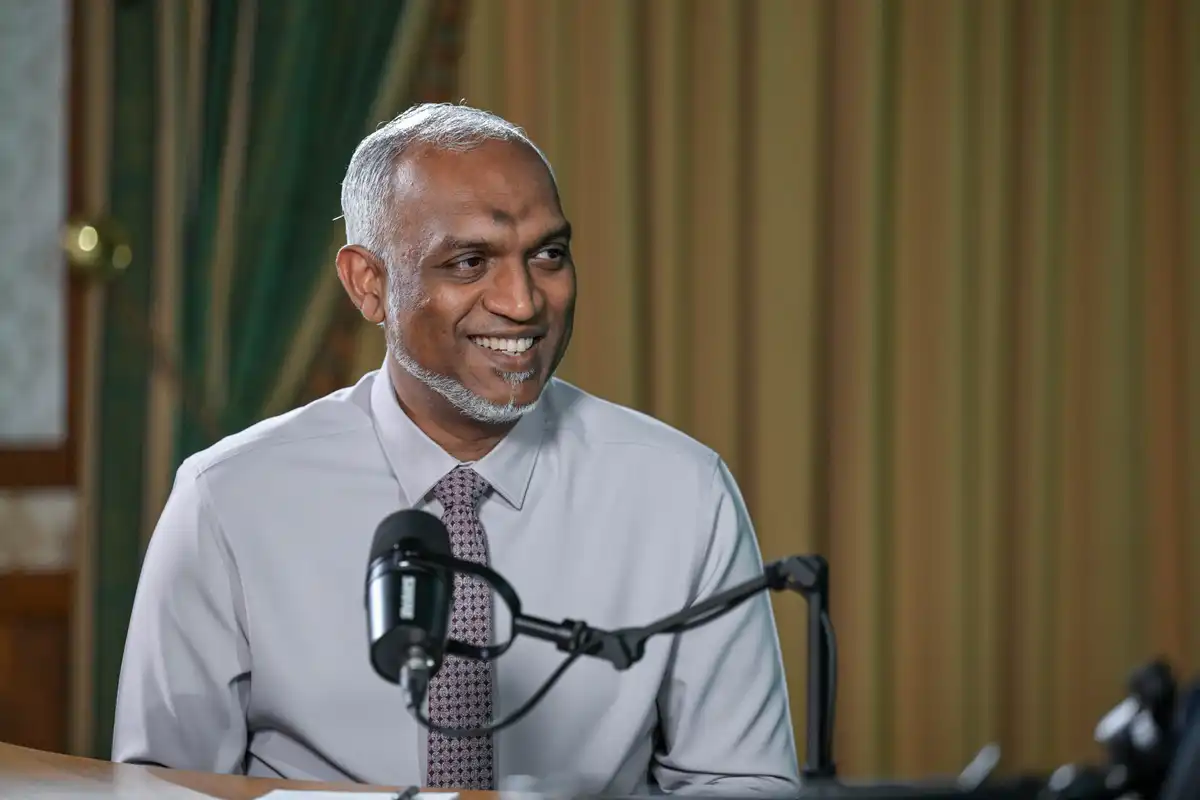
President Dr. Mohamed Muizzu and Minister of Tourism and Civil Aviation Mohamed Ameen | Transport Ministry
Citizens remain deeply fractured over the true nature of the sitting head of state, Dr. Mohamed Muizzu. Observers argue endlessly over whether his governance stems from fundamental ignorance, raw obstinacy, or an authoritarian impulse driven by unchecked ego that inflicts substantial injury across the country.
These assessments capture the souring public sentiment surrounding the administration. At the heart of the critique lies the head of state’s habit of staging what popular parlance labels a jarring, total deception on policy.
The established routine involves plowing ahead with ill-advised measures while brushing aside explicit warnings from specialists and affected parties, only to scramble back to square one after the initial destruction has already taken root.
Folklore recounts that the great deception attributed to the islanders of Vashafaru served as a shrewd, practical maneuver that actually paid dividends.
However, for Dr. Muizzu, who traces his family lineage to Vashafaru, these executive flip-flops materialize only after the republic and its population have shouldered heavy losses.
The latest retreat casts fresh doubt on the regime’s baseline competence while dragging the leader's island heritage under an unfavorable spotlight. Scrambling to manage an unrelenting U.S. Dollar deficit, the regime meddled heavy-handedly in the tourism industry.
This campaign featured hostile, disparaging remarks aimed directly at resort operators alongside an unconsulted fiat compelling luxury property to offload 40 percent of their foreign exchange revenue via the monetary authority.
At the very same juncture, authorities rolled out fresh tax codes aimed at overseas tour agencies without bothering to evaluate the fallout beforehand.
The blowback arrived without delay. International travel wholesalers escalated far beyond mild grumbling by presenting an outright ultimatum. These entities warned that such regulatory shocks risked upending the primary pillar of the entire Maldivian financial structure, cautioning that they stood ready to halt tourist flows to the archipelago completely.
Even as formal diplomatic and commercial objections poured in from several foreign capitals and global allies, bureaucracy initially yawned, waving away the alarm bells while digging its heels into the sand.
That grand posturing evaporated in record time. Confronted with the immediate specter of complete financial ruin and the total surrender of grip over the hospitality trade, the ruling circle staged a frantic retreat. Merely 72 hours into the rollout of the controversial fiscal levies, the palace declared that Dr. Muizzu was seeking statutory revisions to undo his own decree.
Tourism Minister Mohamed Ameen stepped up as the regime's messenger during a gathering commemorating National Tourism Day to formally reveal the capitulation. Fronting the mounting panic, the minister conceded that state officials had recognized profound disquiet across resort executives and worldwide travel brokers regarding the updates to the goods and services tax statutes.
The minister explained that these industry anxieties focused squarely on the rushed rollout schedules and underlying technical mechanisms. He verified that following a flood of formal petitions submitted straight to the presidential office by trade figures, the head of state had chosen to overhaul the tourism tax framework along destination-based tenets in a bid to ease the fiscal squeeze on the hospitality sector.
Delivering remarks intended to clear the air that evening, Ameen announced that the chief executive had authorized prompt legal rewrites based on destination principles to establish operational transparency.
Though the presidential mansion now schemes to spin this frantic climb down as a generous demonstration of executive compassion, it simply mirrors the regime's tired, destructive playbook. The supposed fix surfaced only after the primary economic engine of the nation absorbed palpable trauma, visibly destabilizing accommodation reservations and gutting global trust.
By treating specialist guidance with contempt until catastrophe was unavoidable, the administration executed yet another expensive deception, leaving regular citizens to clean up the wreckage.