Establishing a new office to manage traffic in GMR, despite existence of an elected council and thousands of traffic police officers?
13 ޖުލައި 2026 | ހޯމަ 20:25The establishment of the "Greater Male' Transport and Mobility Office" to address regional traffic issues is expected to increase state expenditure and undermine the decentralization system. This decision is viewed as an attempt to curtail the powers of the City Council while expanding political influence, directly contradicting the government's stated policy on fiscal austerity.
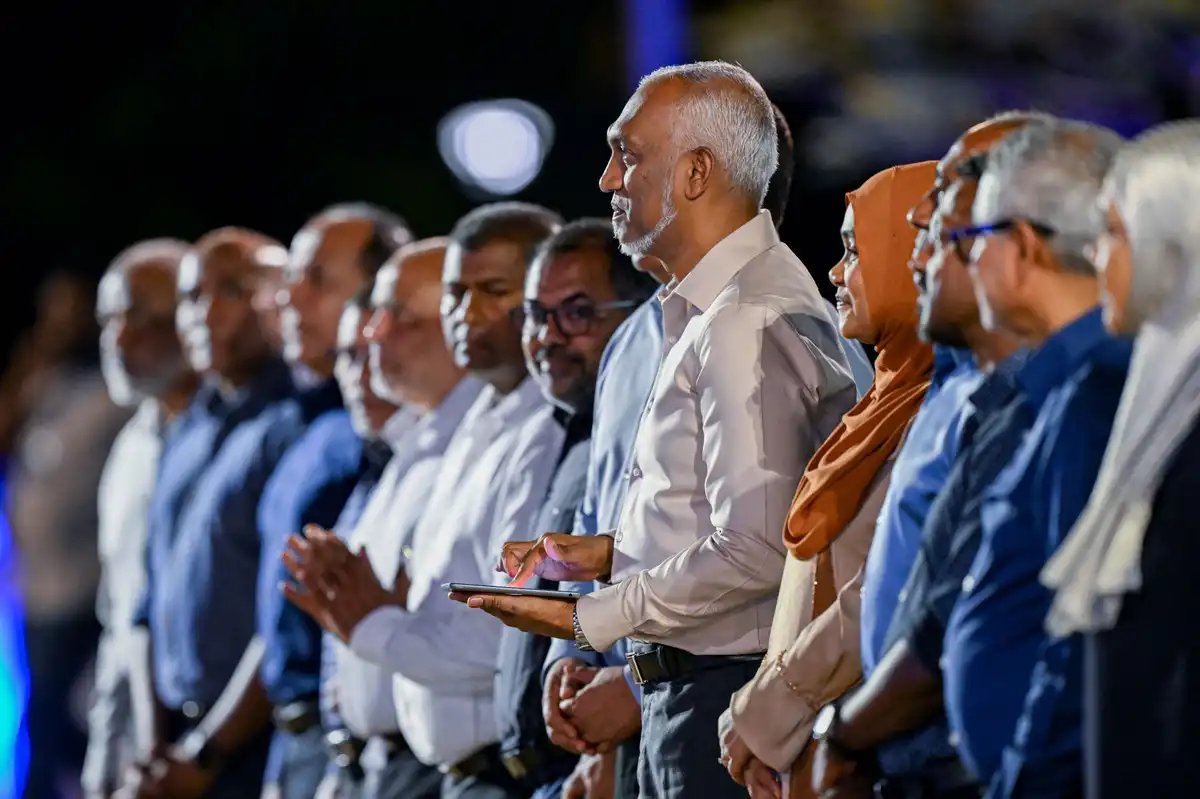
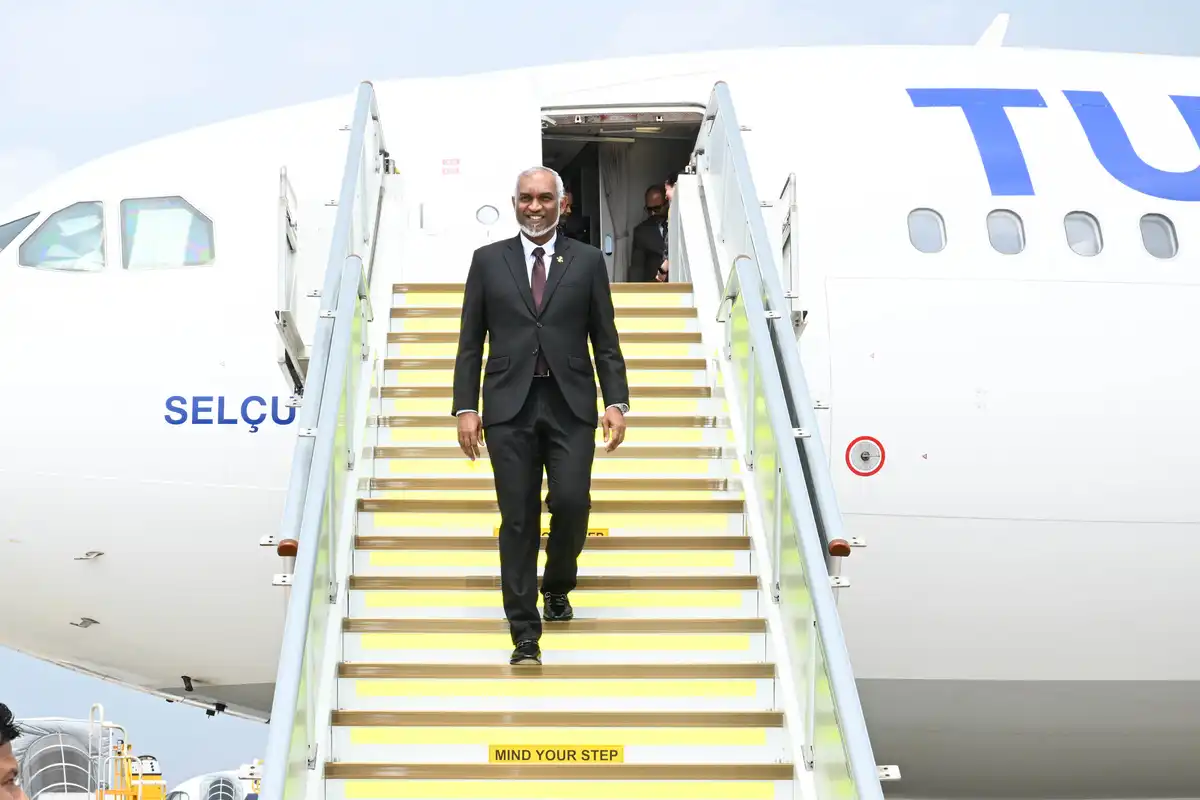
President Dr. Mohamed Muizzu at an event. | Presidents Office
President Dr. Mohamed Muizzu’s administration assumed office on the promise of managing state funds with integrity and fiscal responsibility. The government assured the public that it would stabilize the economy and utilize state resources with full transparency. However, the solution currently being offered by this administration for every emerging issue appears to be the establishment of new offices and the creation of additional political positions.
The establishment of the "Greater Male' Transport and Mobility Office" was carried out in the same manner. This initiative represents the government's solution to the issue of traffic congestion in the Male' region.
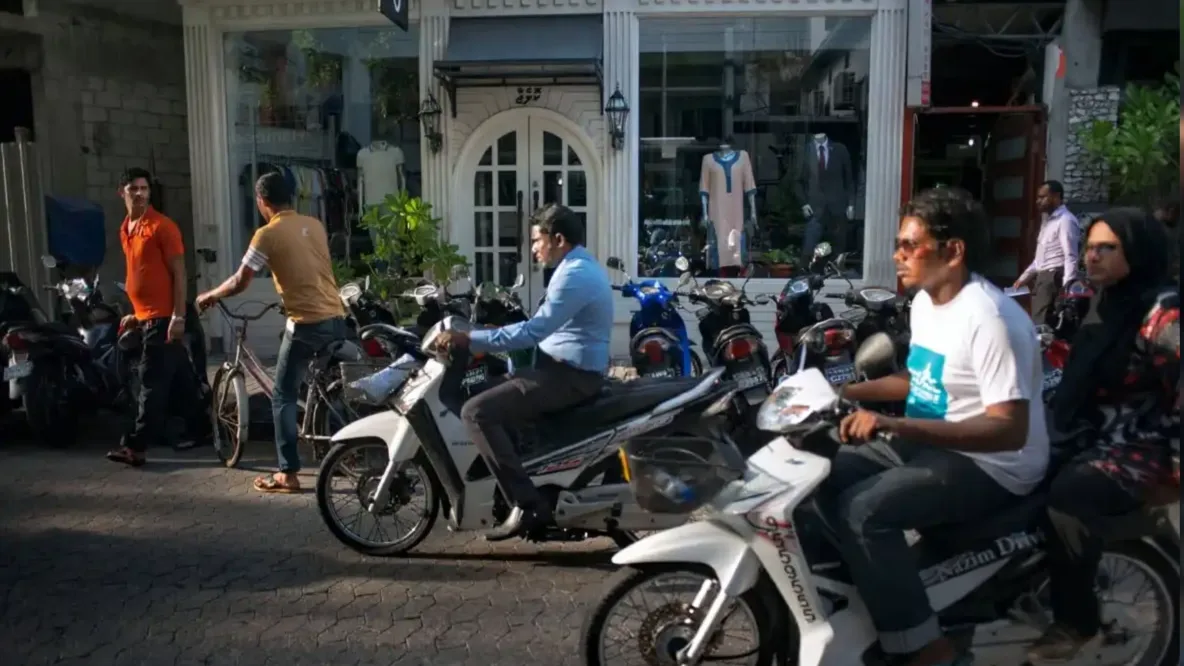
The Maldives Police Service already maintains a significant force dedicated to enforcing traffic regulations. Furthermore, Male' City Council also employs numerous personnel specifically tasked with monitoring and managing street-level activities.
Furthermore, a massive Transport Ministry already exists. Its mandate is clearly defined, and specific departments have been established to carry out its functions. Given this, what is the hidden motive behind the sudden decision to create an additional office within the Ministry?
This is because the legal authority of these institutions has not diminished. There is no shortage of police officers to manage traffic in the Maldives. Therefore, by what logic has the decision been made to establish yet another agency to utilize state resources, rather than compelling these existing taxpayer-funded institutions to deliver results?
The office's mandate includes collaborating with relevant authorities to formulate and implement programs aimed at alleviating traffic congestion in the Greater Male' Area. It is also tasked with advising stakeholders on the development of comprehensive policies to address the gridlock caused by the increasing number of vehicles. Furthermore, the office will play a leading role in modernizing the region's transportation system, identifying contemporary solutions for parking facilities, and overseeing the implementation of such infrastructure developments.
However, it must be noted that specialized departments for each of these functions are already established within state institutions. These are all currently active and operational entities.
With the establishment of every new office, additional costs are incurred for directors, staff, vehicles, and equipment, alongside the expenses for office premises and ongoing administrative overheads. These represent recurring expenditures that must be sustained indefinitely through the public purse.
At a time when the government repeatedly asserts that the nation's financial situation is dire and expenditure must be curtailed, the creation of a new agency highlights a significant discrepancy between their rhetoric and actions. Or perhaps, there is a hidden political motive behind this move?
It is difficult not to view the President’s decision to establish an entirely new office—tasked with responsibilities that fall under the City Council’s mandate—as a direct consequence of the ruling party recently losing its majority in the Male’ City Council. This new office is mandated to play a leading role in modernizing the Male’ area’s transport system, establishing parking facilities, and implementing other contemporary urban solutions. The City Council’s role in executing these very tasks is significant, making the overlap in jurisdiction particularly notable.
Therefore, it is more likely that this office was established because the government lost political control over an elected institution. Had there been a genuine desire for a swift solution to Male's congestion, there were no obstacles preventing the government from strengthening its relationship with the City Council, providing additional resources to the Traffic Police, or bolstering the enforcement powers of existing institutions. None of these measures would have required an expansion of the administrative framework.
Instead, the government has opted for a solution that expands the influence of the central government while diminishing the role of local governance established under the decentralization system.