Spending on salaries and benefits surges under President Muizzu’s administration
12 ޖުލައި 2026 | އާދީއްތަ 20:48State expenditure has surged by 21.7 percent compared to last year, primarily driven by rising spending on salaries and allowances for political appointees. This fiscal strain is further exacerbated by a significant increase in subsidy costs due to rising global market prices. Despite government pledges to implement austerity measures, official statistics indicate that administrative operational costs have spiraled out of control.

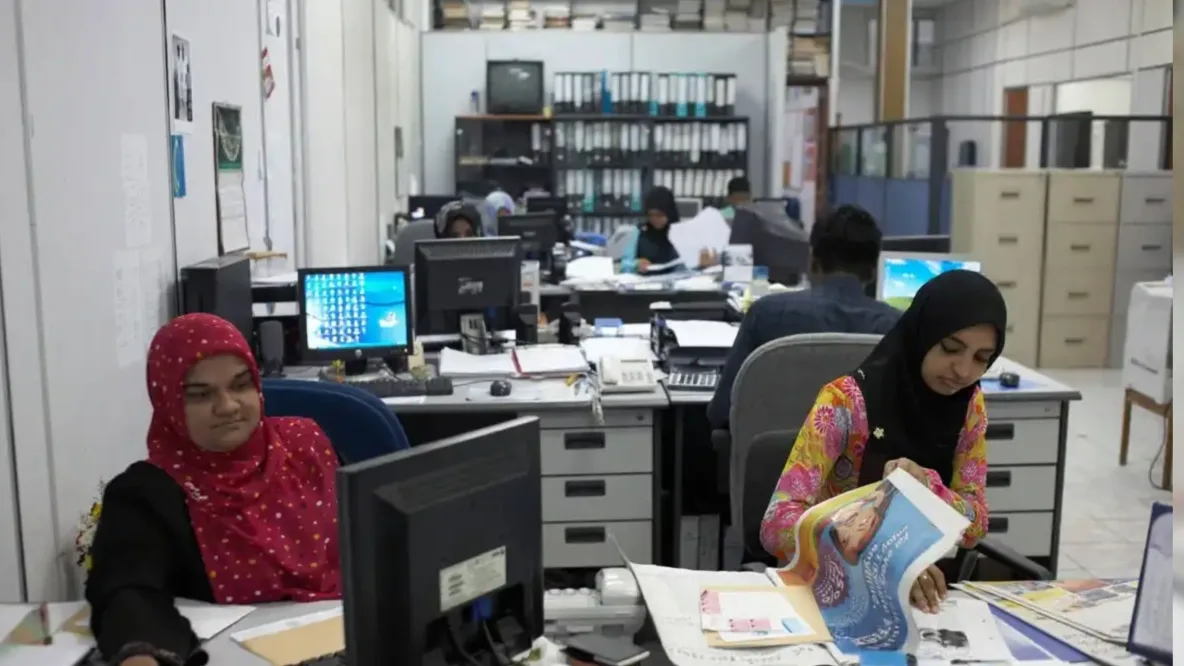
Employees within a government ministry are currently engaged in their work. | Alamy
Statistics released by the Ministry of Finance reveal that government expenditure has increased significantly so far this year compared to the same period last year, with spending on employee salaries and benefits rising sharply.
According to official data released through July 2, total government expenditure has reached MVR 23.4 billion. This marks a significant increase of MVR 4.2 billion, or 21.7 percent, compared to the MVR 19.2 billion spent during the same period last year.
The primary driver behind the significant surge in expenditure is the rising cost of civil service salaries and benefits. According to official statistics, spending on wages and allowances alone has reached MVR 3.7 billion. This represents a 13.9 percent increase compared to the previous year.
Total expenditure on salaries and pensions has now reached MVR 8.0 billion. Although the government continues to claim it will "rightsize" the civil service by reducing staff numbers, the reality on the ground suggests otherwise. The primary driver behind this surge in personnel costs is the unprecedented increase in political appointments, which has now surpassed the levels of any previous administration.
Government spending on subsidies to stabilize the prices of essential goods and services has surged by 1.4 billion Rufiyaa so far this year.
The government maintains that these expenditures are necessary to ensure the uninterrupted delivery of public services and to fulfill obligations regarding the harmonization of civil service salaries.
However, economic experts point out that the increase in political appointments and administrative spending at a time when state expenditures must be curtailed is a matter of concern. While the government maintains that it is implementing a cost-cutting policy, statistical data suggests that spending is spiraling out of control. In particular, the significant rise in wage expenditures compared to last year raises serious questions regarding the government's "right-sizing" policy.