Cancel culture within Muizzu administration: from policy halts to national governance
11 ޖުލައި 2026 | ހޮނިހިރު 12:08President Dr. Mohamed Muizzu's administration is facing criticism for a pattern of abruptly canceling policies, media briefings, and public forums to avoid accountability. This habit of dismantling initiatives extends to the mass firing of political staff and the sudden banning of commercial sectors, leading to a breakdown in transparency and trust.

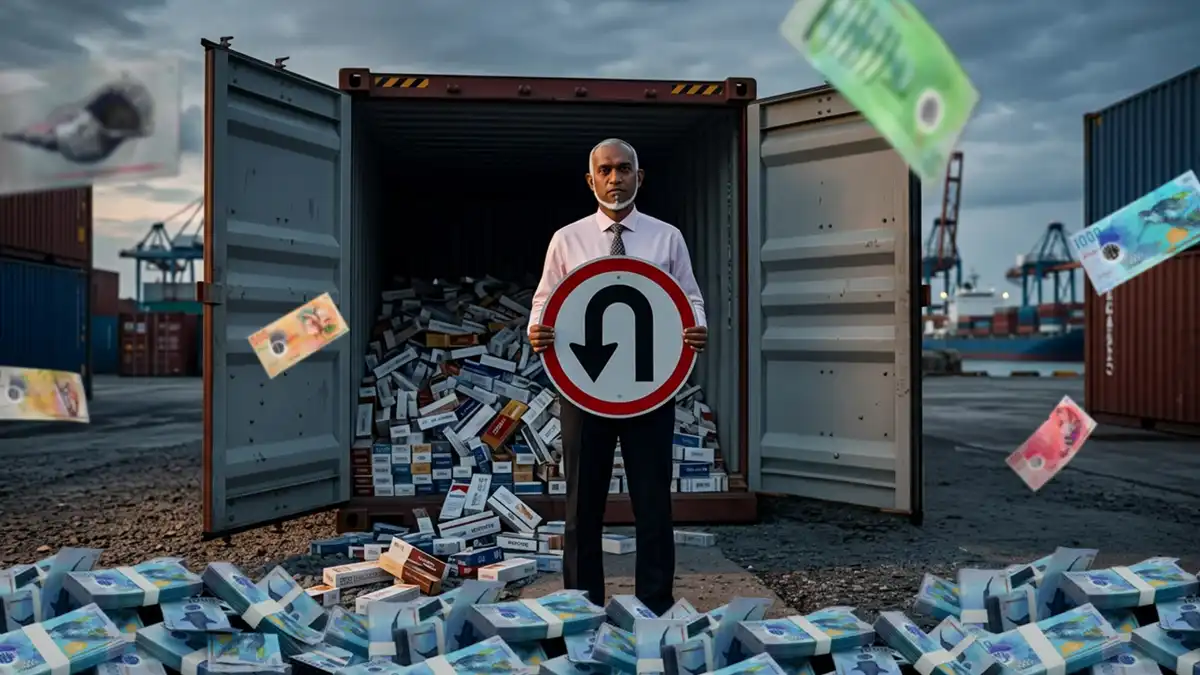
Despite President Muizzu’s recent assertion that there would be no "U-turn" on tobacco duties, the government has decided to significantly reduce cigarette prices. | Raajjemv graphics
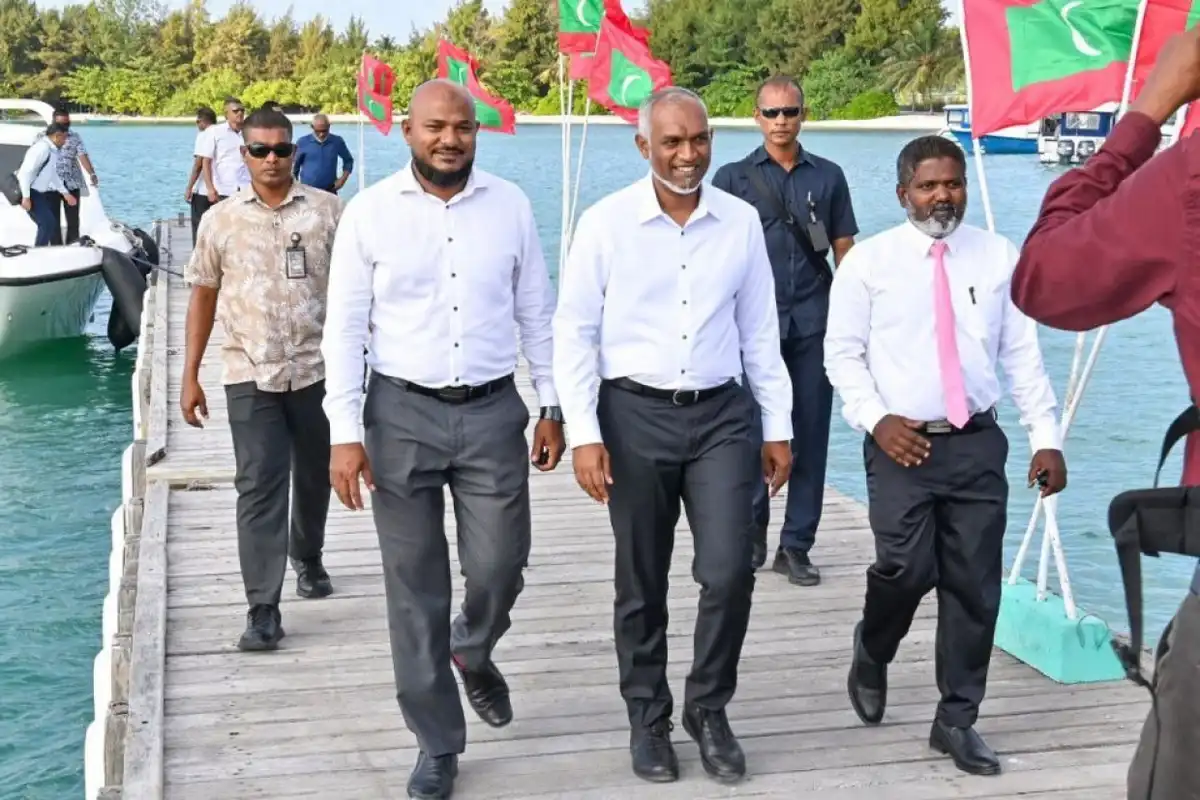
When the Maldivian electorate handed a resounding mandate to President Dr. Mohamed Muizzu, they did so with sky-high expectations. Instead, the defining hallmark of this administration has become a toxic habit of abruptly shutting down crucial policies, massive public infrastructure projects, and various high-profile state activities.
The early campaign promises of transparency, absolute openness, and listening to the collective voice of the citizenry have been replaced by an exhausting routine.
Every single government initiative kicks off with loud trumpets and flashy headlines, only to be quietly suffocated or completely dismantled the very second it encounters public backlash or internal political friction.
This addictive reflex to scrap everything has contaminated the entire state framework, swallowing up social welfare policies, administrative structures, and the very platforms meant for public engagement.
Objective observers now openly mock the administration as a regime that rubber-stamps a decree in the morning only to completely wipe it from existence by nightfall.
The entire state machinery looks paralyzed, trapped in a loop of constant cancellations that impacts media briefings, public forums, ministerial hirings, political staff, commercial business permits, and even basic community entertainment.
Dodging accountability in the media room
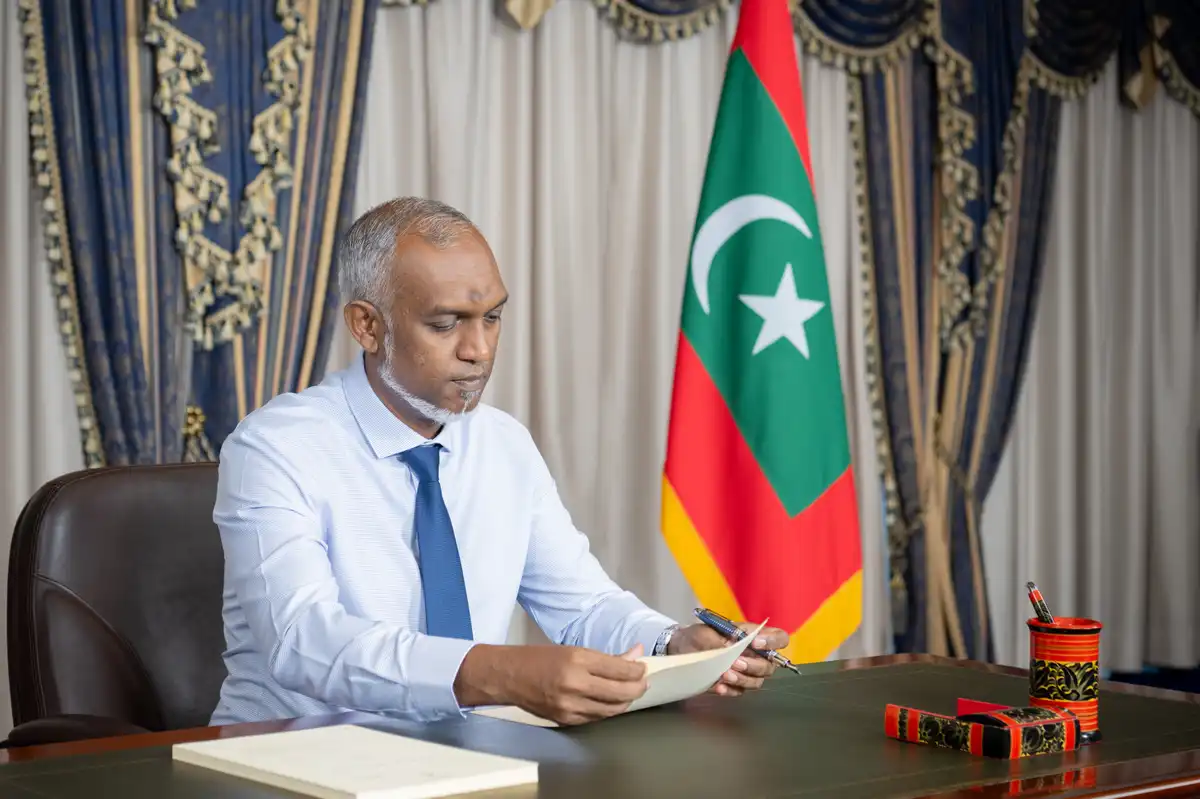
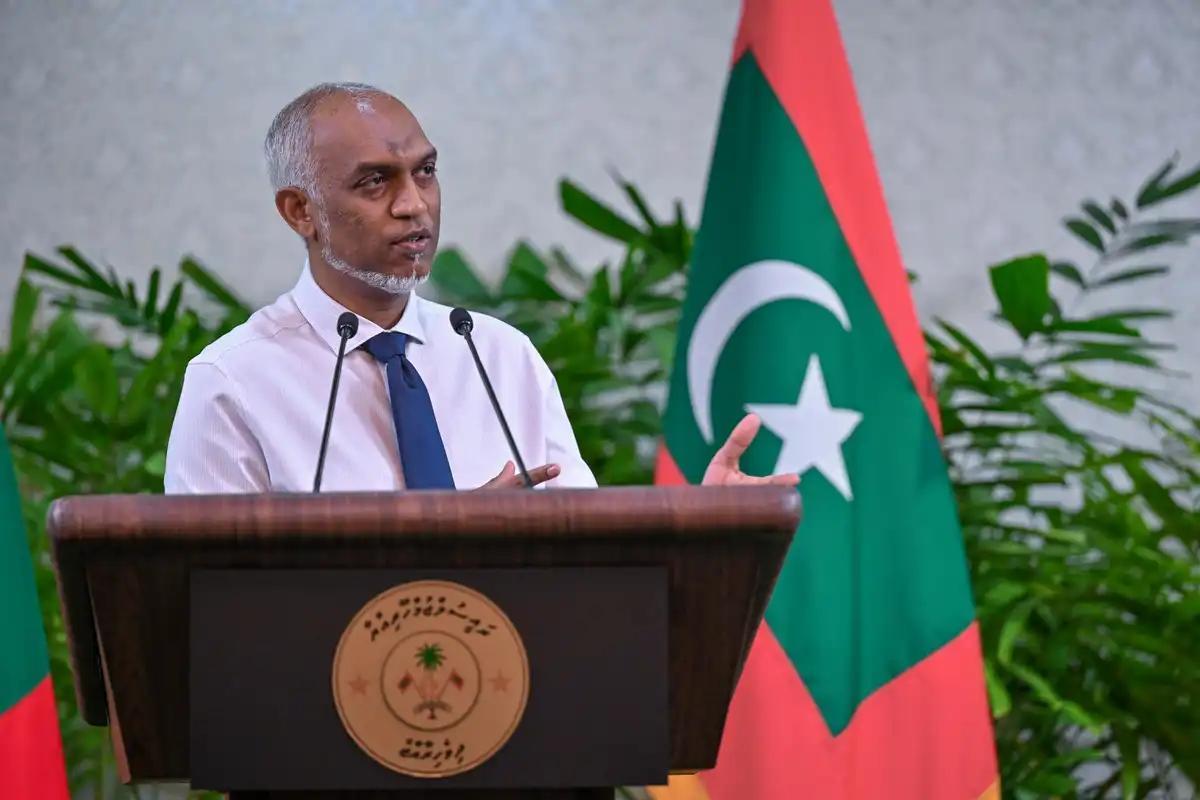
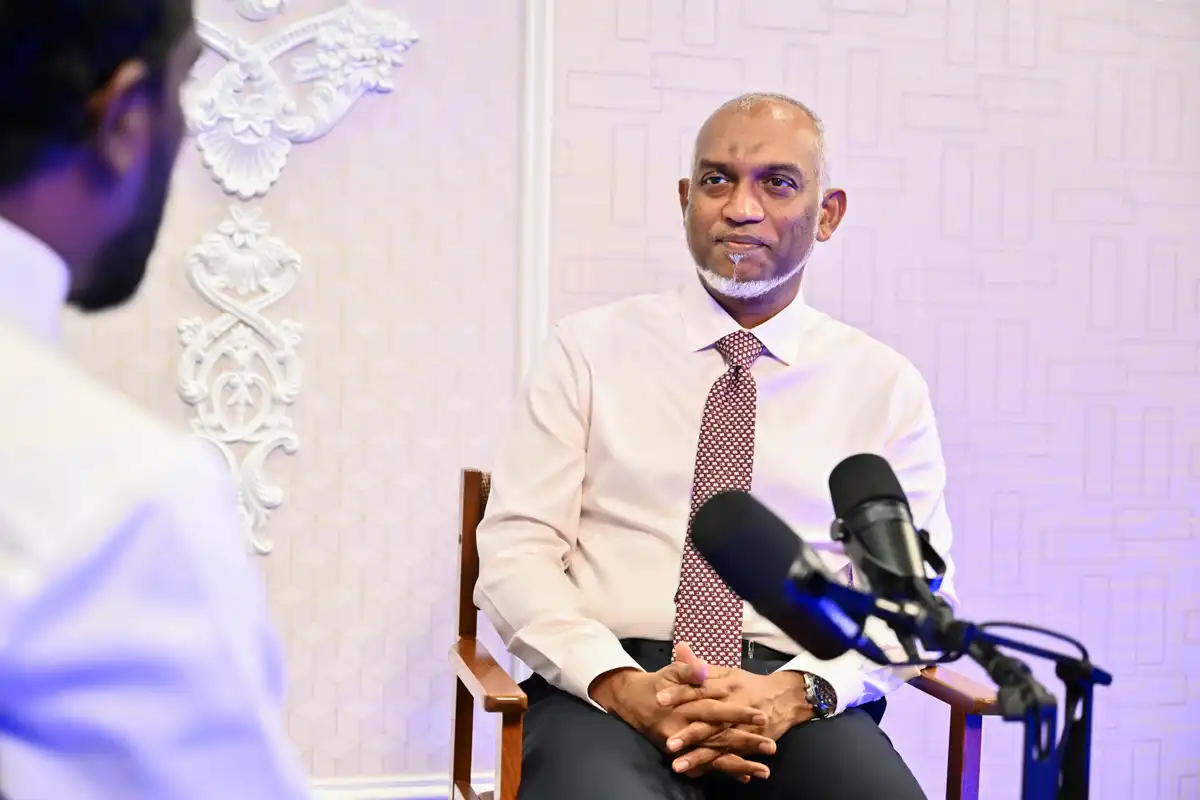
Back in March, under the grand banner of media freedom and keeping the public accurately informed, President Muizzu confidently swore to host weekly press briefings every single Monday from 10am to 11am to face the music on critical national matters.
That commitment to sustainability crumbled fast, as the President’s media appearances were abruptly axed for three straight weeks in June 2026. The government spokesperson quickly scrambled to blame these cancellations on June 8, June 15, and 22 June 2026, on the President's incredibly packed schedule. However, savvy citizens immediately noticed that the President did not actually leave Malé City for any official travel during those exact weeks, leaving the public to rightly view the busy schedule line as a clumsy excuse to dodge transparency.
The public consensus is that these consecutive cancellations were a strategic retreat, especially since they happened right after the 1 June 2026 briefing, where President Muizzu spent his time harshly insulting and ridiculing specific independent media outlets by labeling them "gutter press."
It appears the weekly disappearing act was a desperate attempt to avoid answering tough questions about widespread government incompetence and the country's nose-diving financial and economic status.
Rebranding the audio failures
The exact same fate befell the official state podcast series, "Riyyithunnaa Eku”. This show was launched early in the presidential term with a massive taxpayer price tag and aggressive public relations promotion, designed to showcase the President directly addressing the worries of ordinary citizens. The plug was pulled on the whole project shortly after its premiere, abandoned entirely the moment it transformed into a lightning rod for criticism against botched government policies.
In a desperate bid to sweep this media failure under the rug, the administration rolled out replacement podcasts with shiny new names like "The Pulse" and "Nation Chat," complete with fresh hosts and spokespersons.
However, this inability to keep a single platform alive for more than a minute serves as glaring proof of a broken communication strategy designed to keep the truth in the dark.
The habit of trying to soothe public anger with smooth talking or constant podcast relaunches has completely tanked the government’s political worth.
Locking the doors on the public
The grand "Ahaa" Forum, originally hyped as a flagship arena where everyday people could look ministers in the eye and demand answers, has faced a wave of cancellations that stripped it of any real purpose.
President Muizzu personally kicked off the inaugural event on 23 February 2024, promising it would be a reliable monthly fixture. Instead, these forums were repeatedly stalled or flat-out canceled whenever public rage boiled over regarding housing crises, flat allocations, land plots, and widespread financial suffering.
Political analysts consistently note that ministers are simply terrified of facing raw public questioning, especially when annual statistics from the Maldives Monetary Authority reveal a brutal crash of over 48 percent in the vital fisheries and economic sectors. The government has chosen to hide from these open events to conceal their failures and keep misinformation alive.
Up in smoke: killing an entire business sector
This pattern of canceling entire commercial markets through impulsive, zero-thought edicts heavily bruised health and economic policies.
The most glaring example is the sudden hammer blow dealt to the vaping and tobacco industries. On 14 October 2024, President Muizzu took to the social media network 'X' to declare that the import of vaping devices would be completely outlawed by 15 November 2024, to be followed by an absolute ban on possessing, selling, and using any such items by 15 December 2024.
This sweeping decree drew fierce criticism because it was enacted without an economic impact assessment, totally ignoring the devastating financial ruin inflicted on local businesses.
Home Minister Ali Ihusaan tried to justify the extreme overreach by claiming that vapes were packed with illegal narcotics, but subsequent police laboratory analyses proved those assertions were completely fabricated. Erasing an entire multi-million MVR commercial market without offering a single alternative or a dime of financial compensation has sent shockwaves through the national economy.
Cabinet musical chairs and the parliamentary walkout strategy
When it comes to internal governance, firing ministers and purging political staff has become the defining trait of the Muizzu administration.
The most shocking casualty was the sudden axing of Finance Minister Mohamed Shafeeq, a central pillar of the cabinet, who was erased from his post and replaced by Foreign Minister Moosa Zameer. Following that, on 15 October 2024, the President ordered the termination of 228 political workers under the flag of cost-cutting.
However, the President’s Office has stubbornly refused to reveal a single detail or name regarding who was actually fired. Even when journalists filed formal requests under the Right to Information (RTI) Act, the administration stamped the file as private information, completely deleting their original vow of being a transparent government.
At the exact same time, a nasty environment of political revenge has taken root, directly targeting the PNC kingmakers who hoisted this administration into power. The government has actively stripped these powerbrokers of their influence and systematically fired their family members from state jobs.
Ghost town at the Majlis
The destructive reach of this cancel culture has even crippled the People’s Majlis. Even though the ruling People’s National Congress (PNC) holds a crushing supermajority, petty internal wars and cynical strategic schemes have caused multiple crucial parliamentary sittings to be completely canceled due to a lack of a quorum.
Opposition politicians openly point out that these sessions are being intentionally sabotaged from within. In a recurring circus act, members of the government coalition will intentionally march out of the room moments before a session begins, entirely to avoid any legislative proceedings overseen by Deputy Speaker Ahmed Nazim. This political meddling is not just freezing the operations of state institutions; it is actively damaging the welfare of the public.
Ruining the fun in Addu
Even innocent community joy and local festivities have found themselves on the chopping block. The Addu City Council publicly vented its deep frustration when a highly anticipated fireworks show, meticulously planned for the grand opening of Hithadhoo Central Park, was called off at the absolute last second by SIFCO.
The military-backed cancellation came after all local preparations were fully finished, leaving the public to view the incident as an ugly example of the central government using raw political power to stomp on community enjoyment.
This unyielding doctrine of sudden cancellation is the single greatest barrier to the stability and progress of the Maldives.
Launching major national initiatives only to pull the plug at the final hour out of absolute terror of public backlash or internal party plotting has completely obliterated public trust.
From the silent press rooms and abandoned podcast studios to canceled public forums, axed political workers, empty parliamentary chambers, and ruined local festivals, absolutely nothing is safe from this administration's obsession with the delete button.