Muizzu rules podiums while logic takes a back seat
16 ޖޫން 2026 | އަންގާރަ 09:23Muizzu is facing criticism for inconsistent standards after refusing to answer party-related questions at an official briefing while later using a political rally to discuss state business. During a partisan event, the leader utilized government data to critique past financial liabilities and justify rising domestic debt. This selective use of platforms suggests the administration employs official protocols to avoid difficult inquiries while blurring the lines between state and party interests.

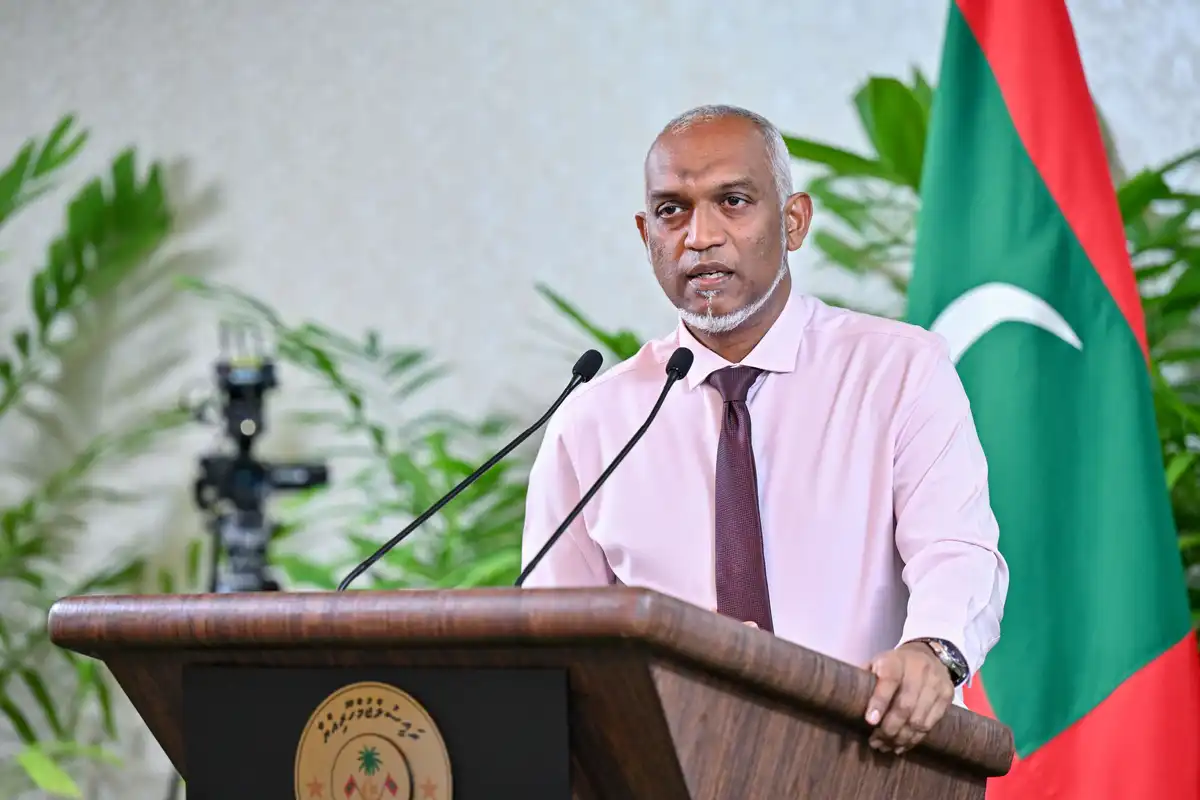
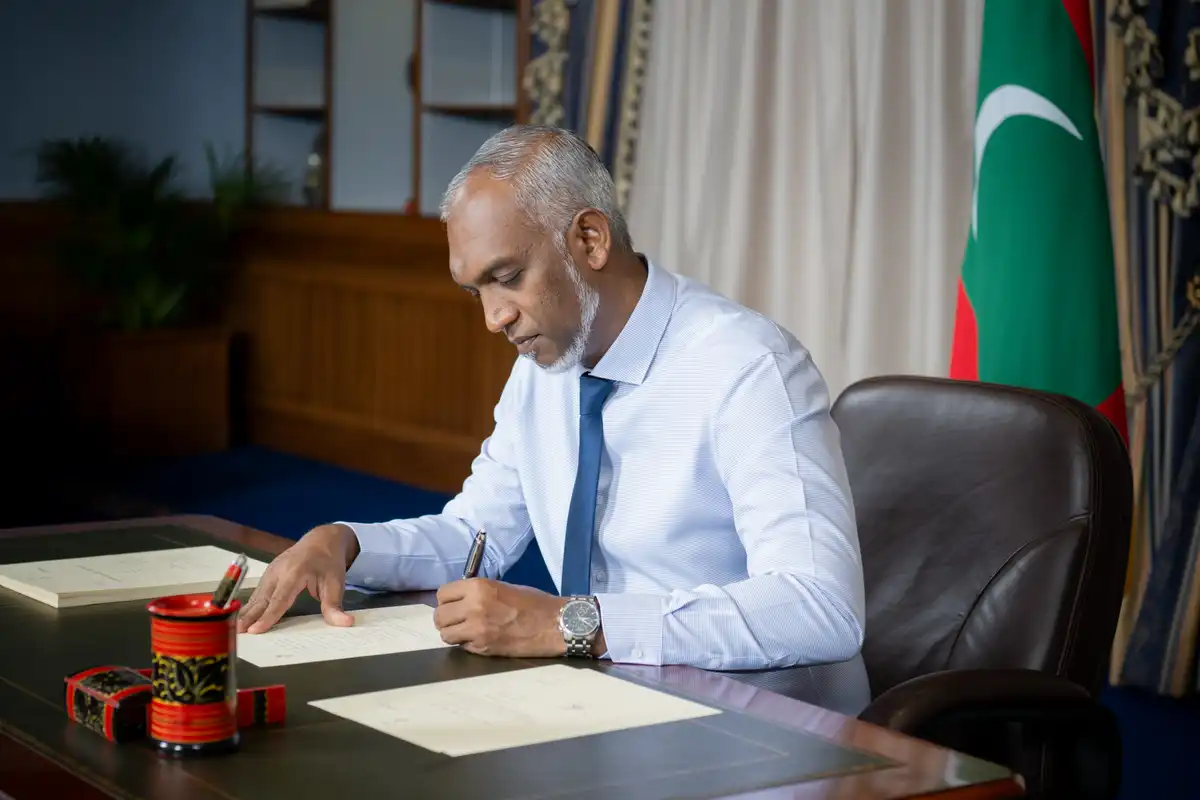
The speech delivered by His Excellency President Dr. Mohamed Muizzu at a meeting with journalists, the questions posed by journalists to His Excellency the President, and the answers given by His Excellency the President to those questions | Presidents Office
The rules of engagement for official press briefings apparently shift depending on who is asking the questions.
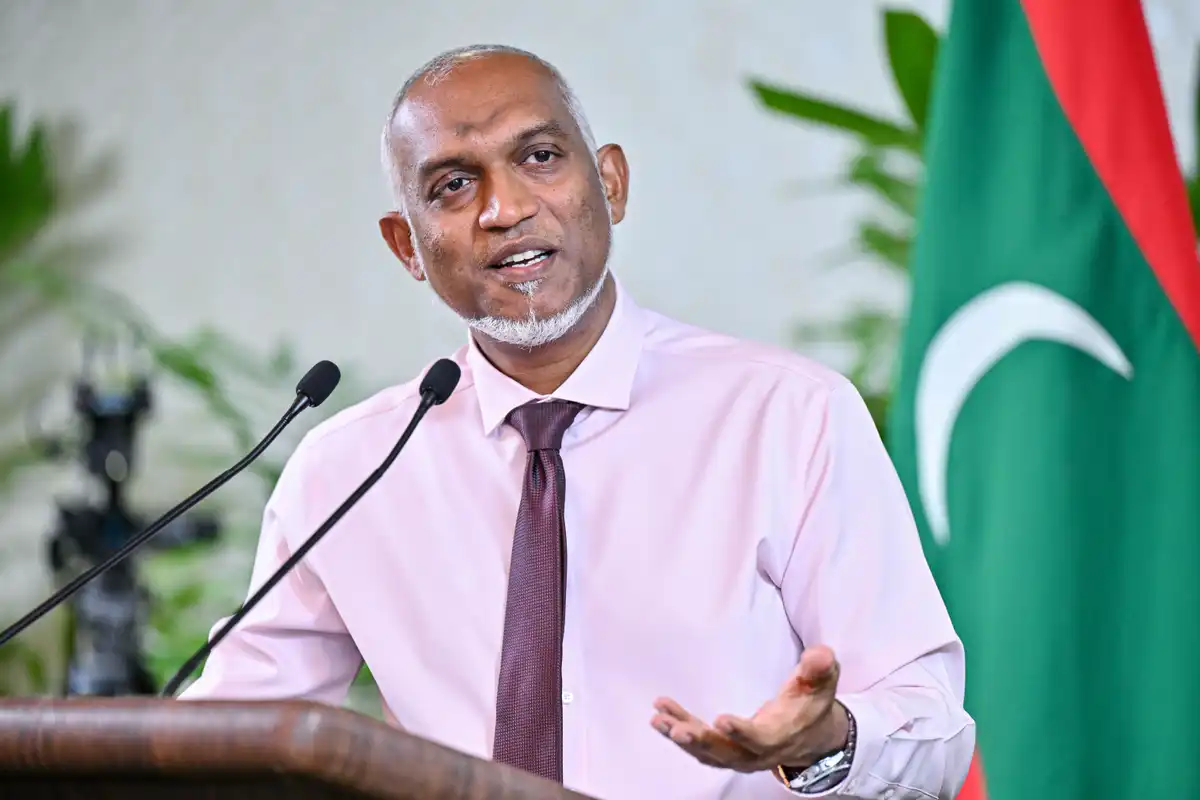
At a recent media briefing at the President’s Office, a reporter attempted to get to the bottom of the internal politics shaking the main ruling People's National Congress (PNC). The journalist questioned whether a sudden drop in President Dr. Mohamed Muizzu’s personal confidence in Ahmed Nazim, the former Deputy Speaker of the People’s Majlis, was the driving force behind the ruling group's decision to launch a no-confidence motion against him. Rather than answering, the president deflected, stating that inquiries of that nature belonged strictly at a party-specific platform. He insisted that because he was standing behind the official executive lectern at that exact moment, it was completely improper to dive into the inner workings of his political party.
Rules for thee but not for me
That supposedly firm boundary between governance and politics dissolved just days later.
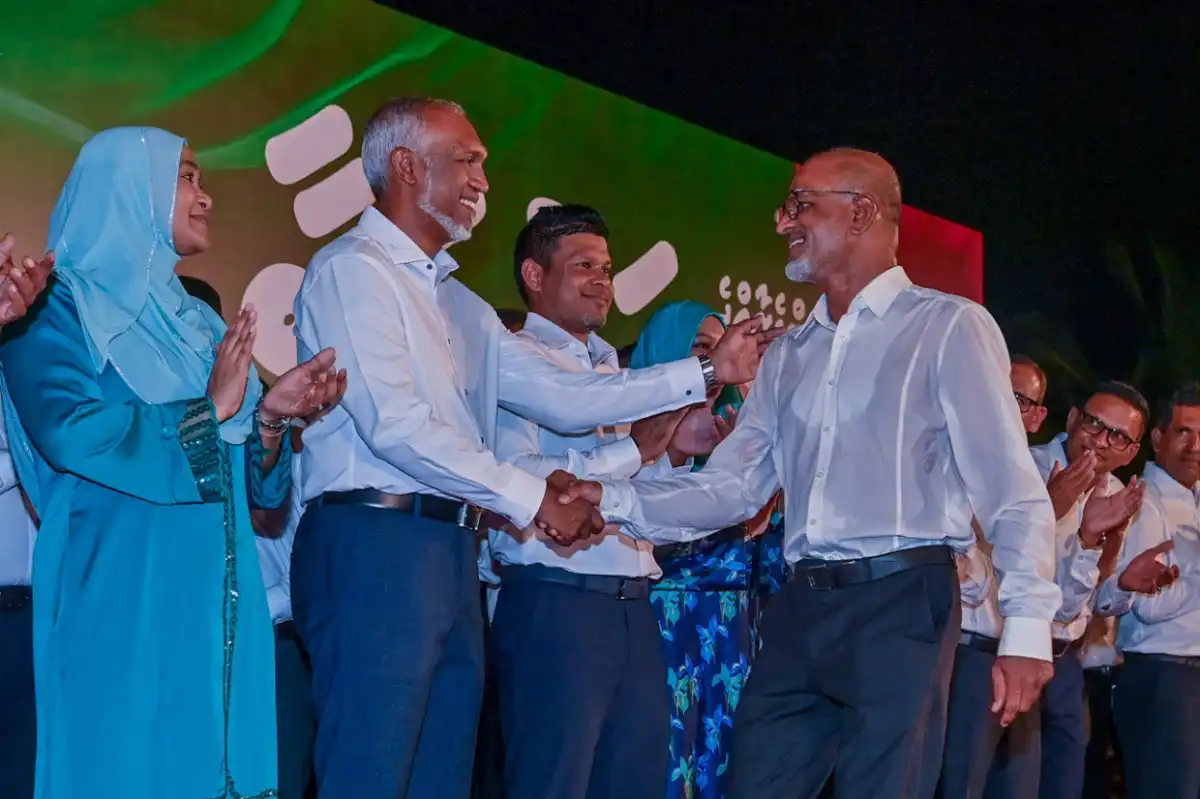
During a political rally hosted by the ruling organization on a Sunday evening in Meedhoo island of Dhaalu atoll, the head of state spent a massive portion of his time lecturing the crowd on the intricate workings of government business. If the official executive platform is a sacred space where partisan politics cannot be tolerated, then standard reasoning dictates that a partisan rally should be a space reserved strictly for internal party business, completely separate from executive operations, public works or state functions.
This is not a matter of shifting goalposts or personal bias; it is the logical conclusion of the exact standard the leader set himself.
If party topics are banned from the state house, then executive business has absolutely no place at a partisan rally.
Selective memory of the master presenter
Consistency, however, was clearly not on the agenda at this particular political gathering.
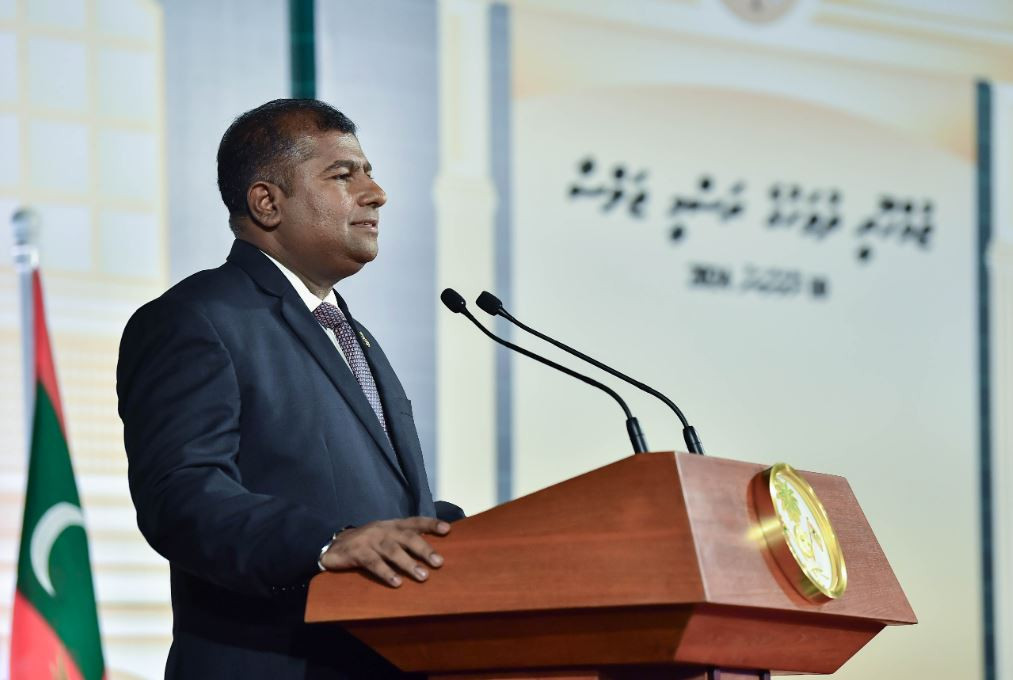
Standing behind the ruling organization’s emblem, the leader brought out detailed slideshows and extensive data sheets to give a lecture on the financial obligations of the country.
He spent a great deal of energy dissecting the financial liabilities left behind by previous leaders while making sure to loudly praise the massive billions his own team has managed to clear.
The irony was palpable as he used a partisan stage to broadcast executive financial metrics, revealing a massive gap between his stated ethical boundaries and his actual behavior.
Good debt vs bad debt
The presentation itself took a highly critical view of past financial choices, framing the liabilities left by prior terms as a massive failure of governance.
This is a familiar talking point for the leader, who frequently voices immense anger over the financial mess he inherited while simultaneously touching upon the fresh financial obligations his own team is currently generating.
This creates an obvious paradox if accumulating liabilities is such a terrible stain on the nation, it makes very little sense that his own administration is actively accumulating more of it.
Baffling economics of high finance
The financial justifications only grew more bewildering when the discussion shifted to local liabilities. Under the current executive team, the amount of money borrowed domestically has actually surpassed the levels seen under prior leaders.
The official explanation offered for this trend was that a minor spike in domestic obligations would magically lead to a drop in overseas liabilities.
For ordinary citizens, this reasoning sounds entirely backwards, since a financial obligation is a burden on the public purse regardless of whether the lender is domestic or foreign.
This special brand of math might make perfect sense to someone with an advanced understanding of economics, but to the rest of the public it looks like a flat-out contradiction.
Ultimate shield and sword
When the dust settles, a single reality becomes completely undeniable.
The leader is going to talk about whatever he feels like talking about, regardless of which microphone is placed in front of him.
When a piece of journalism proves to be uncomfortable or socially inconvenient, the formal majesty of the executive briefing room is dragged out as a convenient excuse to dodge the question entirely.
Even so, the moment it serves his immediate political goals, he feels absolutely no shame in turning a partisan megaphone into a branch of the state house.