How politicians are carving up Hulhumalé to buy your votes
21 ސެޕްޓެމްބަރު 2026 | ހޯމަ 19:26The integrity of the Hulhumalé Master Plan is being compromised by abrupt modifications driven by political influence, raising concerns that the city may succumb to the same over-congestion as Malé. Given that the manipulation of urban development standards and housing policies for political gain imposes a significant burden on the citizenry, it is imperative to establish a robust legal framework to protect the original vision and planning of Hulhumalé

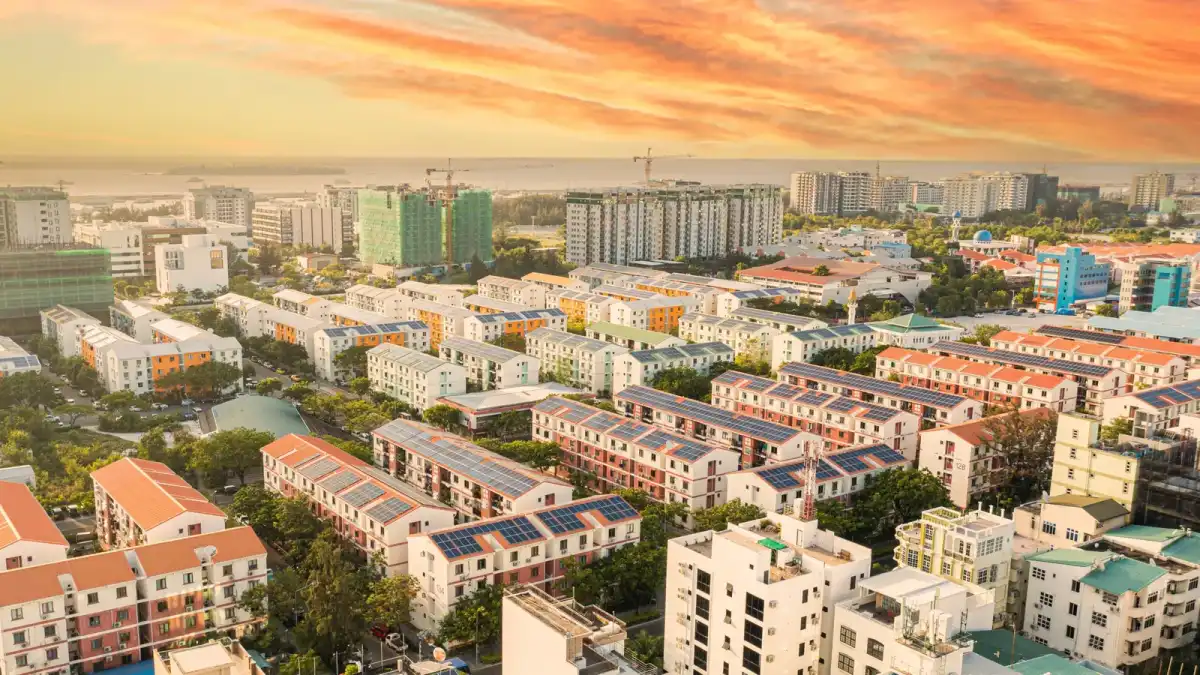
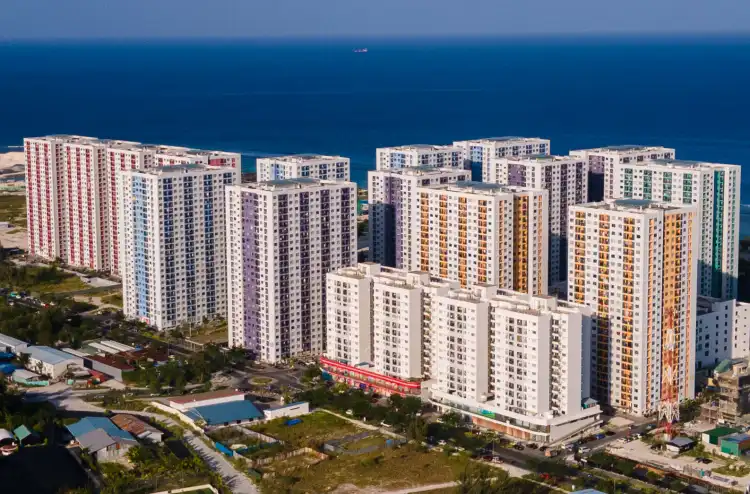
An aerial view of Hulhumalé | IM Maldives
Hulhumalé was initially envisioned as a progressive, cutting-edge urban sanctuary engineered to permanently cure the suffocating congestion tormenting the Maldivian capital of Malé. Extensively reclaimed from the sea following deliberate, forward-looking planning, the island was supposed to deliver an eco-conscious and refined municipal existence.
Instead, the public has been forced to watch party politics steadily dismantle the blueprint of this scenic landscape. Turning the development of the suburban extension into malleable dough, endlessly kneaded and distorted to satisfy the vanity of the political class, should be considered utterly intolerable.
Tearing up the blueprint for partisan whims
The foundation of Hulhumalé rested on rigid benchmarks and distinct tenets, all calibrated around an overarching blueprint designed to accommodate an exact population density. Despite this foundation, chaotic revisions carried out whenever an administration changes hands or whenever rivalries flare up continue to gut the settlement’s core stability.
Systematically cannibalizing earmarked community parks and green spaces for alternate developments, alongside constant tinkering with street alignments, serves as the main culprit behind this wholesale blueprint decay.
As a direct result, the visual elegance of the island is evaporating, leaving Hulhumalé on the verge of mimicking the exact suffocating density that wrecked Malé City.
Political expediency masquerading as modernization
Every revolving regime inevitably meddles with the urban agenda, and the government led by President Dr. Mohamed Muizzu proved no different. On 26 May 2026, his administration officially combined Hulhumalé Phase II and Phase III, rolling out and re-initiating yet another bundle of amended schemes.
Adapting urban designs to absorb contemporary technological and social progress is not inherently flawed; however, anxiety continues to swell because these ongoing shifts stem visibly from partisan calculations rather than sound technical data or rigorous academic inquiry.
The undeniable reality remains that the original dream behind this city is disintegrating under this opportunistic meddling.
Ballot-box bribes, and collapse of fairness
The distribution of residential units and public apartments across the reclaimed island has transformed into one of the most weaponized levers in the political playbook during election cycles. Aspiring power brokers routinely fish for endorsements by pledging to forgive overdue rental penalties or dangling newly restructured lease contracts.
Such maneuvers might deliver easy ballots to ruling coalitions, but they constitute a blatant slap in the face to law-abiding households who punctually settle their lease payments month after month.
Pandering in this manner directly plants bitterness and hostility among neighbors, effectively tearing down the pillars of an equitable and functioning civic society.
Moving target of skyward construction limits
Wild, volatile swings in municipal building codes offer yet another glaring display of this chronic mismanagement. Across Phase I of Hulhumalé, residential plots were originally restricted to modest three-floor structures.
Before long, that ceiling was pushed up to six and seven levels, and most recently, the prevailing leadership opened the door to ten-story edifices under designated stipulations.
If zoning allowances continue dancing to political tunes, there is nothing stopping an incoming government down the road from approving twenty-story towers overnight. This regulatory unpredictability has already coerced pioneering homeowners who constructed three-level residences to bulldoze their standing houses and plunge into crippling bank debt just to rebuild higher.
Meanwhile, citizens who chose to construct past their initial clearance limits now find themselves entangled in nasty neighborhood quarrels and punishing monetary penalties.
At the end of the day, it is ordinary families who shoulder the exhausting financial toll and mental stress triggered by these fickle executive decrees.
A recipe for gridlock and legal protection
The ultimate toll of these chaotic revisions falls squarely upon regular residents. The constant tampering with traffic schemes and roadway intersections has directly spurred an uptick in perilous road collisions, transforming everyday transit into an active hazard for those living there.
A very real dread has settled over the populace that this once gracefully organized development is being spoiled beyond recognition, leaving them right back where they started with nightmare overcrowding.
Given this trajectory, it has become undeniably urgent to ask whether the Hulhumalé Master Plan must be shielded behind an ironclad, unyielding legislative framework that halts any rogue political figure from tearing it up on impulse.
Hulhumalé is hailed as the cornerstone of the country's collective tomorrow, meaning its trajectory cannot be left behind as a plaything for the private ambition of politicians.
To safeguard the country and its citizens, this master design must be frozen and executed through an approach that quashes community division, protects future viability, and guarantees genuine sustainable growth.