When in doubt, blame Berlin instead of paying the bills
29 އޯގަސްޓު 2026 | ހޮނިހިރު 12:00Even if the recent disruption to the Maldives' passport service resulted from unpaid bills, the government's decision to shift the blame onto the German company, Dermalog, risks tarnishing the Maldives' international reputation. Such irresponsible and inaccurate assertions could strain the longstanding diplomatic and economic ties between Germany and the Maldives, potentially harming the tourism sector. Therefore, it is imperative for the government to acknowledge its own administrative shortcomings and take full responsibility


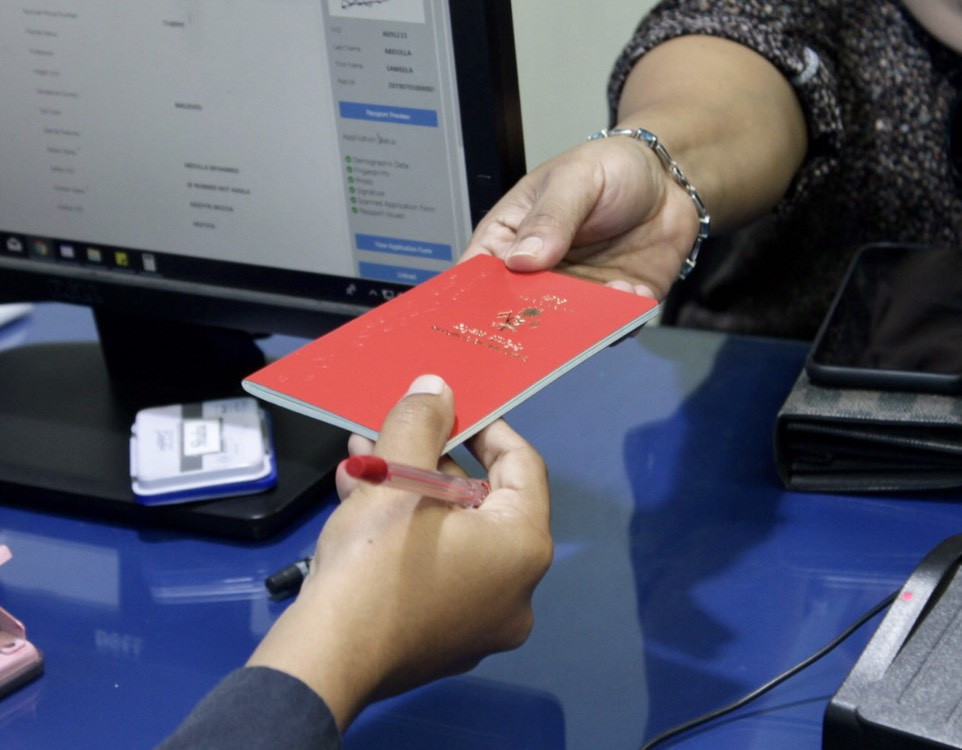
The government has stated that the current passport shortage is due to technical issues with the machinery at the printing house of the German company that supplies passports to the Maldives | Raajjemv graphics
A glaring puzzle at the heart of the incumbent administration’s routine conduct is its absolute inability to confront internal shortcomings.
Whenever a public works venture grinds to a halt, official excuses promptly point fingers at the prior regime’s carelessness, the hurdles in procuring rock boulders, or the outright absence of required heavy machinery.
The country’s ongoing foreign currency crunch is similarly pinned entirely on earlier policies. Even the surging cost of daily survival is laid at the doorstep of the former leadership.
Whenever the state finds itself saddled with a staggering backlog of ventures, officials simply flip the narrative, framing the mountain of unfinished work as a byproduct of citizens' lofty ambitions and relentless demands.
Now, faced with yet another breakdown, the regime has aimed its accusatory sights at Germany.
Shifting culpability onto external targets has hardened into an instinctive reflex rather than owning up to executive blunders.
Dragging international partners through the mud
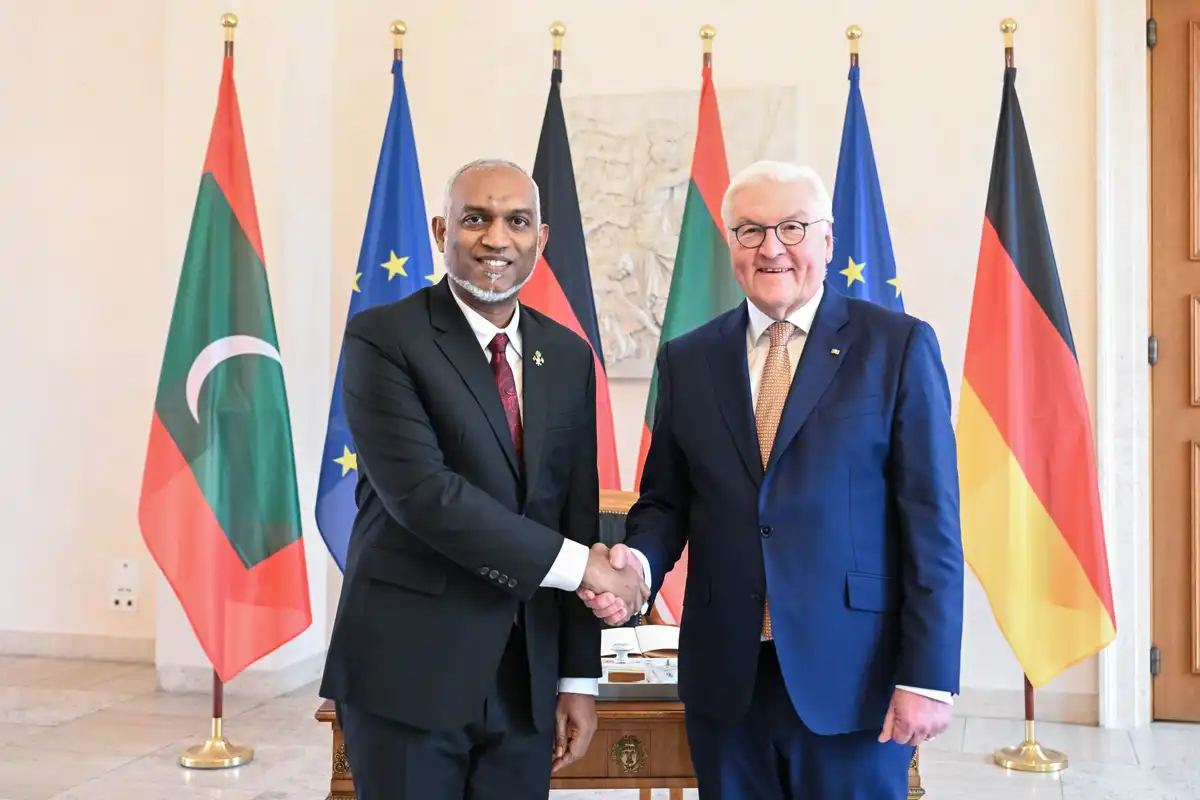
Instead of owning the humiliating breakdown of the domestic passport distribution system, authorities chose to steer public anger toward the German state and its world-renowned corporate enterprise, Dermalog, on the global stage. Slandering an entity of that stature is a reckless and unrefined blunder that severely damages the international standing of the Maldives.
It defies all basic reason to broadcast in the official government gazette that a premier global firm, a flagship of modern German technological excellence and engineering that has manufactured premium passports for the nation without a single hitch since 2016, abruptly halted its deliverables over a minor mechanical printing defect.
This absurd explanation is plainly a calculated maneuver to bury the reality.
Financial insolvency behind the smokescreen
Beneath the official rhetoric lies a deceitful strategy to obscure executive inadequacy and mask the genuine cause of the operational shutdown: the government simply skipped out on paying its overdue invoices amidst an escalating foreign exchange shortage.
Making the situation considerably more scandalous is the release of these fabricated claims against a foreign sovereign power, seemingly without regard to, or in sheer ignorance of, the German federal government directly owning a 22.43 percent stake in the firm through Bundesdruckerei, its official federal printing authority.
Transparent excuses on the global stage
Asserting that an influential European power renowned for rigorous technical discipline, alongside its foremost biometric technology corporation, is suddenly incapable of delivering travel documents because of trivial printing hiccups only spotlights how completely the Maldivian governing framework has worsened.
This follows an established playbook where, instead of confronting structural monetary distress and dollar deficits with transparency, the leadership fabricates wild accusations against outside third parties to duck accountability.
It has become plain to local citizens, global analysts, and European news outlets alike that the disruption did not originate from malfunctioning German machinery, but rather from an unpaid invoice left unsettled by the Maldivian government.
Floating such misleading claims into the international arena represents an extraordinary breach of diplomatic responsibility.
Jeopardizing diplomacy and the tourism lifeline
Spreading such risky untruths threatens to fracture the longstanding political and commercial ties between the Maldives and Germany, creating the hazard of international isolation and grave foreign policy friction.
This threat is especially alarming given that the lifeblood of the Maldives’ economy, the tourism trade, hinges directly on travelers arriving from the European continent.
With hefty tourist volumes streaming in from Germany and the broader European Union, any political friction or diplomatic blowback sparked by this state-level recklessness could inflict lasting ruin on the visitor economy.
Time to drop the charade
With the domestic economy already wobbling under intense strain, leadership must grasp that slanderous attacks against international partners will never successfully mask executive negligence.
The only rational path forward is to instantly discard these dangerous fabrications that imperil foreign alliances, openly concede the state's financial limitations and administrative neglect, and shoulder genuine responsibility to safeguard the nation’s economic stability and collective future.