Failure to address economic and political concerns of youth paved the way for "India Out" campaign: Mariya
30 ޖުލައި 2026 | ބުރާސްފަތި 08:16She emphasized that instead of dismissing protests as purely politically motivated, authorities must listen to the genuine concerns of the public and seek resolutions through established institutions.
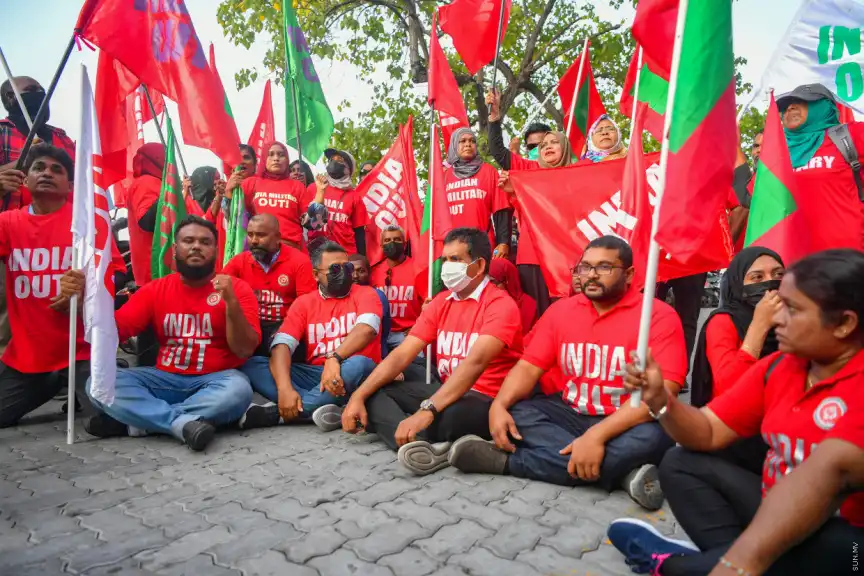
Former Economic Minister Mohamed Saeed participates in a protest organized by the opposition coalition as part of the 'India Out' campaign in Male' — March 5, 2022. | sun
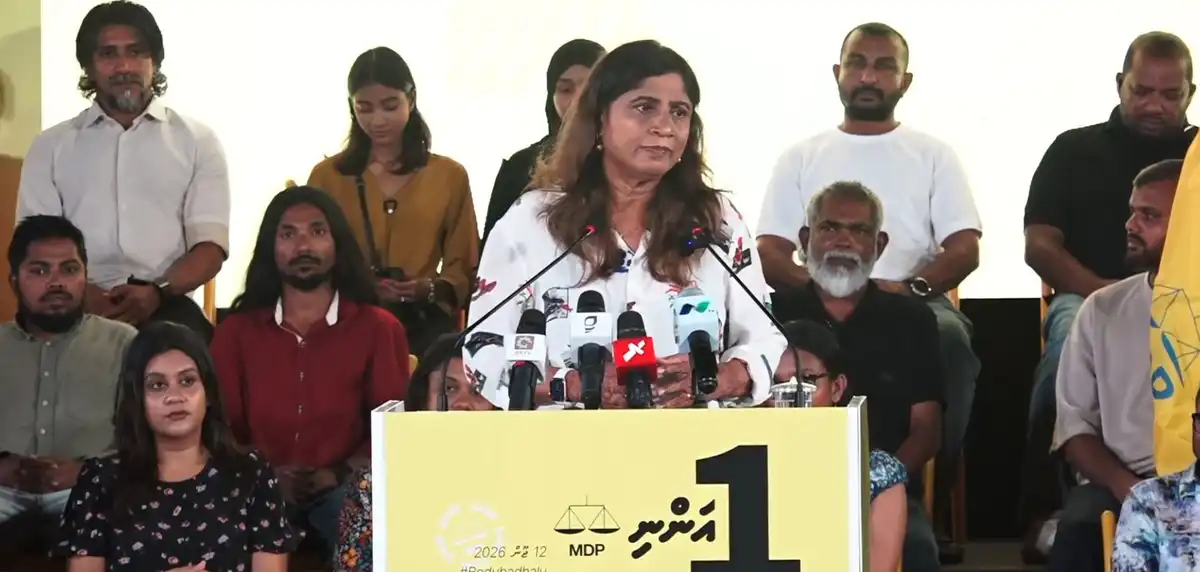
Former Defense Minister Mariya Ahmed Didi has stated that economic disparities and limited job opportunities were among the factors that fueled the 'India Out' campaign, which was spearheaded by the then-opposition calling for the removal of Indian military personnel on the grounds that they compromised the Maldives' independence and sovereignty. Mariya further noted that the movement was also driven by public concerns regarding corruption, systemic governance failures, and issues of accountability, alongside a perceived inability of political institutions to address the grievances of the citizens.
In an interview with the Indian publication "Outlook," Mariya stated that concerns regarding national identity and the extent of political polarization played a significant role in the situation. She noted that portraying political opponents as being against Islam divided the community and heightened political tensions. Mariya further highlighted that social media facilitated the mobilization of youth and made it easier to disseminate various political ideologies.
Mariya noted that during the 'India Out' campaign, issues concerning national sovereignty and the alleged presence of foreign military personnel in the Maldives became a significant focal point. However, she emphasized that because the campaign was conducted during a period of intense political volatility, it is crucial to distinguish between the public's genuine concerns regarding sovereignty and narratives manufactured for political gain.
When asked whether the Maldivian government had failed to understand the sentiments of the youth, Mariya responded, 'In a sense, yes.' She acknowledged that the government may have underestimated the youth’s growing frustration regarding economic challenges, the lack of opportunities, and the current system of governance. She further emphasized that when a government fails to engage closely with the youth or listen to their concerns, it results in a disconnect between the state and its citizens. Mariya noted that today's youth are politically conscious, well-informed, and vocal; therefore, it is imperative for governments to proactively listen to them before their grievances escalate into widespread discontent.
When asked how to distinguish between a protest rooted in genuine grievances and a short-term demonstration driven by political motives, Mariya stated her belief that a protest is genuine if it involves people from various segments of society over an extended period, rather than being timed to coincide with a specific political agenda.
Mariya stated that governments must address issues with fairness and impartiality. She emphasized the need to identify the genuine concerns of the public by engaging directly with protesters, conducting public opinion surveys, and utilizing relevant institutions.
"We must not dismiss every protest by claiming it is driven solely by a political agenda."Mariya Ahmed Didi
When asked about the extent of foreign influence on the protests, Mariya stated that there are opportunities for external actors to exert influence through financial aid, media channels, or diplomatic pressure. However, she noted that this should not be viewed as a significant concern.
"In most instances, issues arise due to internal domestic factors. While external parties may exploit such discontent to exacerbate the situation, a protest only gains momentum when there are genuine grievances among the country's citizens."Mariya Ahmed Didi