No difference between Shakeel’s presence at EC and President Muizzu’s: Aik
12 ޖުލައި 2026 | އާދީއްތަ 20:41Aike Ahmed Easa, a member of the MDP Lawyers' Committee, has expressed grave concern over the failure of the Maldives' independent institutions to fulfill their legal mandates. He alleged that these bodies have lost their autonomy, with all major decisions now being controlled directly by the President's Office. Aike further emphasized that this erosion of independence has effectively obstructed the mechanisms intended to protect citizens' rights and hold the government accountable for its actions.


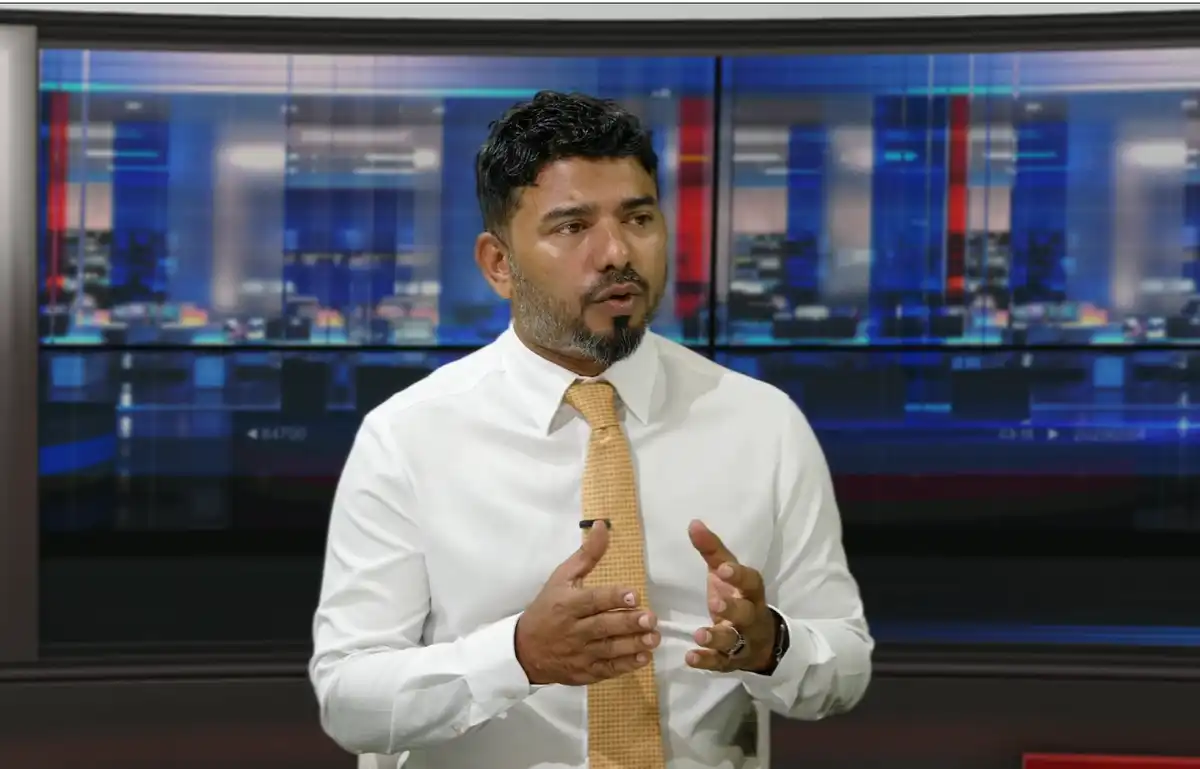
Aik Ahmed Easa, a member of the MDP Lawyers' Committee. | Raajje MV
Aik Ahmed Easa, a member of the MDP’s legal committee, has stated that there is no distinction between Mohamed Shakeel’s presence at the Elections Commission (EC) and that of President Dr. Mohamed Muizzu.
Speaking on RaajjeTV's "Fala Surukhee" program, Aik stated that independent institutions no longer exist in the country. He further asserted that, in reality, there are no functioning institutions at all.
Noting that these bodies hardly deserve to be called institutions, Aik stated that for an entity to be considered a true institution, it must be seen actively working to fulfill its legally mandated responsibilities. However, he remarked that the commissions currently in place are not operating in such a manner.
Noting that he previously held high expectations for the Elections Commission, Aik stated that the direction taken by the commission since the referendum has continued to deteriorate.
The situation has deteriorated to an unprecedented level, reaching a point of decline never seen before. It would be far more appropriate for Dr. Muizzu to assume the role himself rather than appointing Shakeel. It is the only logical conclusion, as a single individual is currently making every decision. Whether at the President's Office or the Elections Commission, that person is Dr. Muizzu.Aik Ahmed Easa, a member of the MDP’s legal committee.
Aik stated that when independent institutions fail to function effectively, the public bears the greatest burden of the resulting state-level failures. He added that the damage caused to state agencies manifests as an inherent inability to manage and govern those institutions.
This is because these institutions are mandated to oversee, investigate, and take action when irregularities occur. If these bodies fail to function effectively, it creates an obstacle to ensuring accountability.
Aik stated that these institutions are the sole recourse for citizens when a government treats them unjustly. However, he remarked that such institutions no longer exist in this country today.