Abucha is back in prison, but the government still owes the public answers
7 އޮކްޓޯބަރު 2026 | ބުދަ 07:29Abucha is back behind bars. But the most important question remains outside them: how did the state allow this release to happen, and will everyone responsible, at every level, be required to explain their role?

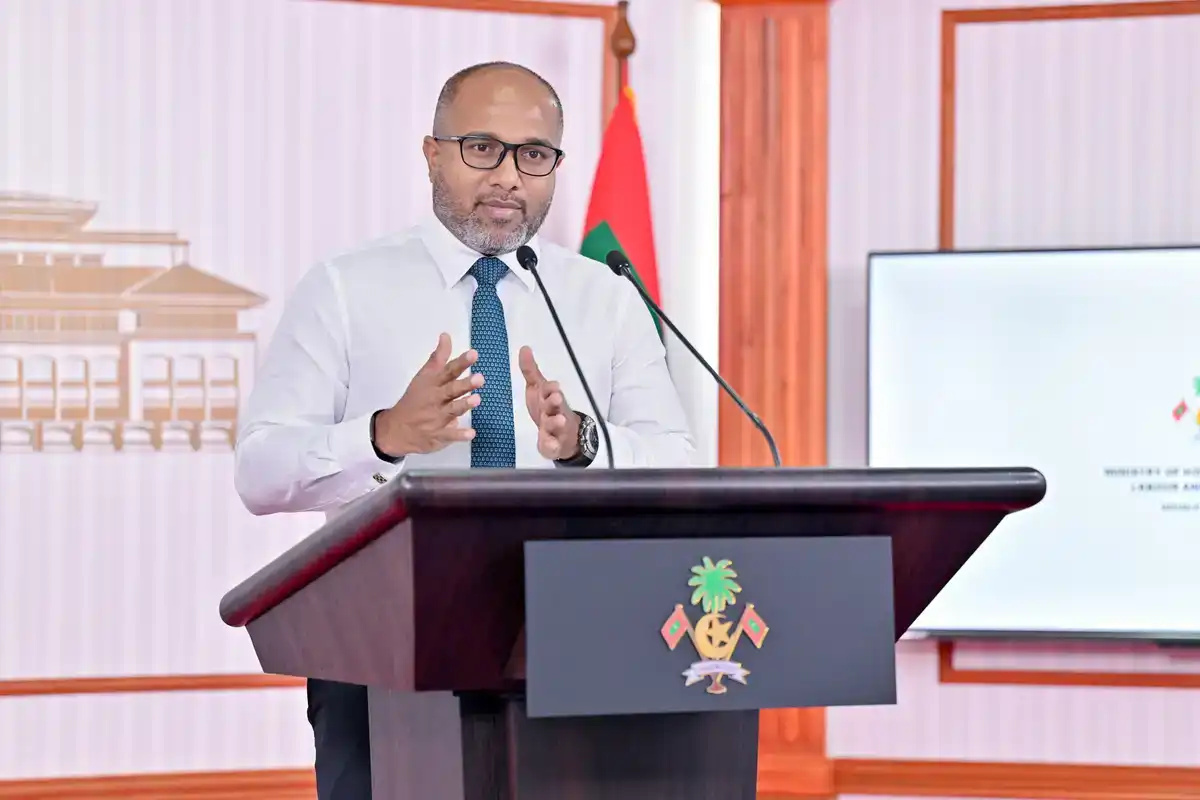
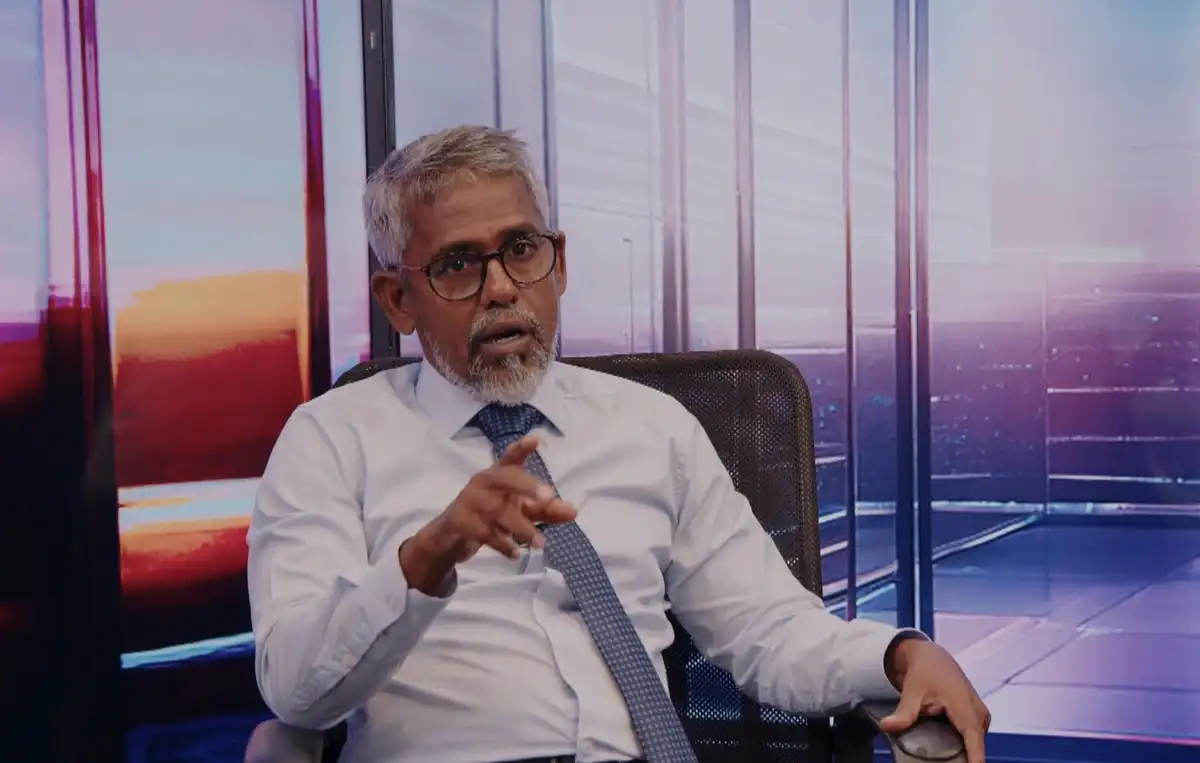
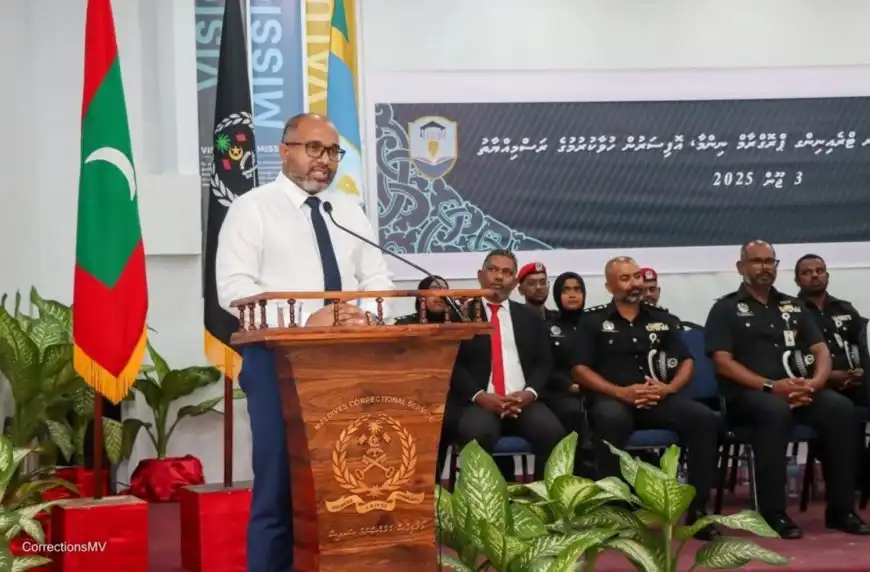
Minister of Homeland Security, Labour and Technology Ali Ihusaan speaking to press. | Raajje MV
Abdulla Ibrahim, commonly known as ‘Abucha,’ is back in prison. Six members of the Parole Board who voted in favor of releasing him have been dismissed, and parole proceedings have been suspended while the system is reviewed. These measures may reverse the immediate consequence of the controversial decision, but they do not answer the much bigger question confronting the government: how was a high-profile convicted drug trafficker allowed to walk out of prison in the first place?
Abucha was sentenced in May 2025 to 25 years in prison over his involvement in an attempt to smuggle approximately 98.6 kilograms of narcotics into the Maldives. He had been arrested during a major police operation in October 2020, and police have described him as a significant figure in an Addu-based drug-trafficking network. Despite the lengthy sentence, the Maldives Correctional Service confirmed that he was released on parole on 1 October 2026 after spending roughly five years in detention and imprisonment.
Five days later, Homeland Security Minister Ali Ihusaan announced that Abucha had been returned to prison. According to the Minister, the Parole Board had incorrectly calculated his eligibility and failed to properly consider mandatory legal requirements. Ihusaan said the Board had counted approximately four years between Abucha's 2020 offence and a later sentence as time served and then calculated the parole threshold against the remaining sentence. The government subsequently concluded that this interpretation was legally incorrect.
It is important to make one legal distinction clear: Abucha was not granted a presidential pardon. He was released on parole. A pardon and parole are fundamentally different processes. Parole is governed by the Prisons and Parole Act and decided through the statutory Parole Board. However, that distinction does not remove the government's responsibility to explain how the system failed. The Board itself is part of the state machinery and includes representatives from institutions such as the Maldives Police Service, Maldives Correctional Service and Attorney General’s Office, along with professionals from other sectors.
If the legal error was serious enough for the government to identify and reverse within days, the public deserves to know how multiple institutional safeguards failed before the release. Who submitted Abucha's case for parole? Who calculated his eligibility? What recommendation did Corrections provide? What position did the police representative take? What legal advice was available to the Board? Was a public-safety or risk assessment considered? How did the members vote, and who ultimately authorized his physical release from custody? These questions cannot be answered merely by dismissing Board members.
That fact should not be distorted. But neither should it be used to shut down legitimate questions about executive oversight. When did Corrections inform the Ministry? When did the Homeland Security Ministry become aware of the release? Was the President’s Office informed before 1 October? Did police raise any concern? Was anyone outside the Parole Board involved in discussions about this particular application? The government should establish a clear timeline showing who knew what, and when.
The Minister has also said that the government's initial review found no indication that Board members deliberately acted improperly, although he said sufficient legal scrutiny had not been exercised. That creates an even more serious institutional question. If there was no deliberate wrongdoing, how could a mistake of this magnitude survive a process involving several state institutions? If further investigation reveals negligence, improper influence, conflict of interest, abuse of authority or corruption, those matters should be investigated independently and dealt with according to law. No misconduct should be presumed without evidence, but neither should the return of Abucha to prison be treated as proof that nothing more needs investigating.
The reversal itself also requires transparency. Ihusaan said that after the Ministry learned of the case, he instructed the Parole Board to reconsider its decision, following which the Board revoked the parole and Abucha was returned to custody. The government should therefore disclose the legal provision and procedure relied upon to reconsider an already implemented parole decision. Correcting an allegedly unlawful decision does not remove the obligation to demonstrate that the corrective action itself was carried out lawfully.
This issue must also extend beyond Abucha. If his eligibility was calculated incorrectly, the government should audit previous parole decisions to establish whether the same interpretation was used in other cases and whether any other prisoners were released before satisfying legal requirements. The decision to suspend parole proceedings pending review already indicates that the government considers the problem potentially wider than one individual case.
Returning Abucha to prison corrects the immediate outcome. Dismissing Board members addresses one level of responsibility. Neither, by itself, establishes accountability. Accountability requires disclosure of the eligibility calculation, relevant Board records, institutional recommendations, legal advice, risk assessments, voting decisions and the full chain of communication surrounding the release.
Abucha is back behind bars. But the most important question remains outside them: how did the state allow this release to happen, and will everyone responsible, at every level, be required to explain their role?