Maldives has spoken: will Muizzu follow the global exit door?
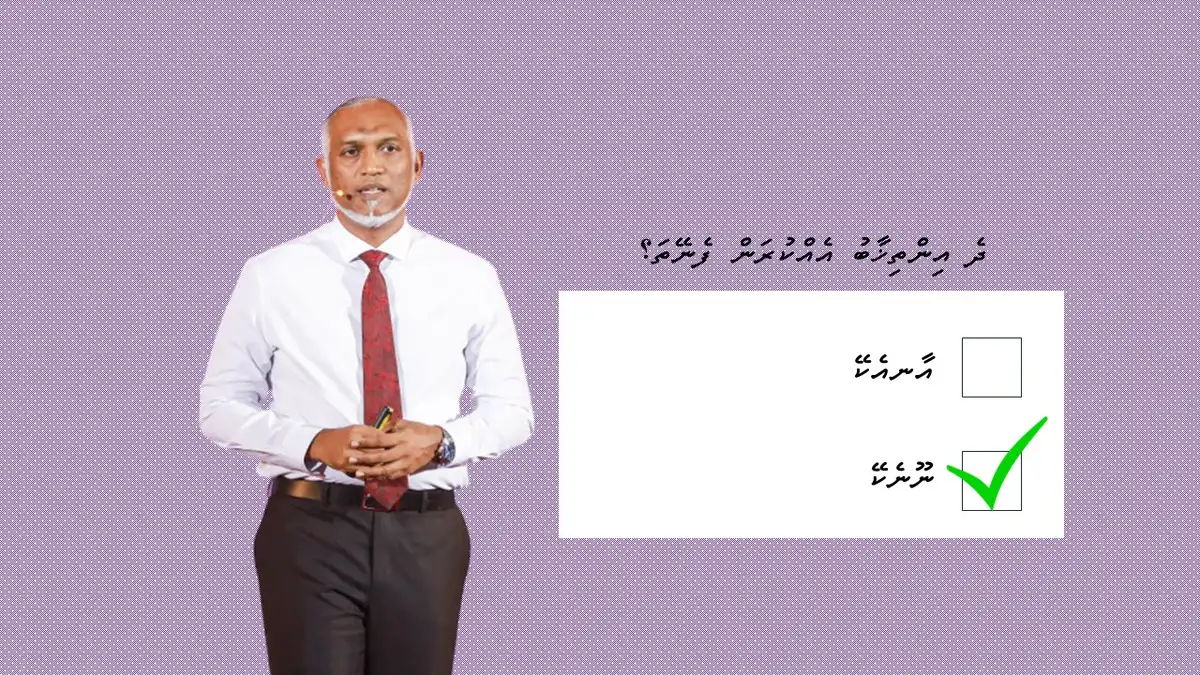
5 އެޕްރީލު 2026 | އާދީއްތަ 14:17Following a national referendum on April 4, 2026, Maldivian voters overwhelmingly rejected President Mohamed Muizzu's proposal to merge presidential and parliamentary elections. Despite the administration's heavy campaigning, nearly 70 percent of the electorate voted against the constitutional amendment. Critics argue this resounding defeat represents a total loss of public confidence, citing historical precedents to demand the president's immediate resignation.

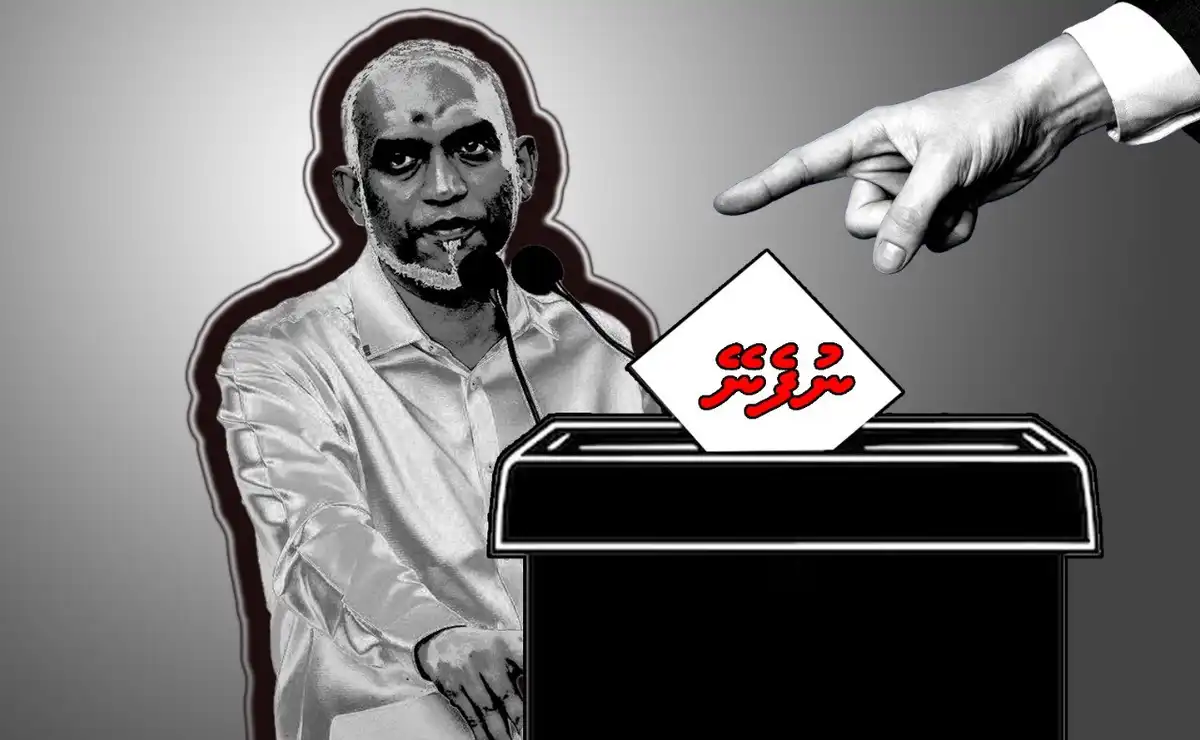
President Dr. Mohamed Muizzu. | RaajjeMV Graphics | Raajje MV
The honorable way out
In the world’s most sophisticated democracies, there is a time-honored tradition that seems to have bypassed the current administration: the art of a graceful exit.
When the public’s faith in a leader evaporates and a popular vote confirms that the government has lost its mandate, true leaders step aside. While giving up the perks of power is a bitter pill to swallow, doing so is the ultimate display of democratic integrity. Putting the will of the people above the ego of the office is the gold standard of governance.
A referendum born of excessive pride
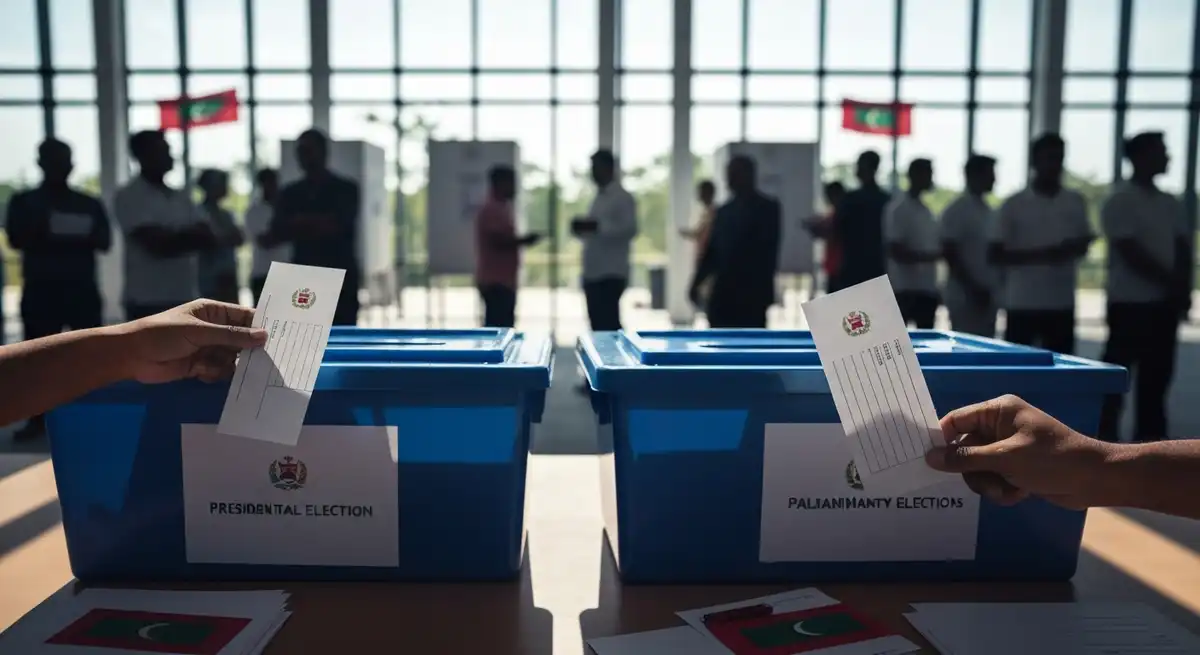
The focus now shifts to the national referendum held in the Maldives on 4 April 2026. It was an event directly orchestrated by President Dr. Mohamed Muizzu and his inner circle. The administration’s grand plan was to rewrite the Constitution of the Republic to force presidential and parliamentary elections into a single cycle. Because such a fundamental shift in the nation’s foundation requires the consent of the governed, the matter was tossed to the public.
Campaigning with the state’s wallet
The incumbent didn’t just support this change; he bet his entire political reputation on it. He hit the campaign trail with relentless energy, shouting his justifications at rally after rally while openly draining state resources to fund the propaganda machine. He made it personal and explicitly demanded that citizens hand him this amendment as a show of support.
A resounding, 70-percent slap in the face
The "No" vote wasn't just a loss; it was a total demolition of the incumbent’s agenda. Roughly 70 percent of voters rejected the proposal, delivering a landslide refusal to merge the elections.
It is a staggering irony that while over 70 percent of the People’s Majlis largely under the administration's thumb, originally rubber-stamped the amendment, the actual people of the Maldives were diametrically opposed. This massive chasm between the political elite and the voting public is a failure that demands more than just a shrug.
The message is crystal clear
The electorate has sent a chillingly stern message directly to the incumbent’s doorstep. By overwhelmingly killing the very proposal he personally spearheaded, the citizens have signaled a total lack of confidence in his leadership. This is the definitive moment for Muizzu to show some democratic backbone and resign. If he truly cares about the pulse of the nation and its people, he should acknowledge his defeat and walk away.
Lessons from history’s exit sign
History is littered with leaders who understood when their time was up. In 2016, David Cameron walked out of 10 Downing Street after losing the Brexit referendum. That same year, Italian Prime Minister Matteo Renzi quit when his constitutional reforms were trashed by the public. Alex Salmond surrendered his post in 2014 after the "No" vote on Scottish independence and French Prime Minister Jean-Pierre Raffarin hit the bricks in 2005 after a referendum defeat.
A growing chorus for an exit
The precedent is set, the voters have spoken and the administration has been crushed. Across the Maldives, the demand for the incumbent to accept Saturday’s defeat and step down is growing louder.
Political leaders and the general public alike are now asking the same question: if the people don't want your vision, why are you still in the seat?