Pres. Muizzu criticizes Indian contractor’s poor performance as executive power collapses over Thilamalé project
20 އެޕްރީލު 2026 | ހޯމަ 16:12Muizzu has admitted to significant delays in the Thilamalé Bridge project, shifting the completion target from 2026 to 2027. Despite his previous criticism of the project's pace, the President now describes his administration as a passive observer at the mercy of the contractor's deadlines. This admission of stagnation and the decision to omit the project from the presidential address have drawn criticism regarding the executive branch's lack of oversight.

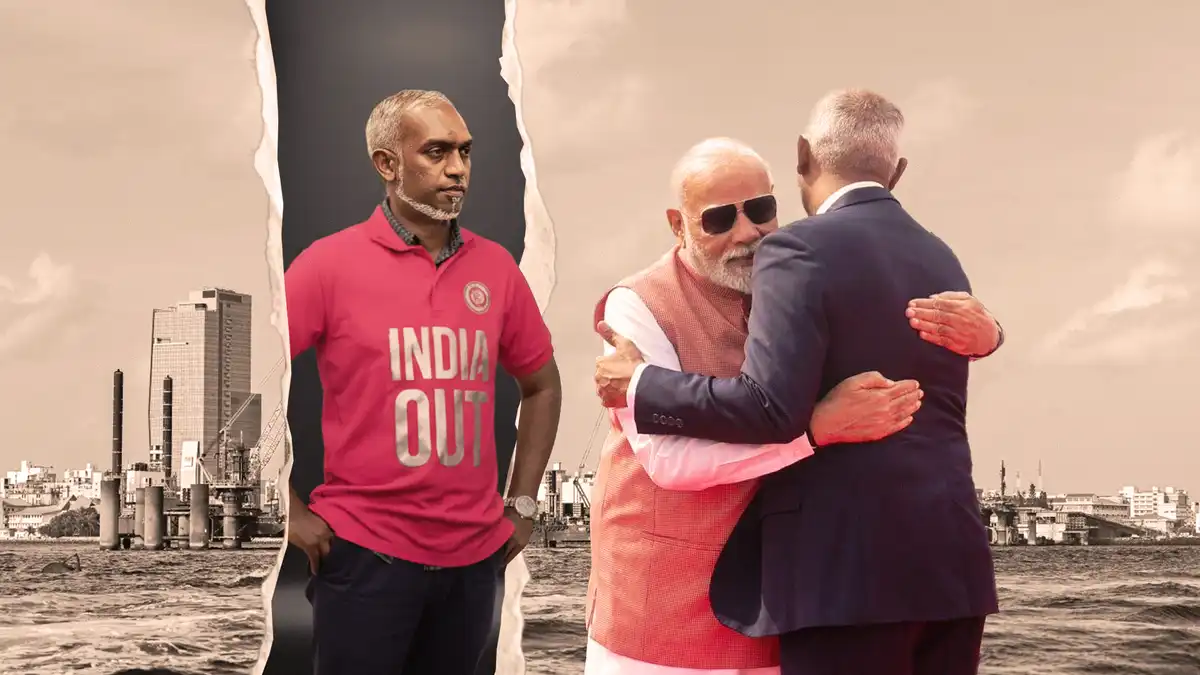
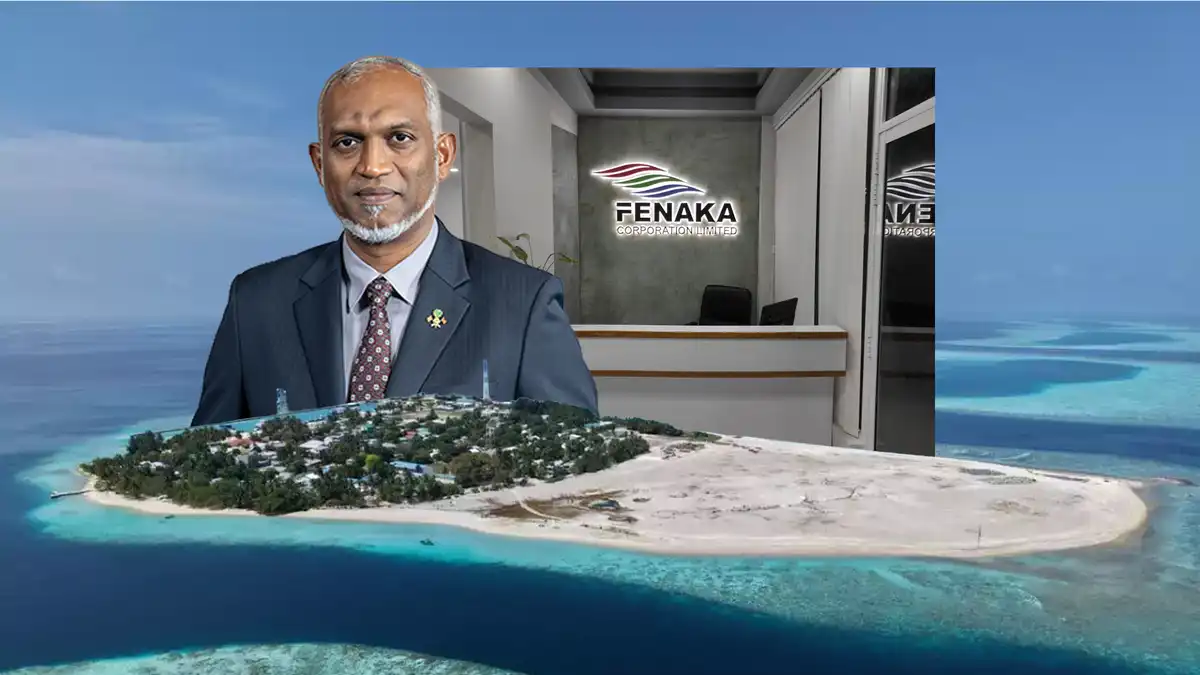
President Dr. Mohamed Muizzu has criticized the Indian company contracted the bridge project. | RaajjeMV Graphics | Raajjemv graphics
Back when he was hunting for votes, President Dr. Mohamed Muizzu made the Thilamalé Bridge project a primary target of his rhetorical fire. He famously mocked the former efforts made by the former administration of the now main opposition Maldivian Democratic Party (MDP), claiming that even from the comfort of his own balcony, he could not spot a single sign of life at the construction site. According to the version of reality he sold during the presidential campaign, the entire massive undertaking had ground to a total and pathetic halt under the former leadership.
The second-year slump
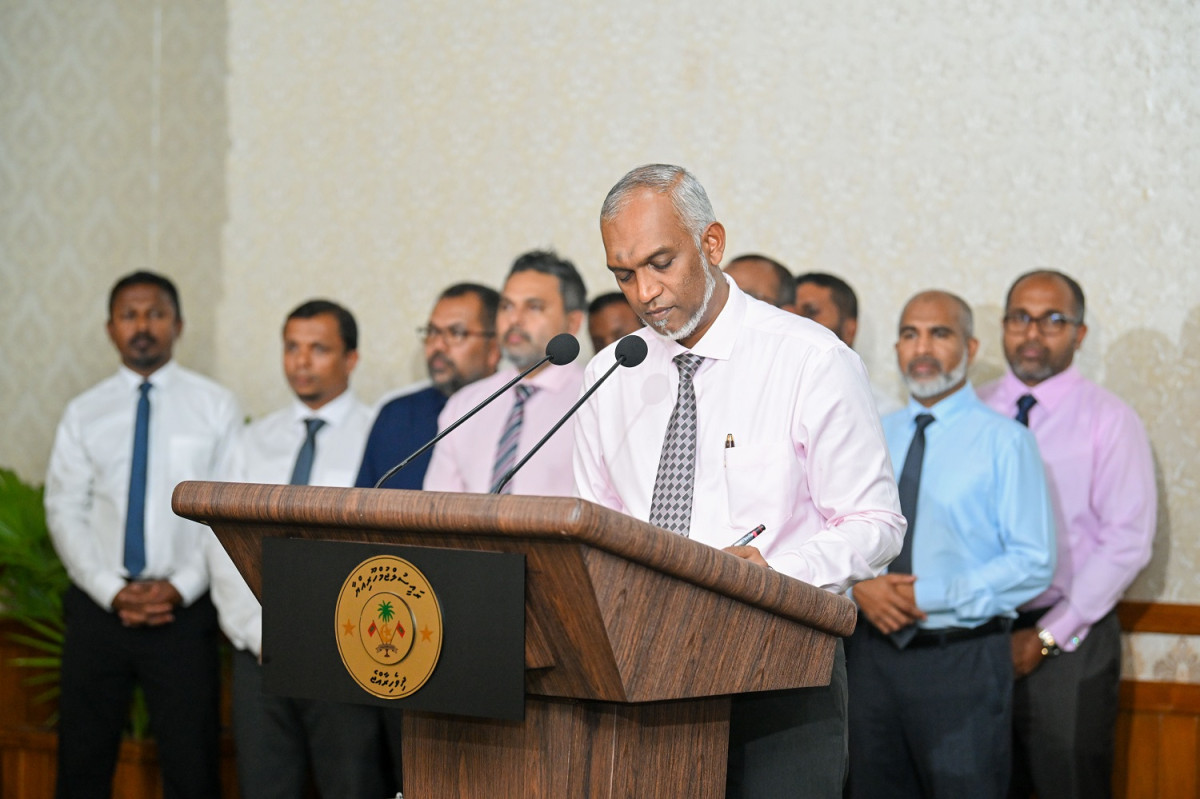
Fast forward to the present, as the incumbent edges closer to the end of his third year in office, the bridge remains a haunting monument to stagnation. The scenery has not changed and the progress is as invisible now as it supposedly was then. This is not just an outside observation; it is a grim reality that Muizzu himself had to own up to during a media briefing on Monday.
From hothead to pushover
The fiery determination that once fueled his stance on finishing this project has since vanished, replaced by a defeated shrug. The man who once used his platform to roar about delays in the harshest possible terms has now downgraded his outrage to a mild admission that things are just moving a bit slowly. It is a stunning pivot from a leader who once claimed to have all the answers.
Calendars hold the great Muizzu administration hostage?
More concerning than the admission of a snail’s pace is the incumbent’s suggestion that his hands are effectively tied. He painted a picture of an administration at the mercy of a contractor that does nothing but toss out new deadlines like confetti. Instead of taking charge, the government appears to be sitting in a waiting room, watching those dates expire one by one, seemingly incapable of exerting any real influence or taking any meaningful action to fix the mess.
The silent presidential address
While expressing his personal annoyance with the velocity of the work, the incumbent essentially confessed to being a bystander in his own government. He admitted that he purposefully scrubbed any mention of the bridge from this year’s presidential address because there was simply nothing positive to report. He noted that while he is not happy and he assumes no citizen is, the government is still playing nice and providing full cooperation. He lamented that since a deadline he shared in last year's address was ignored by the contractors, he saw no point in bringing it up again. According to the president, he will be thrilled whenever it actually wraps up, but for now, the target has conveniently shifted from 2026 to 2027.
The incredible shrinking executive
These excuses paint a portrait of a hesitant, passive administration. The incumbent’s own words frame him as a helpless witness to the passage of time rather than a commander-in-chief driving the country forward. It leaves the public wondering: if the man at the very top of the hierarchy claims he lacks the muscle to hold a contractor to their word, where does the buck truly stop? If a private company is the one calling all the shots on the timeline, one has to ask what happened to the actual power of the executive branch.
The analyst-in-chief
This level of passivity is hardly the gold standard for a national leader. A incumbent is not supposed to be an uninterested bystander or a commentator documenting the country's failures from the sidelines. He is not a weather reporter narrating a storm of delays; he is the person hired to ensure the gears of the nation actually turn, that contracts are enforced and that the public's needs are met.
A mirror of incompetence
The very project Muizzu once used as a weapon to prove his predecessor’s failures has now become a reflecting pool for his own administration’s flaws. The firm, decisive action promised on the campaign trail has dissolved into a series of excuses that sound a lot like a white flag of surrender. The public that was once promised a bridge, is instead witnessing a masterclass in hopelessness.