The people’s veto: Muizzu’s favorite phrase becomes his final warning
5 އެޕްރީލު 2026 | އާދީއްތަ 14:17In a historic referendum, Maldivian citizens delivered a decisive rebuke to President Muizzu by rejecting proposed constitutional changes. The vote surpassed the president's previous electoral support, signaling a public demand for the state to stop manipulating the nation's foundational laws for political gain. This outcome reaffirms the separation of powers and establishes a clear boundary against government overreach, prioritizing national values over short-term political interests.

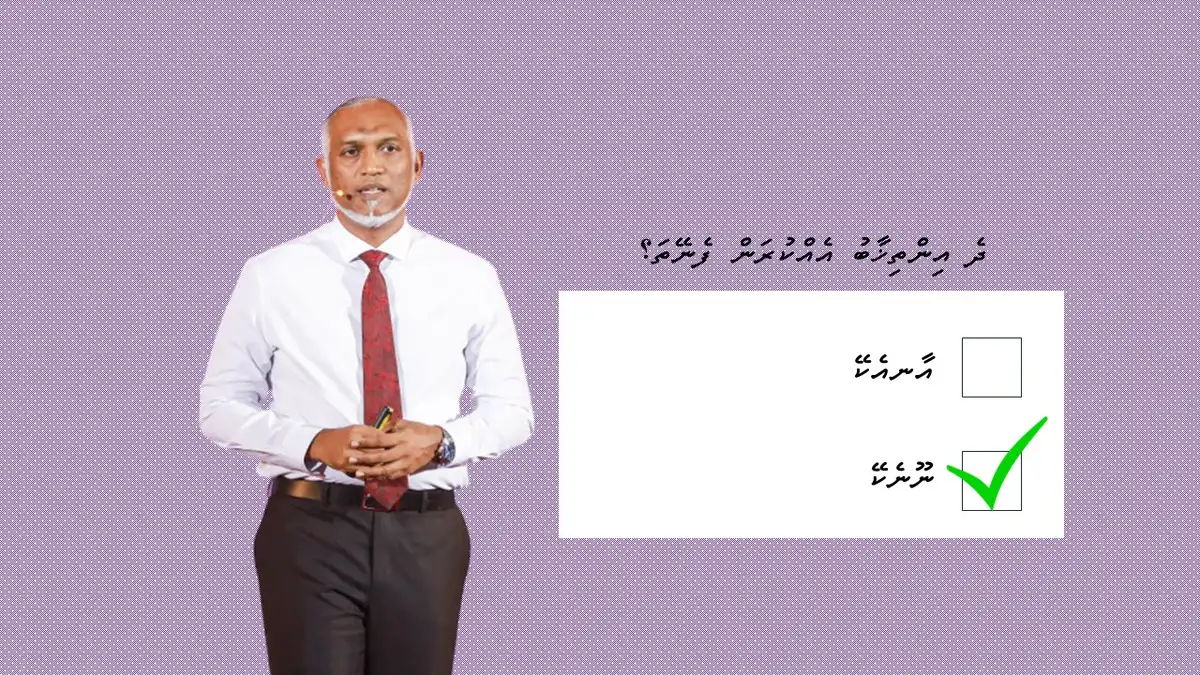
President Dr. Mohamed Muizzu. | RaajjeMV Graphics | Raajjemv graphics
The irony of the invisible line
The term "Red Line" has long been a staple of President Dr. Mohamed Muizzu’s vocabulary, serving as a convenient rhetorical shield throughout his campaign and his tenure. Whether he was posturing about national independence, sovereignty, territorial integrity, or the sanctity of the Constitution of the Republic of Maldives, the president has never missed an opportunity to warn others against stepping over his imaginary boundaries. But on 4 April 2026, the script was flipped in a way the administration clearly didn't see coming, because this time, the government wasn't the one holding the marker; the citizens were.
Math that stings
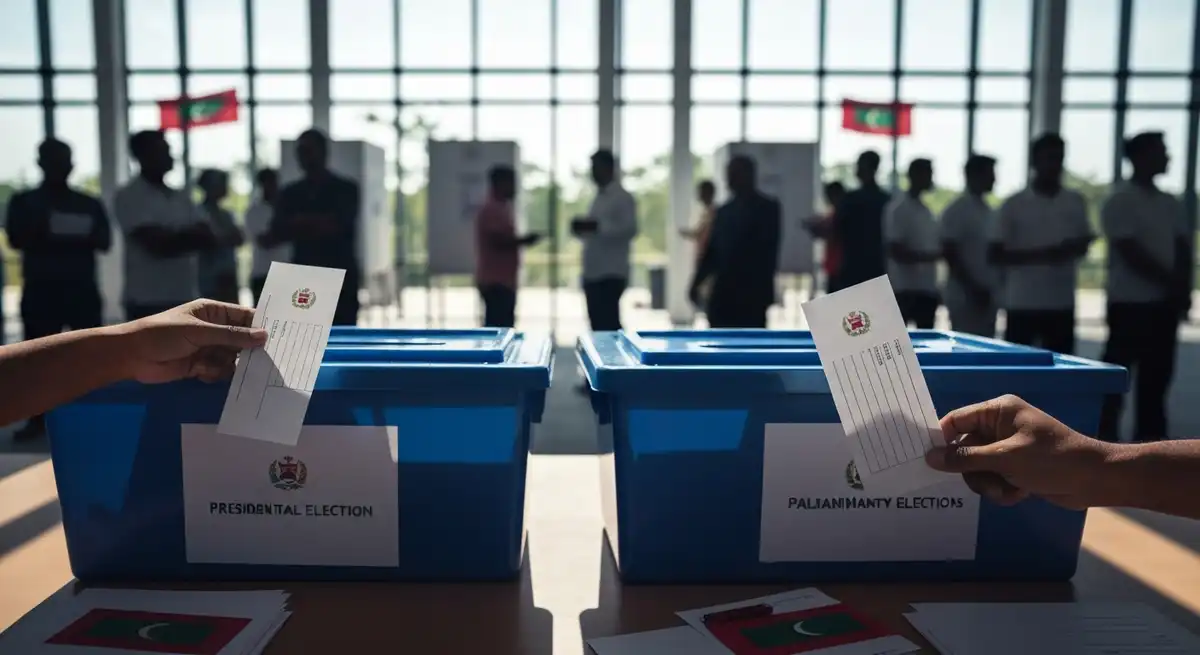
The referendum results provided a cold, hard dose of reality for the current leadership. The tally of citizens who checked the "No" box didn't just edge out the opposition, it surpassed the total number of supporters Muizzu managed to scrape together during the second round of his presidential win. In a vote that gripped every corner of Maldivian society, the electorate did more than answer a simple question. They provided a scathing critique of the current governance trajectory, delivering a loud, unambiguous demand for the state to stop its overreach.
A document, not a doormat
The message from the masses was blunt: stop treating the constitution like a personal sketchbook. The public has grown weary of seeing the nation's foundational document manipulated for convenience, distorted for personal gain, or weaponized to secure political advantages. While "Red Line" is a heavy phrase implying dire consequences, the people have reclaimed it to protect the State's bedrock. The constitution exists to define the limits of authority and ensure the separation of powers, acting as a specific barrier against the very abuse of power currently polluting the Maldivian political landscape.
The people’s red pen
Recently, the foundation of the state has been treated as a flexible suggestion, a document to be bent or rewritten whenever it suits a specific political maneuver. It was at this breaking point that Maldivians felt forced to stand up and draw a boundary of their own. It served as a vital reminder that state power isn't a gift from the top down, but that it originates from the people.
Purpose over politics
To be clear, the public isn't inherently allergic to legal evolution. As democracies grow, frameworks often require thoughtful updates. However, those changes demand deep deliberation, broad consensus and actual integrity; qualities notably absent in recent efforts. The voters didn't necessarily reject the idea of change, they rejected the shady intentions and the arrogant manner in which those changes were pursued.
A legacy reclaimed
This outcome is far more than a simple electoral loss for the administration. It is a fierce reaffirmation of the principles established by the Special Majlis that originally drafted the Constitution.
By saying "No," the people have signaled that certain national values must always sit higher than short-term political greed. The line has finally been drawn and this time, it wasn't by the man in the palace.