Gov’t and state in a losing battle for real independence
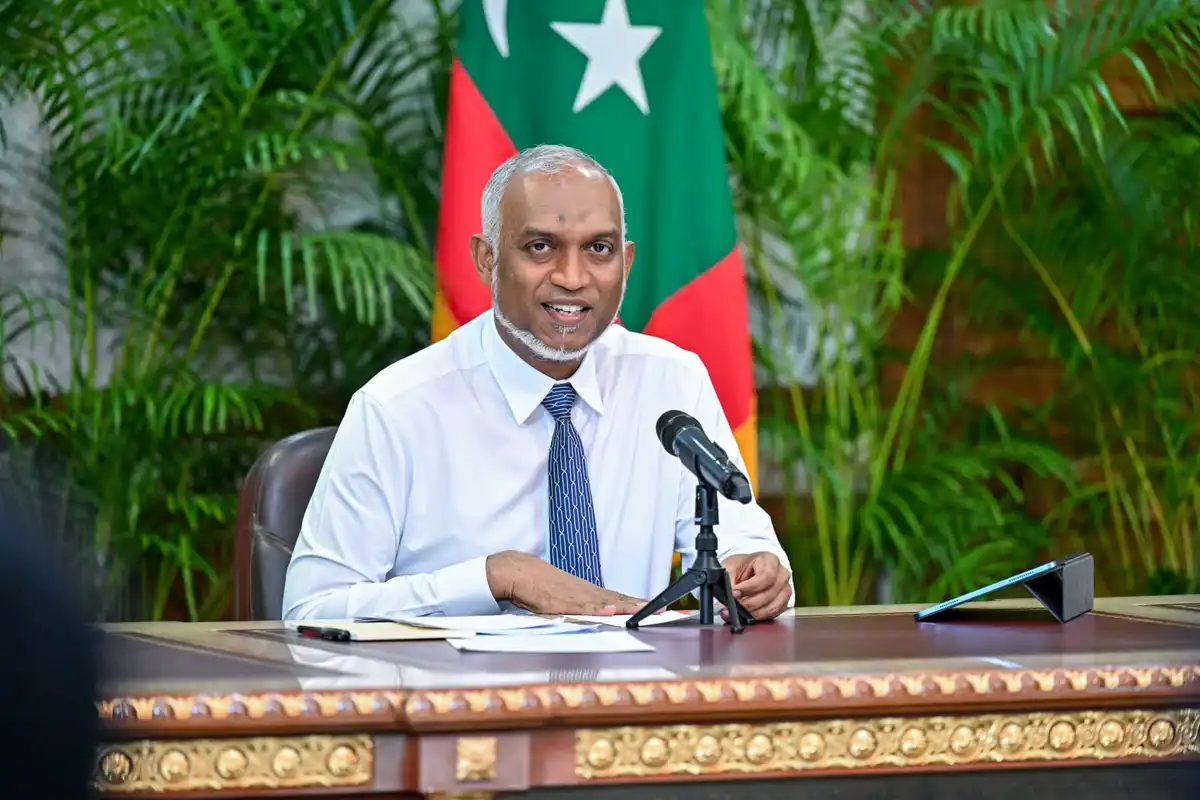
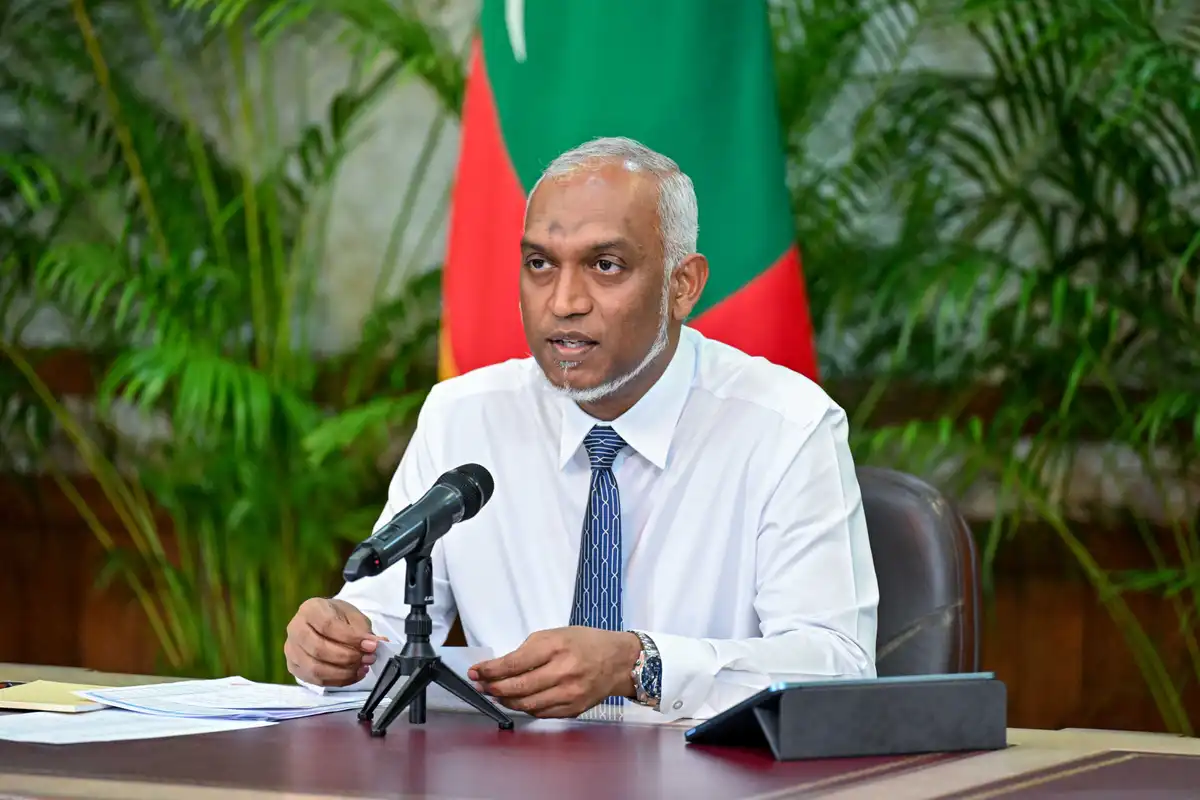
29 ސެޕްޓެމްބަރު 2026 | އަންގާރަ 08:05President Muizzu and PNC have been granted a clear electoral mandate by the citizens. However, the fundamental question currently facing state institutions is whether the systems are functioning independently and effectively, free from government and political influence

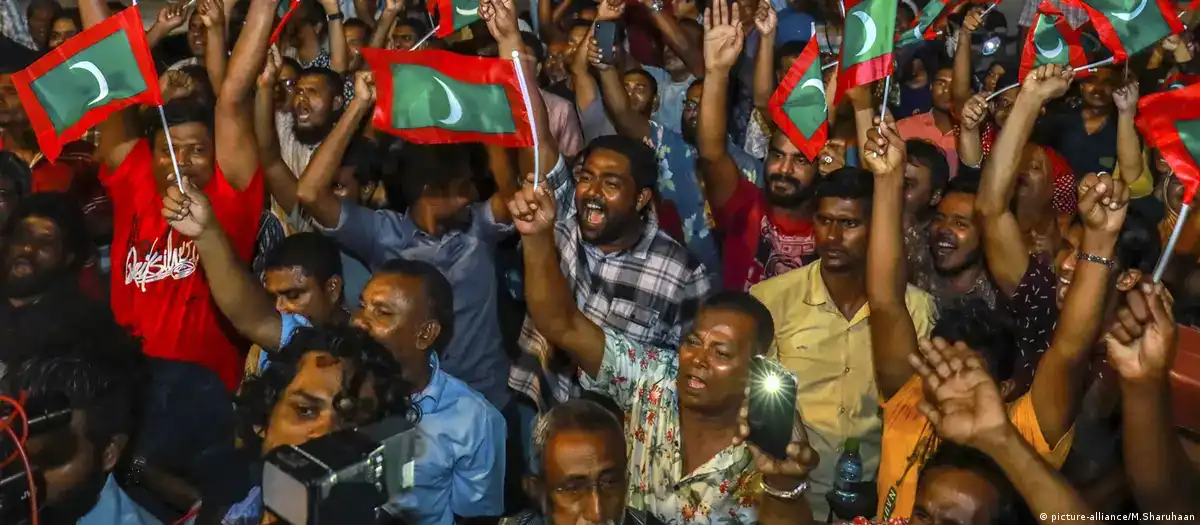
Is this the change Maldivians were promised and the leadership they expected for the nation? | dw.Com
A government comes with an expiration date, serving out its allotted hours until voters kick it out, but the state endures indefinitely. While the occupant of the presidency, cabinet heads, and parliamentary lawmakers come and go through the ballot box, genuine state apparatuses like the judiciary, law enforcement, armed forces, public service, oversight bodies, and municipal authorities owe their allegiance exclusively to the citizenry and the nation itself.
No matter which political flag flies over the administration, these apparatuses must work strictly for the broader community.
Preserving this line between regime and republic is the only thing keeping Maldivian society balanced. The electorate handed President Dr. Mohamed Muizzu and his People’s National Congress (PNC) a governing mandate, sure, but the uncomfortable riddle hanging over our national institutions today is whether any of them actually work with a shred of genuine autonomy, or if they have simply been bent into tools of ruling-party influence.
Holding an intimidating 74-seat bloc in the legislature, PNC commands a supermajority that showers the executive branch with staggering leverage and virtually unchecked discretion.
Now, running a supermajority is not intrinsically an offense against democratic rule, given that voters marked the ballots that built it. However, everyday observers are rightfully wondering whether all that legislative muscle is doing anything good for regular people.
A cynical eye looks at the flurry of recent constitutional tweaks and sees an exercise designed purely to shield the governing regime. Watching lawmakers systematically stretch their fingers toward the courts and independent bodies, one cannot escape the bitter feeling that the administration’s survival comes before every other public interest.
The drama unfolding in the highest legal corridors has set off an acrimonious row over whether judicial impartiality is already dead in the water.
On 26 February 2025, in the middle of deliberating an urgent constitutional matter, Supreme Court Justices Azmiralda Zahir, Husnu Al Suood, and Mahaz Ali Zahir were abruptly pushed aside or thrown off their seats. The maneuver prompted swift alarm from UN Special Rapporteurs monitoring the independence of judges and attorneys.
Unmoved, the administration struck back by terminating two of those judges on the grounds of an active bribery and graft inquiry.
Lawmakers subsequently rushed through a statute chopping the apex bench from seven jurists to five. Then came the twist: on 11 March 2025, President Muizzu sent the downsizing bill back to parliament without his signature and turned around to name brand-new judges instead. Watching this bench-clearing performance, ordinary citizens are understandably asking if the judiciary is taking orders directly from the top.
Through calculated structural revisions, the process of picking the figures who head our independent watchdogs has been neatly neutered. Since November 2024, the law allows the president to handpick the president and vice president for both the Anti-Corruption Commission (ACC) and the Elections Commission (EC) directly from among their sitting rosters.
They might still carry the label of independent statutory institutions on paper, but legislative meddling has placed their autonomy squarely under the thumb of the President and his legislative supermajority. The cynical wager now is whether our battered checks and balances can withstand watchdogs hand-selected by the very authority they exist to police.
On 18 September 2025, President Muizzu signed into law the Maldives Media and Broadcasting Regulation Act, junking the former framework of the separate Media Council and Broadcasting Commission to replace them with a unified Maldives Media and Broadcasting Commission.
The regime rolled out all the usual platitudes, insisting the overhaul would safeguard press freedom, elevate reporting standards, and stamp out fake news. However, observing how this creation actually behaves leaves the public wondering whether it protects the reporter holding the pen, the citizen absorbing the news, or simply the ruler on the throne. One only needs to sift through the body’s official press releases and decrees to discern the answer.
Decentralized power has suffered its own severe downgrades under the banner of progress.
With the passage of the 17th amendment to the Decentralization Act, the public will no longer vote for Atoll Councils, which face total elimination starting with the 2026 local elections. Island Councils survived the chopping block, but stripping out elected atoll leadership means island governance gets sucked back directly into the bureaucratic maw of the central Local Government Authority.
If that was not enough, another legal revision signed into law on 1 September 2026, forces local councils to bend over backward to facilitate central government projects. It establishes mechanisms to seize community land for state endeavors without needing local council approval and shunts administrative authorities once owned by Atoll Councils over to the finance ministry.
The official narrative paints these aggressive takeovers as crucial modernizations to eliminate bureaucratic hurdles and speed up national infrastructure. Sharp-eyed citizens, however, see the centralization drive for precisely what it is.
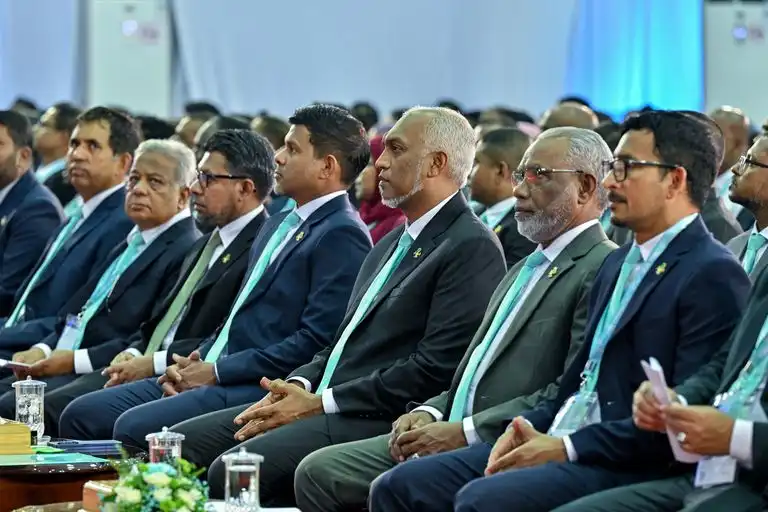
At the PNC’s internal convention in September 2026, the boundaries between the executive hierarchy and the party apparatus vanished completely. President Muizzu sits at the apex of the PNC as party President, with Speaker of the People’s Majlis Abdul Raheem serving as the party’s Chairperson. The vice president, multiple ministers, and a sea of political appointees similarly fill elite leadership chairs within the party hierarchy, joined by the directors of three state-owned enterprises who were successfully seated in the PNC brass.
Of course, party members taking state desks happens across the democratic world. But this heavy-handed cross-pollination breeds an unmistakable climate of graft and pressure across public contracts, bidding protocols, and civil employment rolls. Sound governance demands a clean wall between the party club and the government desk, not a shared payroll.
Despite this aggressive consolidation, the public refuses to nap through the power grab.
In the 2026 national referendum, an overwhelming 68.74 percent of voters rejected the administration’s scheme to merge presidential and parliamentary votes, while the 'Yes' camp scraped together just 31.26 percent amid a 74.98 percent turnout.
Later, in the April 2026 Local Council Elections, the opposition MDP snatched mayoral control across five cities alongside outright majorities in prominent local councils. By June 2026, the opposition maintained its momentum when MDP’s Abdulla Sodiq carried the Hithadhoo North by-election with 1,375 votes.
The ballot box shows our democracy still has a pulse, and that everyday voters are thoroughly sick of witnessing an insular regime hoarding all the levers of power for itself.
When the state apparatus, the governing regime, and the ruling party fuse into a single political leviathan, the everyday citizen is left with a barrage of grim questions: Can any courtroom realistically rule against the government? Can the graft commission pursue genuine investigations into theft inside the cabinet? Can the election board stage an election without taking cues from ruling party headquarters? Can an independent news desk interrogate powerful rulers without being crushed? And can an opposition council exercise its legal mandate without being hit by political payback?
Is this the hollowed-out independence Maldivians thought they were getting?
And is this the clean, accountable public administration citizens dreamed of when they demanded better leadership for their country?