
Civil service employees granted 30-minute "buffer time" to prevent being marked late
3 ޖުލައި 2026 | ހުކުރު 12:45Under this policy, employees must make up for any late arrival within the same workday, though any delay exceeding 30 minutes will be officially recorded as tardiness. The primary objective of this initiative is to provide staff with the flexibility to adjust their working hours during exceptional circumstances.

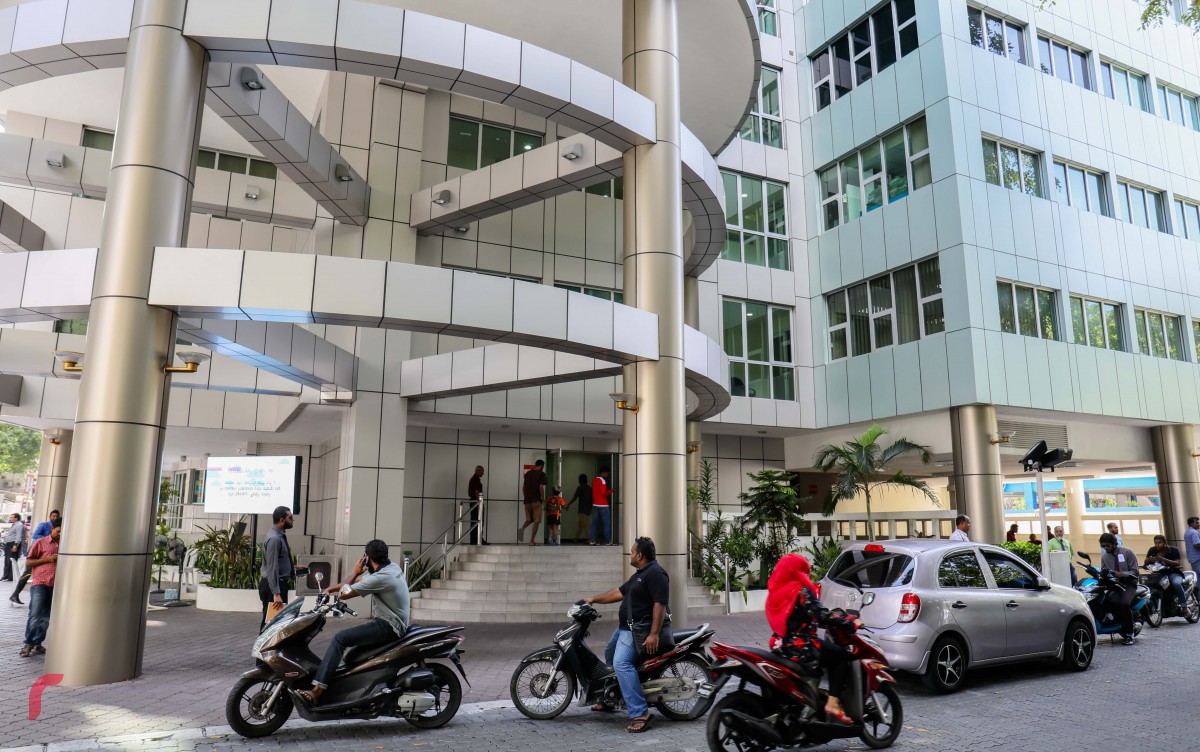
Velaanaage: A significant number of civil service employees work in this building.
The Civil Service Commission has amended its regulations to introduce a 30-minute "buffer time," allowing civil servants to avoid being marked late in the event of emergencies or special circumstances that prevent them from arriving at the office on time.
According to the amendment introduced by the Civil Service Commission, "Buffer Time" is a designated period intended to provide flexibility to employees who are unable to report for duty on time due to unforeseen circumstances. Under this new policy, every employee will be granted a 30-minute buffer period starting from the official commencement of working hours.
Under these regulations, employees utilizing "Buffer Time" who report to the office during that period must notify their respective HR departments, providing a justification for the delay. However, any employee arriving at the office more than 30 minutes after the start of official working hours will be categorized as late.
Furthermore, the policy stipulates that employees who arrive during the buffer period must compensate for the delay by completing the required duration within that same workday. For instance, if the official working hours begin at 8:00 a.m. and an employee arrives at 8:20 a.m., they will only be permitted to sign out at 2:20 p.m. that afternoon.
The Civil Service Commission stated that the primary objective of this amendment is to provide flexibility for employees facing difficult circumstances. However, the Commission clarified that any time exceeding the designated 30-minute buffer period will not be eligible for adjustment.