Paradise found: Maldives dominates UAE’s summer travel charts
29 ޖޫން 2026 | ހޯމަ 10:44Maldives, Thailand, and Mauritius are the top international destinations for UAE travelers this summer, with overseas trips accounting for 90 percent of all bookings. While long-haul travel to places like Canada and Australia is rising, local staycations in Dubai and Abu Dhabi remain popular. Travelers are increasingly opting for luxury four and five-star accommodations, leading to a 16 percent increase in average booking expenditure compared to last year.

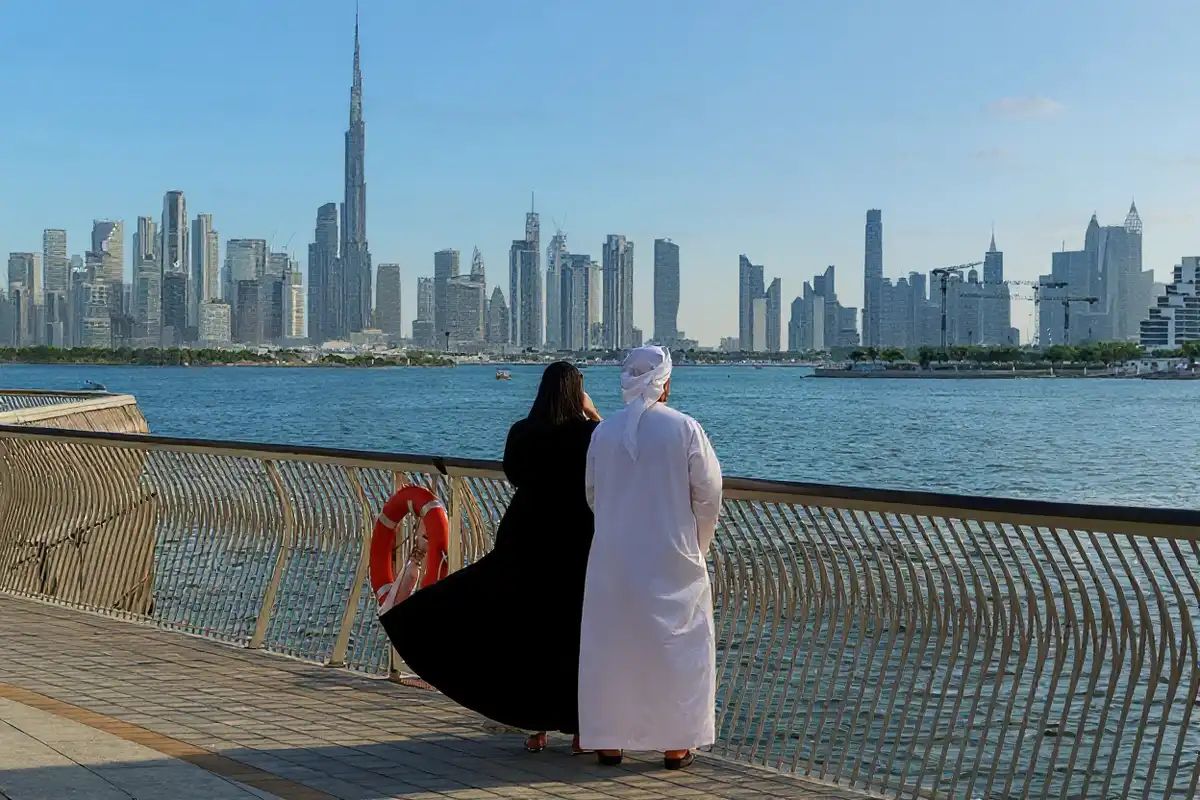
A couple stands looking at the Dubai skyline, with the Burj Khalifa, the world's tallest building, seen from Creek Harbour on April 3, 2026 | getty images
The Maldives has claimed the number one spot as the preferred vacation destination for United Arab Emirates residents throughout the summer of 2026.
Data from dnata Travel reveals that the island nation secured 20 percent of the total overseas hotel reservations during this period.
Joining the Maldives in the list of the five most popular international hotspots for UAE tourists are Thailand, Mauritius, Canada, and Australia.
According to Meerah Ketait, dnata Travel's Head of Retail and Leisure UAE, overseas vacations have experienced a major boom this summer, with international trips making up 90 percent of all accommodation reservations.
Ketait remarked that while classic locations like the Maldives, Thailand, and Mauritius maintain their strong appeal, there is a growing trend of vacationers selecting long-distance destinations to discover fresh locations and distinctive adventures.
Additionally, Ketait pointed out that local getaways, or staycations, still hold a meaningful share of the travel sector. For these briefer getaways, especially over public holidays, Dubai, Abu Dhabi, and Fujairah serve as the preferred spots.
When heading abroad, travelers generally schedule five-night visits on average, though these stays usually lengthen when traveling to far-off destinations.
Vacationer interest in four-star and five-star luxury lodging has grown significantly, which has driven a rise in the typical booking expenditure by roughly 16 percent relative to the identical timeframe from the previous year.