Six conditions must be met to authorize controlled delivery operations in drug-related cases
10 ޖޫން 2026 | ބުދަ 10:24A new regulation has been established outlining six mandatory conditions for authorizing "controlled delivery" operations aimed at dismantling drug trafficking networks. The primary objective of these operations is to identify kingpins and financiers to take down entire criminal syndicates. Under the new framework, authorities are required to maintain strict oversight of the illicit substances throughout the operation while ensuring the safety and security of all personnel involved.

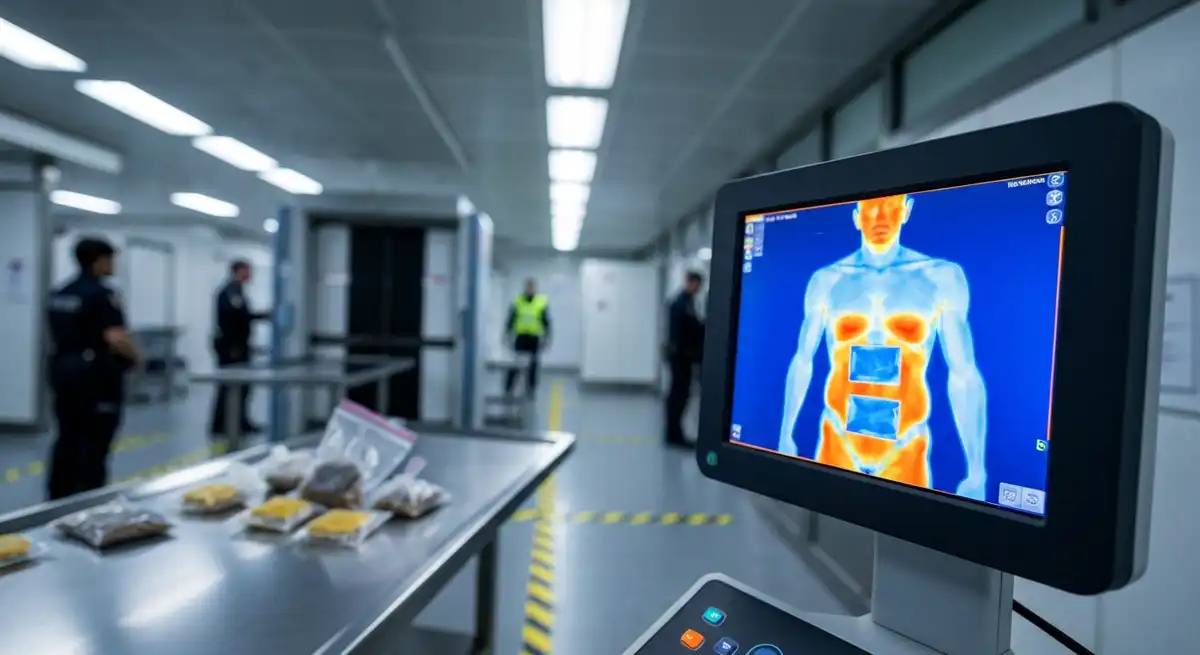
A woman has been apprehended at the airport after attempting to smuggle 30 rubber packets of suspected narcotics into the Maldives by concealing them on her person. | RaajjeMV
Authorities have established a new regulation outlining the procedures for conducting controlled delivery operations in drug-related cases, as well as the protocols for ordering and submitting urine samples for forensic analysis. The regulation defines six specific conditions that must be met to authorize a controlled delivery operation.
The primary condition stipulated in these regulations is the existence of sufficient evidence indicating that an offense under the Drug Act has been committed, is ongoing, or is being attempted. This is the most critical requirement that must be verified prior to conducting a controlled delivery operation.
The second condition requires sufficient evidence to justify a controlled delivery, based on the nature and characteristics of the alleged offense. In this regard, the necessity of conducting such an operation must be determined by evaluating the type and severity of the crime.
The third condition stipulates that if an officer is required to perform an act during a controlled delivery that would otherwise be unlawful without authorization, the necessity of that specific action must be clearly detailed and justified.
The fourth condition stipulates that the operation must include specific measures to ensure that any drugs or substitute substances used remain under the control of the Police or Customs upon the operation's conclusion. This is a critical requirement established to ensure the secure management and accountability of controlled substances.
The fifth condition stipulates that the operation must not be conducted in a manner that encourages participants to commit a crime they did not otherwise intend to commit. This is a crucial safeguard established to protect the rights of those involved in the operation.
The sixth and final condition stipulates that the safety, health, and overall well-being of all personnel involved in the operation must be guaranteed. This is a critical requirement established to ensure the security and protection of all participants throughout the operation.
These regulations establish essential standards designed to ensure that controlled delivery operations in drug-related cases are conducted within legal boundaries while safeguarding fundamental rights.
A "controlled delivery" operation in narcotics cases is an enforcement tactic where, upon the discovery of an illicit drug shipment or parcel, authorities refrain from immediate seizure. Instead, the consignment is kept under surveillance and allowed to proceed to its intended destination to identify and apprehend those involved in the trafficking network.
The primary objective of conducting such an operation is to move beyond the arrest of the individual courier and instead identify and apprehend the entire network. This includes those receiving the shipment, the transporters, the financiers, and the key masterminds behind the planning and execution of the transaction.
For instance, if a parcel containing narcotics is intercepted by the police, they will allow it to proceed to its intended destination while maintaining close surveillance. Once the suspects attempt to take delivery of the parcel, they will be apprehended, and further investigations into the case will be conducted.