Gov’t taxis are spun as a solution, reality remains stuck in gridlock
5 ޖޫން 2026 | ހުކުރު 10:15MTCC and private taxi drivers both identify Malé City's poor infrastructure and heavy congestion as the primary obstacles to reliable service. Despite the introduction of state-funded vehicles, commuters still face severe shortages because the underlying issues of traffic flow and street layout remain unaddressed. Critics argue that the project is an expensive failure that ignores the logistical warnings previously voiced by independent operators.

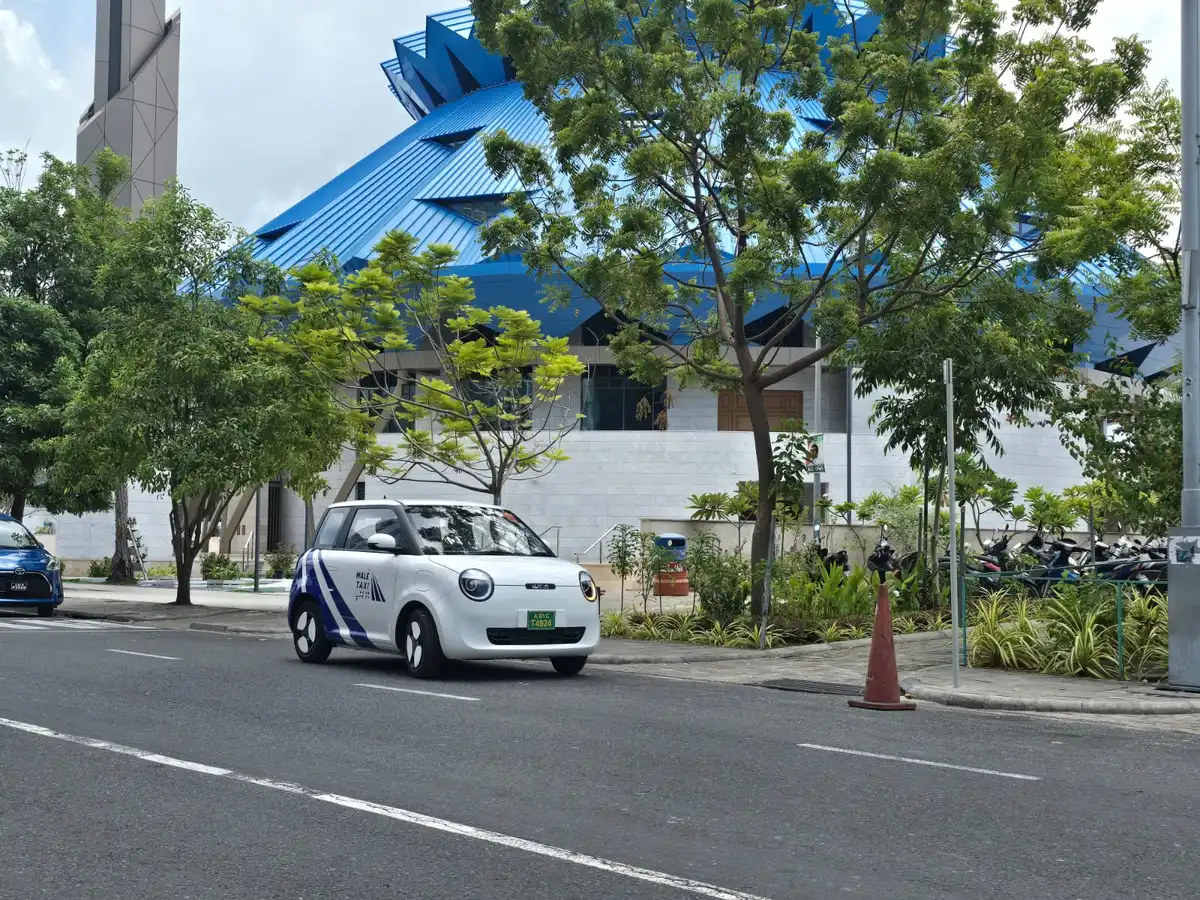
A vehicle from the newly introduced MTCC taxi line travels along a road. | Raajje MV
An audio broadcast on Dhivehi FM recently showcased an interview with a high-ranking representative from the Maldives Transport and Contracting Company (MTCC), focusing on the state-run cab operation and the transportation it delivers.
Monitoring that dialogue raised serious doubts regarding the trajectory of the project and the specific tale being spun to the public.
The corporate representative singled out the abysmal infrastructure of the capital Malé City's streets alongside the dominant congestion as the primary bottlenecks sabotaging their operations.
In addition to this, the individual pointed out the irritation that arises when a vehicle arrives at a pickup point only for the passenger to procrastinate indoors.
Familiar whines of the road
These exact complaints perfectly mimic the eternal protests voiced by independent cabbies.
Private operators have long maintained that the true roadblock to catching a ride is rooted entirely in street blockages and the nightmare of reaching passengers.
The suffocating density of the thoroughfares, worsened by motorbikes dumped across walkways and intersections, turns cruising through the internal lanes of the capital into a logistical nightmare.
Frequently, after dodging these hurdles to pick up a passenger, motorists discover the client is completely unready. Lingering means enduring the anger and aggressive horn-blowing of trapped motorists, which forces the cab to relocate.
On alternative occasions, by the time the vehicle successfully navigates the chaos to arrive, the passenger has already skipped town in a different car, leaving the motorist with a pointless, wasted journey.
Peak hour nightmares, holiday madness
The reality of peak demand hours paints an equally grim picture. A seasoned motorist boasting two decades of road experience highlighted this by painting a picture of the morning rush traveling from Hulhumalé to the capital.
When the entire populace demands a vehicle at the exact same moment and is forced across a single bridge, bottlenecking is an absolute certainty, completely independent of how many vehicles are thrown onto the streets.
Even when operators push their hardest to deliver passengers to their workplaces on time, they are thoroughly crippled by elements completely outside of their influence.
The veteran motorist further observed that during the chaotic windows of school runs and office departures, the resulting gridlock turns driving anywhere in the capital into a self-explanatory nightmare.
Further, the operator observed that passenger requests skyrocket during holidays such as Fridays or when specific public gatherings take place in Hulhumalé.
When a massive wave of vehicles floods the asphalt simultaneously to cash in on this surge, the traffic jam only multiplies in intensity.
Cruel math of private driving
Beyond these massive logistical headaches, the motorist also exposed the harsh economic strain squeezing everyday operators.
The vast majority of these individuals do not possess the titles to their vehicles, meaning they are forced to hand over a daily rental fee ranging from MVR 300 to MVR 350 to the vehicle owners, completely regardless of what they actually take home.
On top of that, even a trivial traffic ticket triggers a financial penalty of at least MVR 700.
Should a vehicle break down and require maintenance, operators are hit with exorbitant price tags and a severe lack of replacement components.
Every single day a vehicle sits stranded in a repair garage represents a day of pure financial desperation. The driver asked a deeply distressing rhetorical question regarding whether any operator would willingly choose to sit around doing nothing under such intense burdens, noting that every person naturally wants to bring home enough money to cover household bills and finish their shift as rapidly as possible.
An expensive mirage funded by taxpayers
To wrap up, the seasoned driver threw a direct inquiry back at the community, asking if the arrival of state-sponsored vehicles had actually cured the vehicle deficit or made flag downs any easier.
The operator's conclusion matched the dominant complaints echoing across social media platforms, confirming that the state's meddling has done absolutely nothing to fix the crisis. Commuters are still documenting severe struggles when trying to land a ride, even with the state's brand-new collection of vehicles patrolling the streets.
This reality lands us right back at the comments made by the corporate representative.
If the state-managed enterprise is stumbling over the exact same structural roadblocks as independent operators, even while enjoying public subsidies and employing workers on fixed salaries, then delivering a swift and dependable transport system remains a total pipe dream.
The general populace can clearly see that this deficit is not a simple case of lacking physical cars.
Ultimately, regardless of the volume of vehicles the authorities dump into the mix, the crisis will drag on indefinitely until the actual layout of the capital is overhauled or traffic flow is regulated competently.
The cab operators and their respective cartels have yelled these warnings repeatedly and petitioned the regulators, but their expertise seems to have been completely tuned out.
This dismissive attitude from leadership, paired with the aggressive forcing of the new vehicle line onto the streets, causes numerous onlookers to smell an ulterior motive.
Whispers of shady dealings involving millions of MVR tied to the state's transport application only add gasoline to these doubts.
As a growing chorus of skeptics is currently hinting, the ugly and unvarnished reality behind this entire corporate gamble might only be unmasked down the road.