ACC Fails to Address Corruption: Shameem Proposes Abolishing Commission in Favor of Single Commissioner
25 މެއި 2026 | ހޯމަ 10:02Former Prosecutor General Hussain Shameem has criticized the Anti-Corruption Commission’s (ACC) investigative framework as a failure, noting that at its current pace, it would take an estimated 11 years to clear the existing backlog of cases. He proposed that the solution lies in restructuring the commission from a five-member body to a single-commissioner model, similar to the Prosecutor General’s office, to improve efficiency. Furthermore, Shameem emphasized that achieving meaningful results in the fight against corruption requires comprehensive institutional reform and the establishment of robust accountability mechanisms.


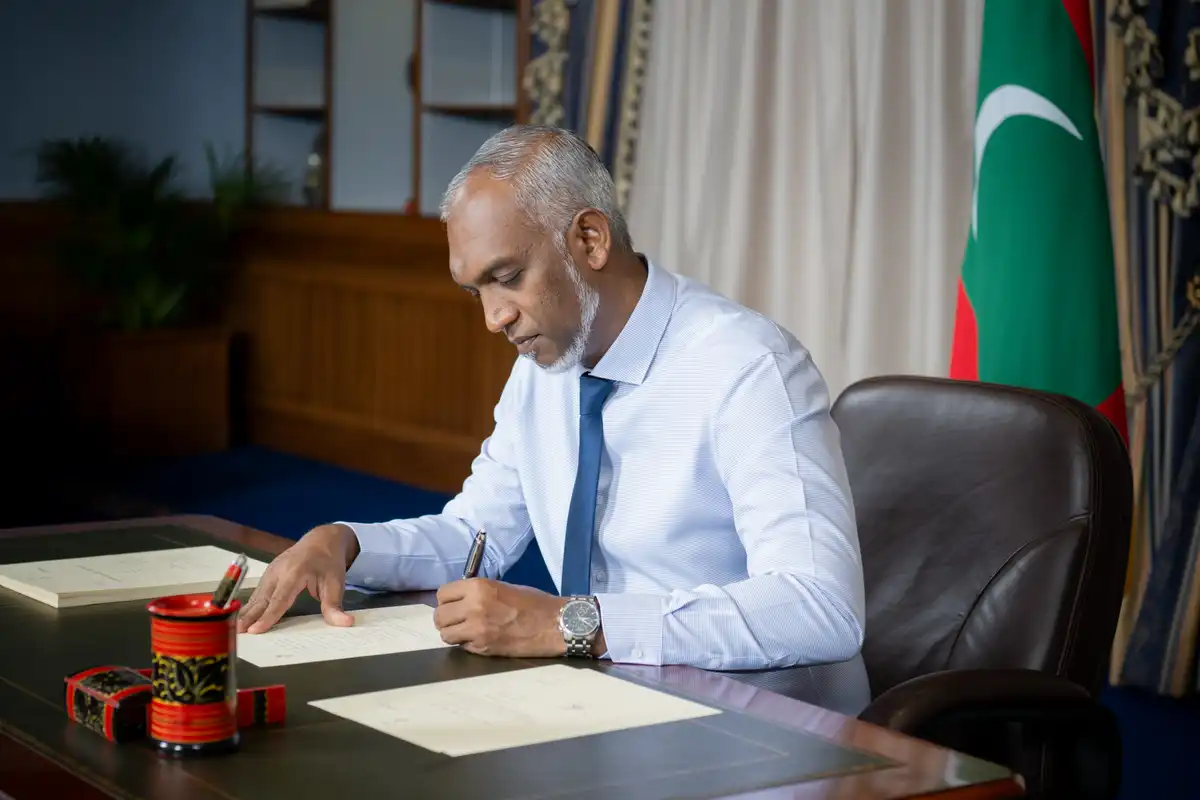
Prosecutor General Hussain Shameem. | PG Office
Former Prosecutor General Hussain Shameem has stated that the Anti-Corruption Commission (ACC) has failed in its mandate to investigate corruption. He suggested that the Commission should be dissolved and replaced by a single Commissioner.
He made these remarks in a post shared on his blog.
Shameem stated that there is universal consensus regarding the failure of the commission established to eradicate corruption. He estimated that at the current pace, it would take at least 11 years to clear the existing backlog of cases. Furthermore, Shameem noted that this timeline only holds true if no new cases are filed between now and the year 2037.
According to 2024 statistics published on the Anti-Corruption Commission (ACC) website, there are currently 3,501 pending cases. This includes 1,036 cases under active investigation and 2,465 cases in the preliminary stage. Over the course of a year, the Commission concluded only 297 cases—173 from the investigation stage and 124 from the preliminary stage. This reflects the Commission's current operational pace. At this rate, it would take at least 11 years to clear the existing backlog, and that is only if no new cases are filed between now and 2037. Of the 297 cases concluded, only eight were deemed fit for prosecution. Consequently, the statistics released by the ACC itself confirm the reality that its investigative system has completely failed.Former Prosecutor General Hussain Shameem
Noting that the Anti-Corruption Commission (ACC) has failed to produce results as an independent institution, Shameem stated that the current Commission President is someone who will fulfill any request made by the government of the day. As an example, Shameem highlighted the role played by the ACC during the turmoil surrounding the removal of Supreme Court justices, which he described as an extra-legal process conducted without any due process or established standards.
Therefore, Shameem stated that it would be more effective to have a single commissioner at the Anti-Corruption Commission, rather than a five-member body, similar to the structures of the Prosecutor General and the Commissioner General of Taxation.
The Anti-Corruption Commissioner will be appointed by the People's Majlis, following the same procedure used to select the Prosecutor General. The Commissioner will be supported by two deputies of their own appointment: one with extensive experience in investigative agencies and another with a background in prosecution and legal affairs. Additionally, the office will include a Chief Executive Officer. While the Commissioner is appointed by Parliament, the remaining leadership forms the Commissioner’s core team. The rest of the commission's staff will consist of technical and administrative personnel seconded from various government offices.Former Prosecutor General Hussain Shameem
Shameem stated that this system would bring an end to the culture of the People’s Majlis dismissing members of independent commissions without just cause. He further noted that a commissioner should only be removed after identifying specific objectives from their initial proposal that they failed to fulfill or achieve, and only after being granted a formal opportunity to be held accountable for those failures.
Shameem further stated that if there is a genuine desire to combat corruption effectively and achieve tangible results from investigations, the system must be reformed as proposed. He noted that based on the experiences of the past 20 years, such structural changes are essential to delivering meaningful outcomes.