Nasheed responds to Abdul Raheem’s vow to block no-confidence motion against President: Vote must proceed once quorum is met
24 މެއި 2026 | އާދީއްތަ 10:59In response to former President Mohamed Nasheed’s assertion that a no-confidence motion against President Dr. Mohamed Muizzu will be submitted to Parliament before the end of the year, Speaker Abdul Raheem Abdulla has vowed to block any such attempt. Rebutting the Speaker’s remarks, Nasheed maintained that under the Constitution, the Speaker has no legal recourse but to proceed with a vote if a motion is formally submitted by one-third of the parliamentary membership.

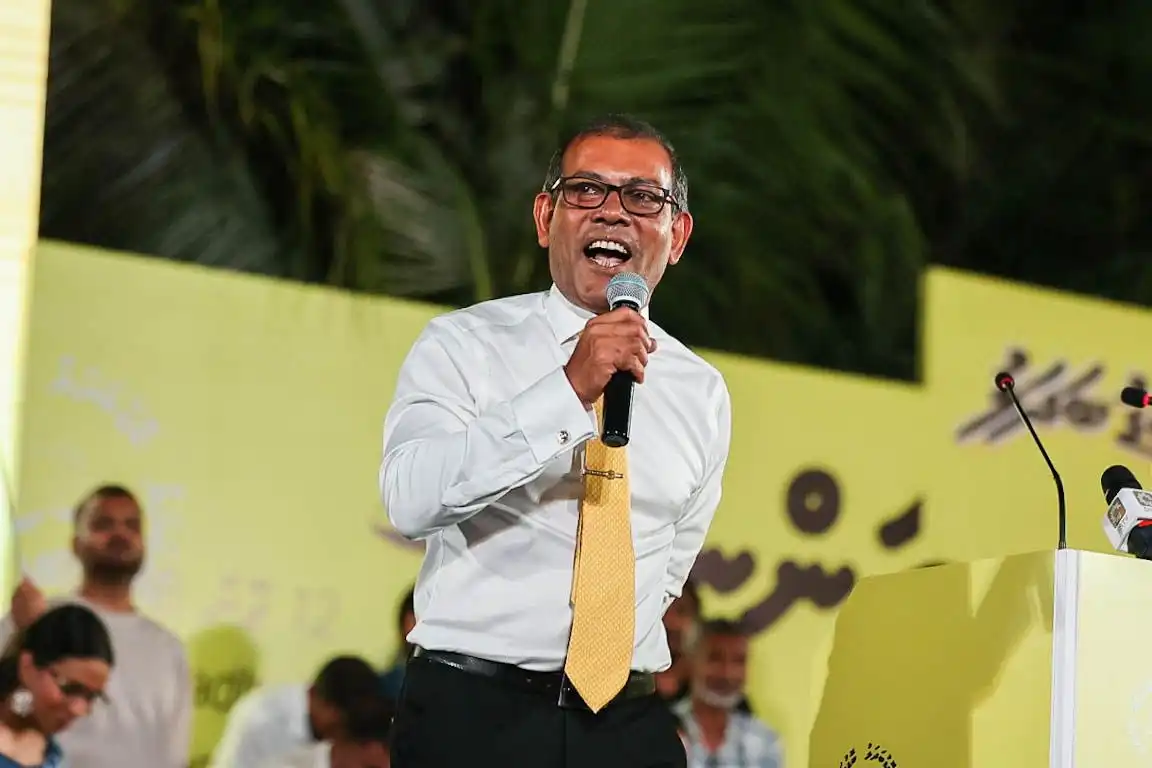
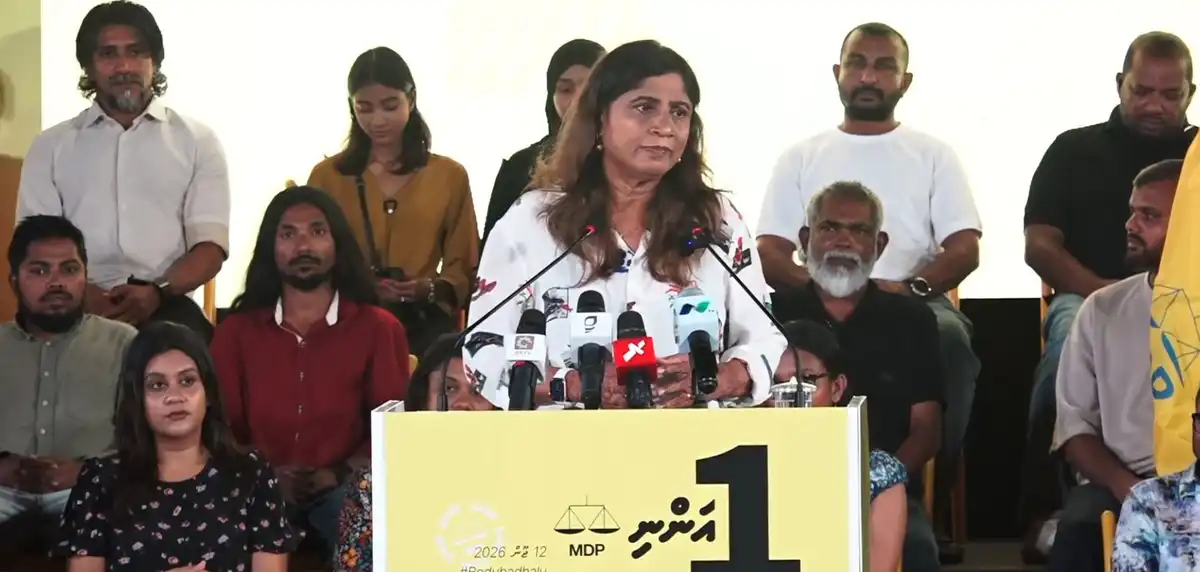
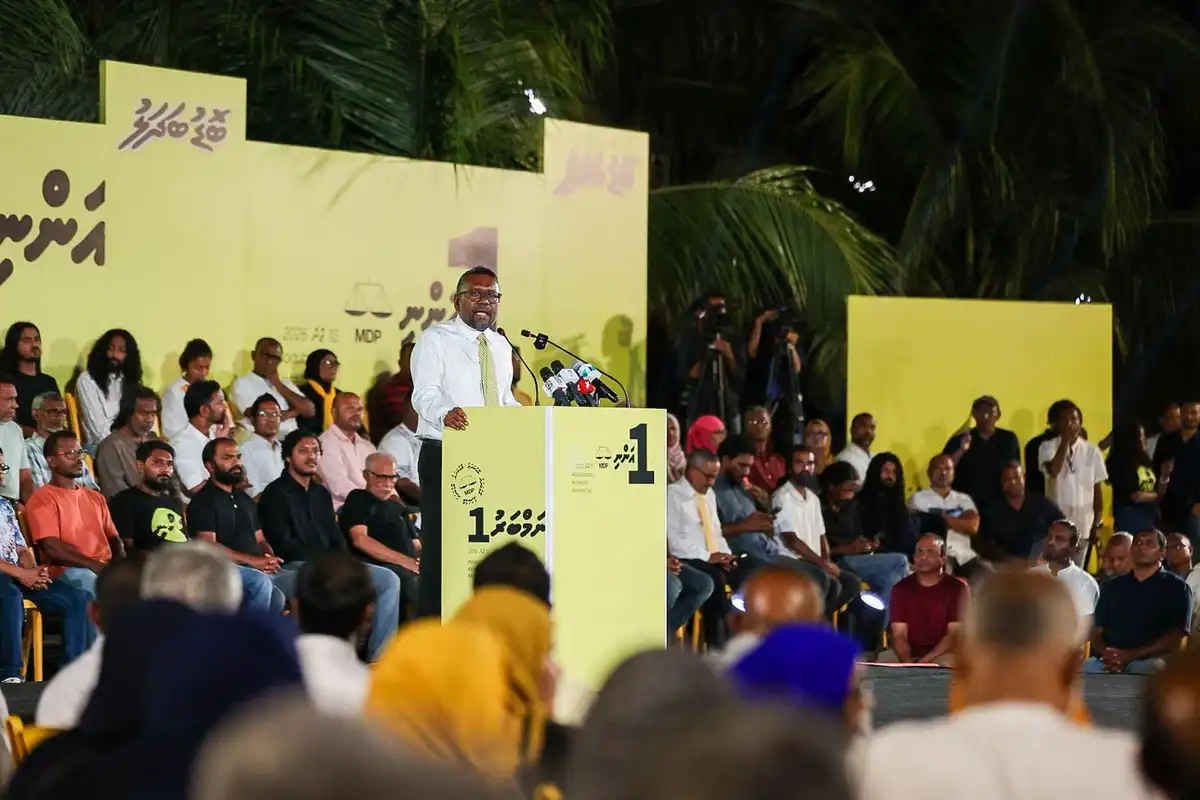
Former President Mohamed Nasheed delivers his remarks at the "Bodu Badhalu" (Great Change) rally. | MDP
Former President Mohamed Nasheed has hit back at Speaker of the Parliament Abdul Raheem Abdulla, following the Speaker’s assertion that he would not allow any motion of no-confidence against President Dr. Mohamed Muizzu to pass through the legislature.
Former President Nasheed has previously asserted that a change in government would be orchestrated before the end of this year by passing a no-confidence motion against President Muizzu through Parliament. Nasheed stated that the no-confidence motion against President Muizzu would be submitted to Parliament within this year. He further claimed that the motion would be introduced with the signatures of members from the ruling People's National Congress (PNC) as well.
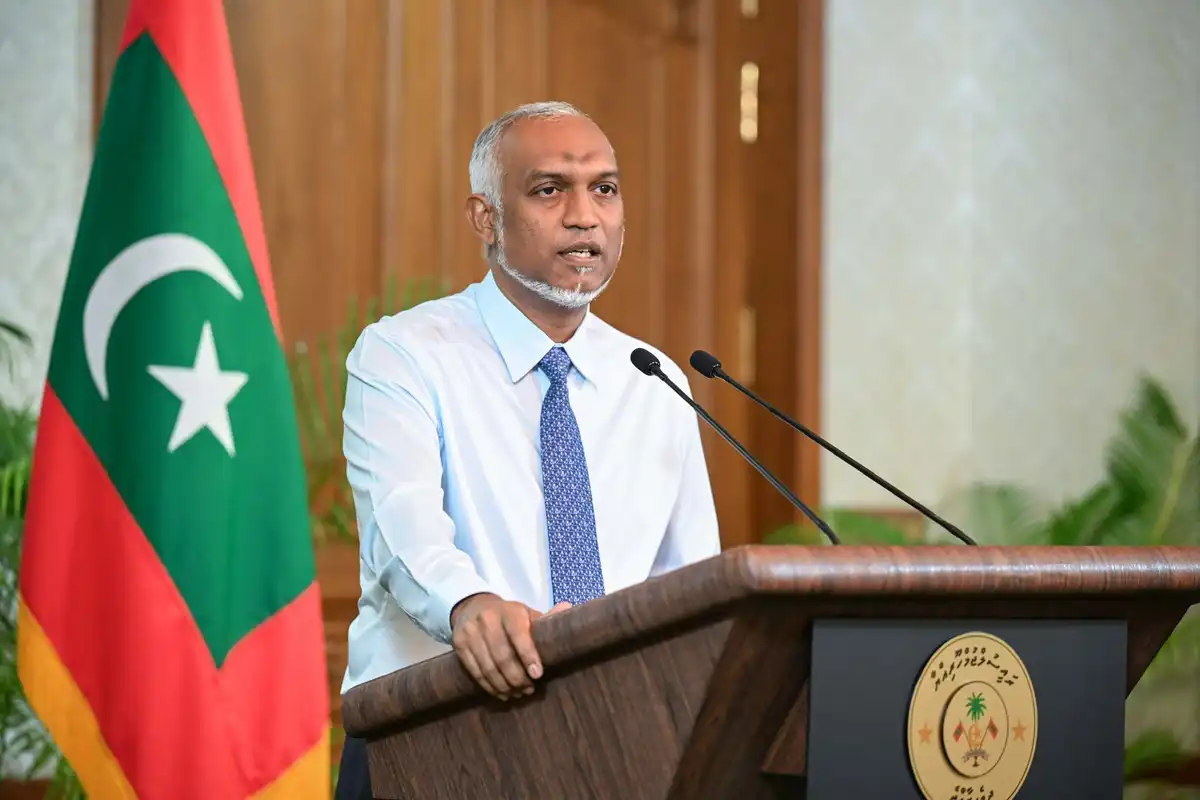
However, Abdul Raheem asserted that such an opportunity would not be granted, stating that the Parliament would not find a single member willing to sign a no-confidence motion against President Muizzu.
Speaking at a PNC campaign rally, Abdul Raheem declared that a no-confidence motion against President Dr. Mohamed Muizzu would not be successful, asserting that such an opportunity would not be granted. He further urged opponents to abandon their "delusional dreams."
Responding to those remarks in a post on X, President Nasheed stated that when one-third of the Parliament submits a motion, there is no alternative but to proceed with a vote. He emphasized that this principle is a fundamental pillar of the Maldivian Constitution.