MDP approves "Decentralization Policy" to triple state block grants for councils and reform local election voting systems
3 އޮކްޓޯބަރު 2026 | ހޮނިހިރު 16:39The MDP Congress has passed resolutions to increase block grants for local councils to 15 percent and grant citizens the right to vote for the council of their place of residence. Additionally, the congress decided to remove council administrative operations from the Civil Service mandate and dissolve Women's Development Committees in favor of restructuring council seats to ensure equal gender representation.
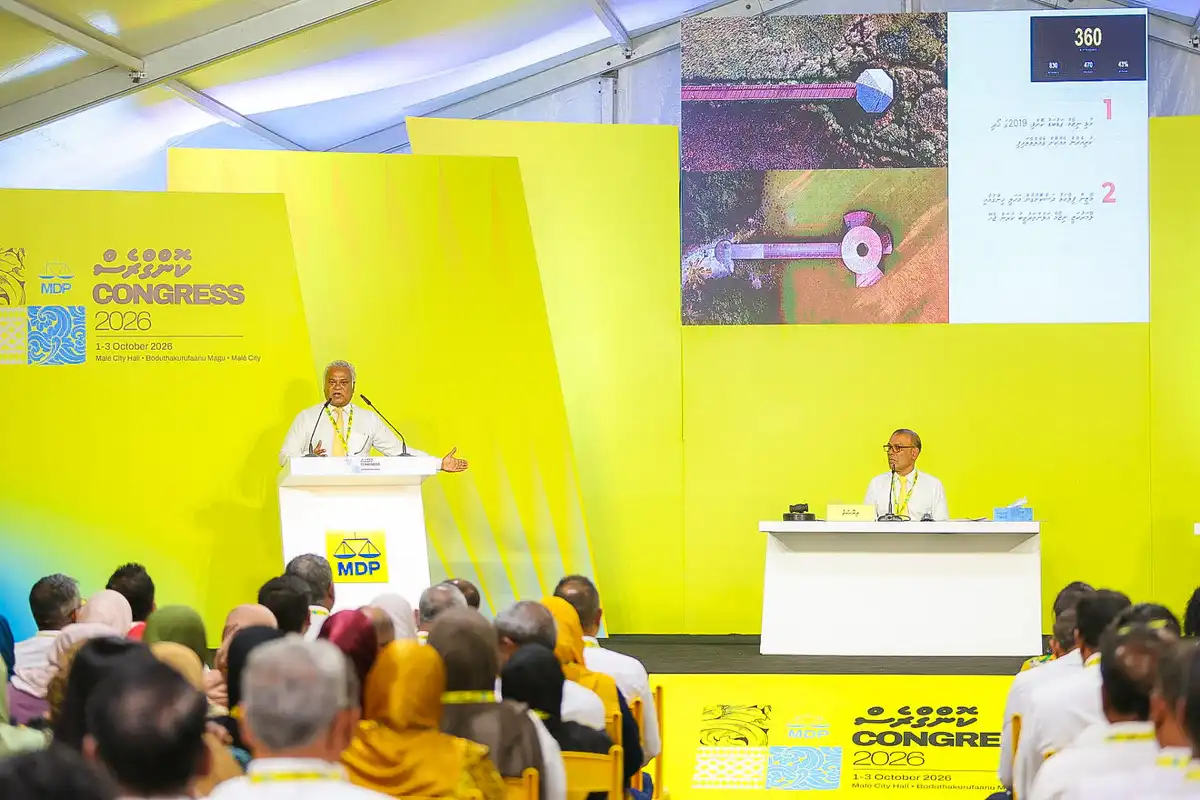
In a paper submitted regarding the policy on decentralizing administrative divisions, Ali Niyaz called for the economic and administrative empowerment of councils to transform the Maldives into a nation governed by a fully realized decentralized system. | MDP Secretariat
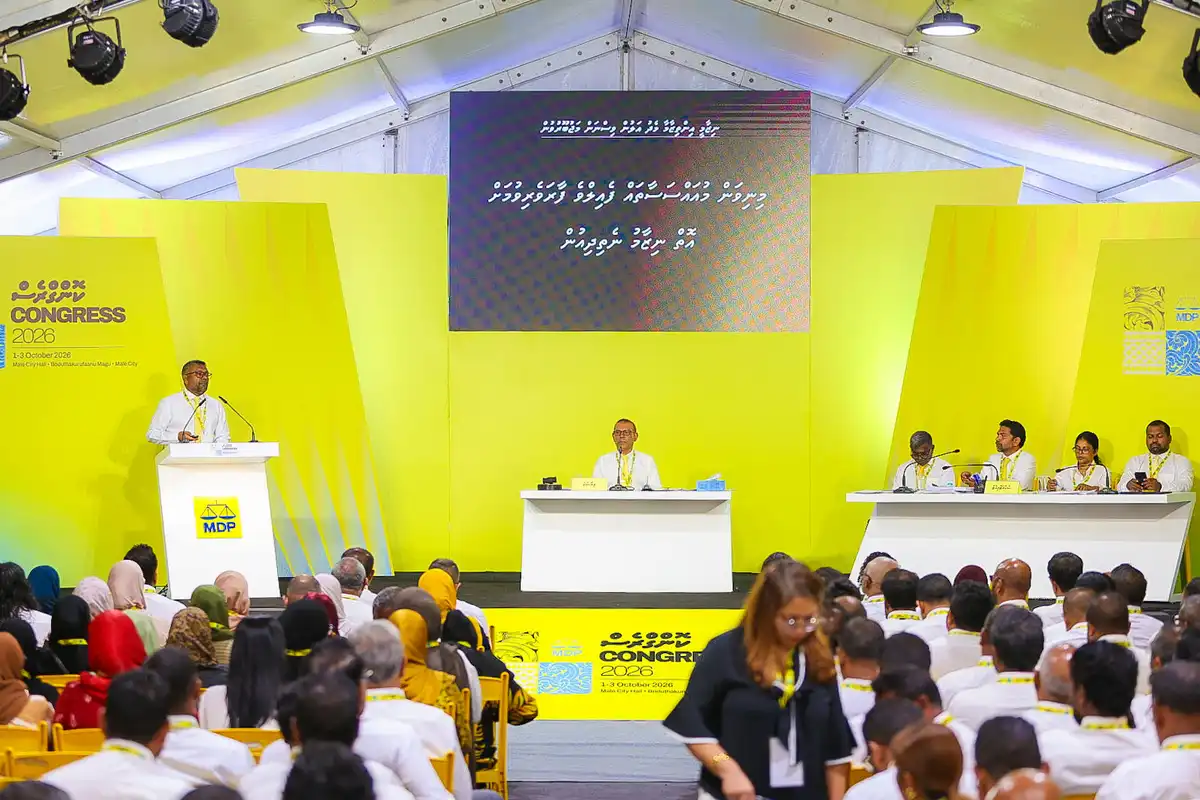
Delegates at the MDP Congress have overwhelmingly approved a "Decentralization Policy" that proposes tripling the block grants allocated to local councils from the state budget and reforming the electoral process for council members.
The proposals, which outline recommended changes to the decentralization system, were presented during the Saturday afternoon session of the congress by Ali Niyaz, Chair of the party’s Decentralization Committee and former Member of Parliament for the Hulhumalé constituency.
A policy paper has been submitted to the MDP Congress proposing to grant citizens the right to vote for the council of their current island of residence, seeking to abolish the existing regulation that mandates voting based on permanent address in local council elections.
The resolution, proposed by Niyaz and seconded by Mariyam Shiuna, outlines amendments across five key areas. A primary focus of the proposal is to reform the electoral process for local councils. Specifically, the resolution seeks to establish a mechanism that allows residents to vote directly for the councilors of the islands where they reside.
The reasoning provided was to end the mandatory requirement for individuals to vote in their home islands based on their permanent address, regardless of how long they had lived elsewhere. Ali Niyaz noted that with this change, individuals will have the choice to vote either in the island of their permanent residence or in another location for political purposes.
Ali Niyaz stated that the resolution was formulated based on the experiences gained from the implementation of the decentralization system in the Maldives to date, as well as research conducted on the matter by the Maldives National University and the Local Council Association.
Among the other measures proposed in the resolution are recommendations to triple the block grants allocated to councils from the state budget, increasing the share from 5 percent to 15 percent. Additionally, the resolution calls for discussions on allocating 20 percent of the Green Fund, 50 percent of land lease revenues, and 5 percent of central tax collections directly to local councils.
Furthermore, the proposal includes removing the administrative management of councils from the Civil Service mandate and granting councils direct authority over administrative functions, such as the recruitment, dismissal, and promotion of staff. The paper further proposes that council members, excluding the President and Vice President, would no longer be required to report to the office daily. Instead, they would receive specific allowances for attending meetings or performing designated tasks, a move intended to open opportunities for electing additional councilors across various sectors. Additionally, the resolution calls for the dissolution of Women's Development Committees (WDCs). It proposes restructuring the decentralization system so that, with the exception of the Council President, all elected council seats are distributed equally between both genders.
The resolution was passed with 560 votes in favor out of the 564 delegates present.