Maldives remains at forefront of climate change advocacy, yet these efforts have not translated into financial gain: Aslam
3 އޮކްޓޯބަރު 2026 | ހޮނިހިރު 16:26Former Minister Mohamed Aslam has stated that the Maldives can only achieve financial benefits through carbon credits by organizing projects in accordance with established specialized frameworks. Emphasizing the vital role of atoll councils in securing such assistance for local islands, he noted that carbon credits serve as a strategic tool for attracting the necessary investment for environmental preservation initiatives.

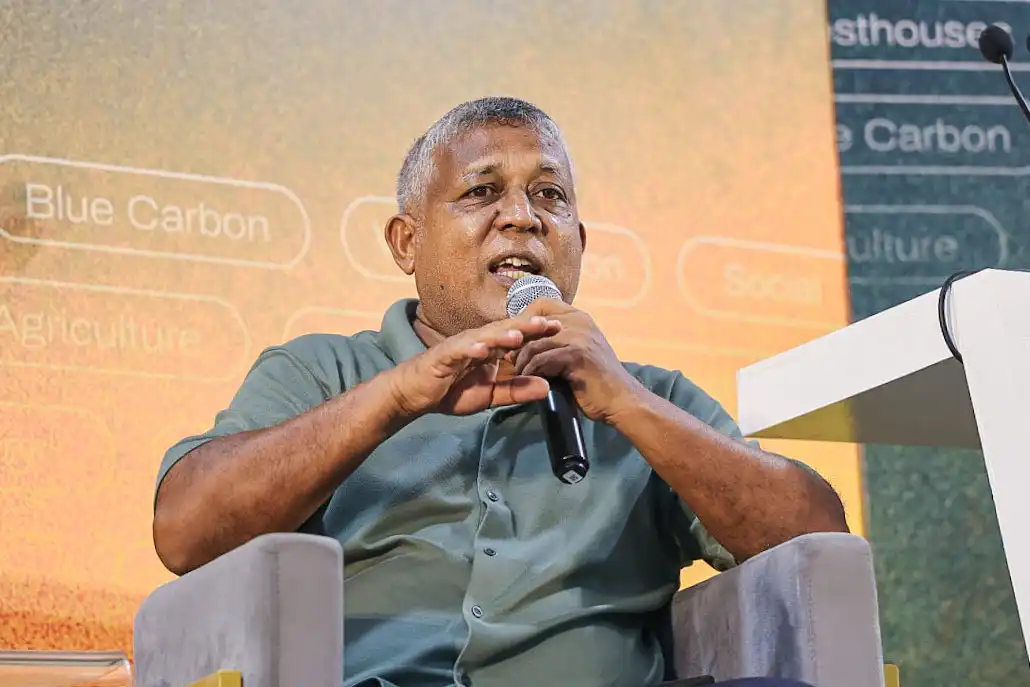
Former Housing Minister Mohamed Aslam. | MDP
Former Housing Minister Mohamed Aslam stated that while the Maldives remains at the forefront of global climate change advocacy, these efforts do not translate into financial gain.
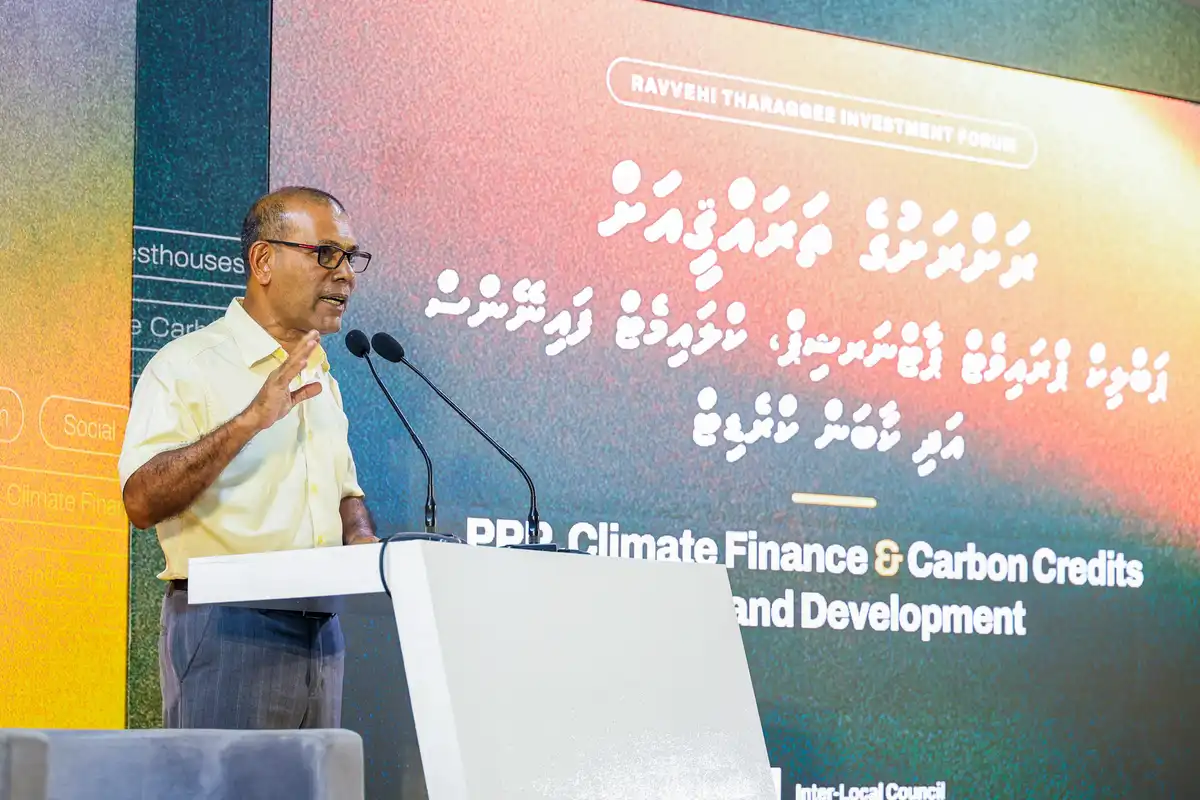
Speaking at a panel discussion during the "Rahvehi Tharaggee" investment forum held as part of the MDP Congress, Aslam stated that a nation does not acquire wealth by becoming vulnerable. Instead, he emphasized that financial stability is achieved by following a structured and systematic approach.
In this regard, Aslam noted that only a few people are aware that carbon credits are a structured and operational concept in the Maldives. He further stated that even within the government, only two or three ministers understand the matter, yet the knowledge they possess remains inaccessible to others.
Carbon credits are not something earned simply by installing solar panels. Projects must be structured and organized according to specific standards. If these requirements are not met and alternative methods are pursued, the outcome changes. Once a project is completed, it must still undergo a rigorous process of assessment, verification, and validation.Mohamed Aslam
Highlighting the necessity of reinstating Atoll Councils, Aslam stated that these bodies are the primary entities responsible for providing such assistance to islands. He further noted that attempting to manage these matters individually for each island leads to significant challenges.
Carbon credits serve as a financial instrument that allows projects to monetize future environmental benefits into immediate revenue, facilitating the acquisition of necessary funding. For instance, if a project to establish a solar farm or restore a mangrove forest requires one million dollars, an investor or company may provide a portion of that funding upfront. This is done based on the projection that the project will generate carbon credits in the future.
Once the project commences, the revenue generated from the sale of credits can be utilized to repay investors, distribute profits, or cover operational costs. In essence, this involves individuals providing financing for a project in anticipation that it will generate valuable carbon credits in the future.