Vice President Calls for Significant Increase in Climate Adaptation Funding
25 ސެޕްޓެމްބަރު 2026 | ހުކުރު 08:50The Vice President has called upon the United Nations to increase financial assistance and establish a robust monitoring system to address the threats posed by rising sea levels. Furthermore, he emphasized that international law must guarantee that the sovereignty and legal status of nations remain intact, even in the face of changes to their physical geography.

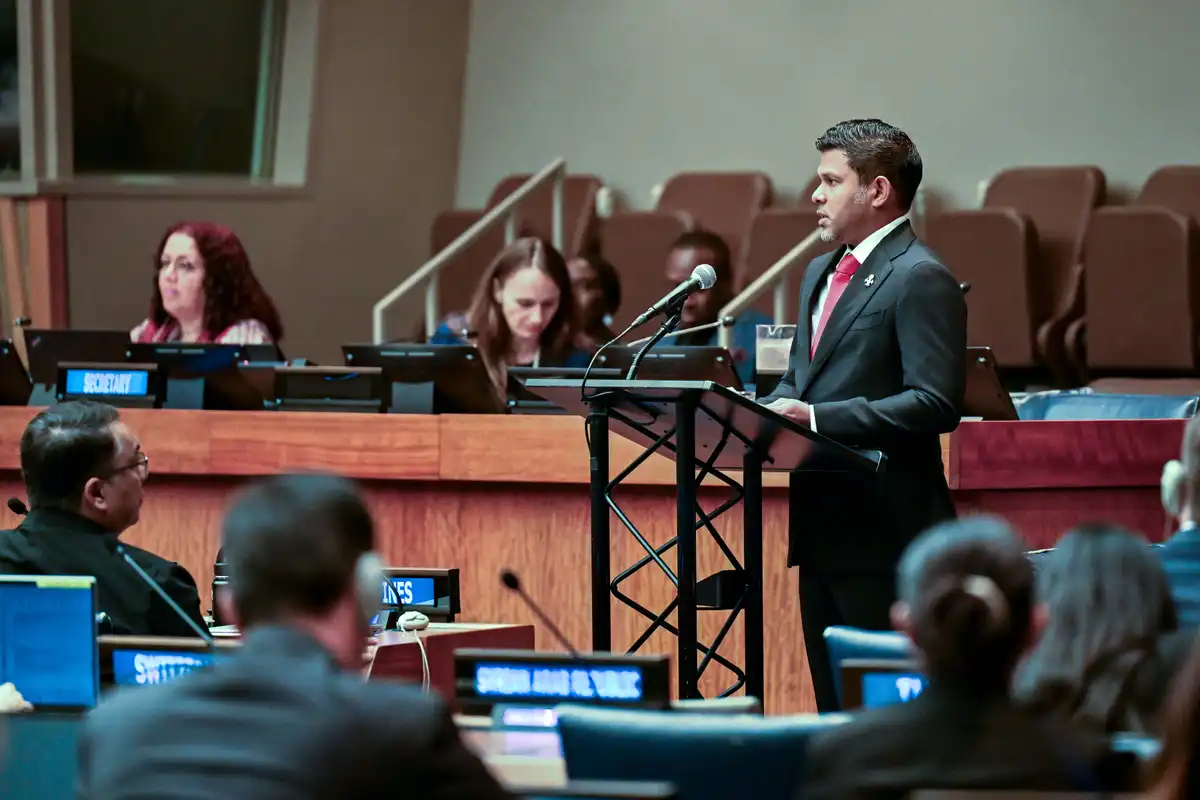
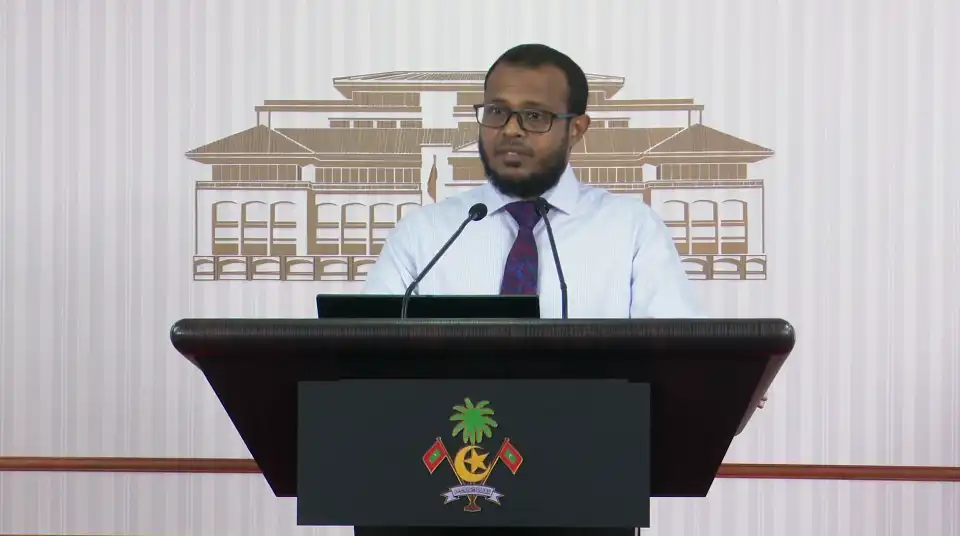
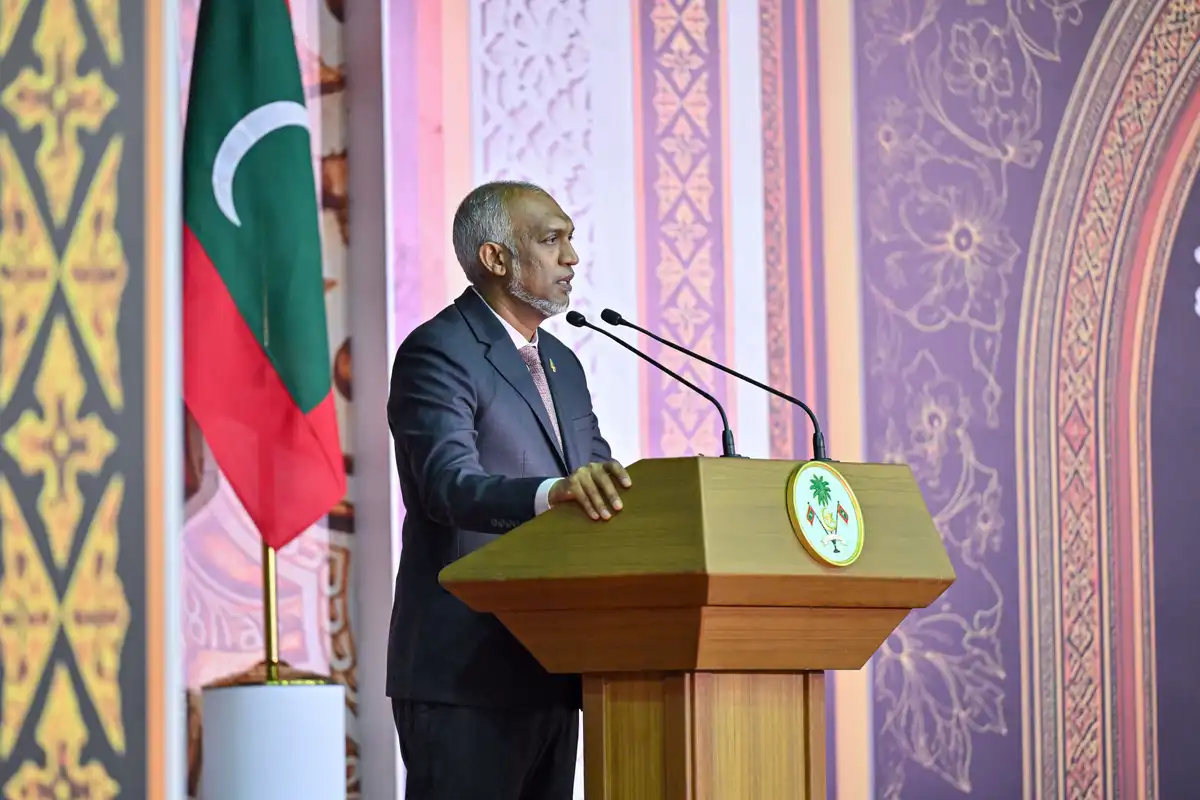
Vice President Hussain Mohamed Latheef delivers remarks at the "High-Level Plenary Meeting on Addressing the Existential Threats Posed by Sea Level Rise," held on the sidelines of the 81st Session of the United Nations General Assembly. | President's Office
Vice President Hussain Mohamed Latheef has asserted that retreating is not the solution to rising sea levels, calling for a significant increase in climate adaptation funding.
Speaking at the "High-Level Plenary Meeting on Addressing the Existential Threats Posed by Sea Level Rise," held on the sidelines of the 81st Session of the UN General Assembly, the Vice President recalled that the Maldives first brought this crisis to the attention of the General Assembly through the 1989 "Male' Declaration on Global Warming and Sea Level Rise."
In his remarks, the Vice President highlighted that the warnings previously issued have now escalated into a more dangerous and urgent crisis than before.
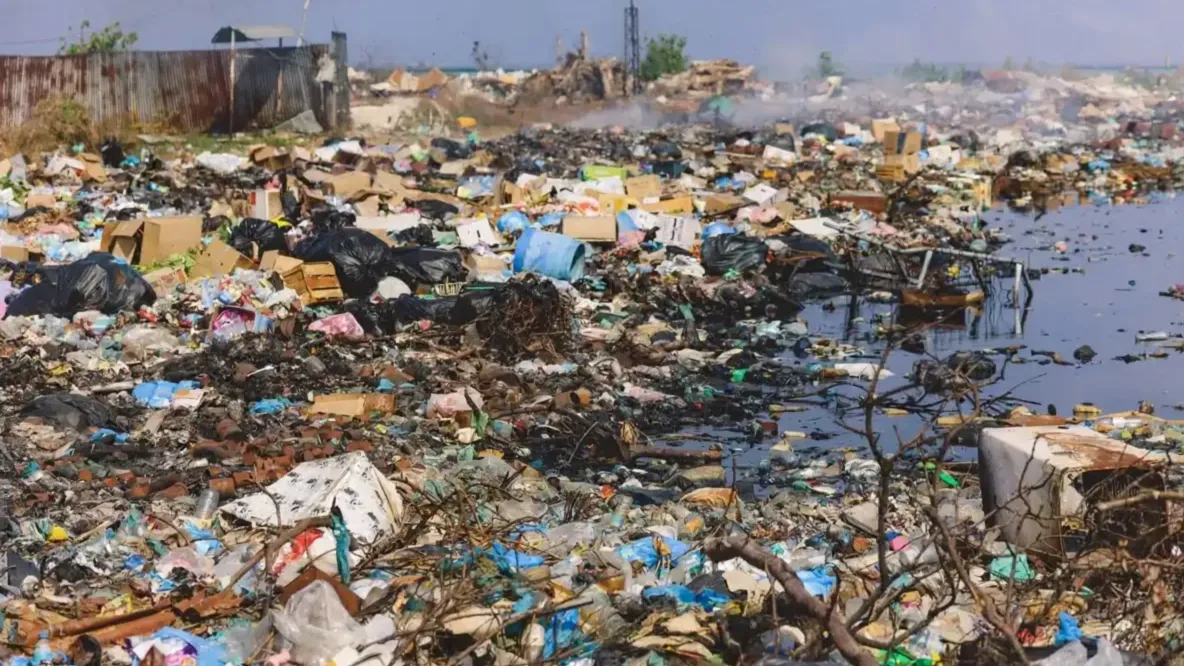
In this regard, he highlighted that rising sea levels are significantly hindering the development of Small Island Developing States (SIDS), threatening critical infrastructure, livelihoods, and key economic sectors. Consequently, he called for urgent action across three primary areas.
In this regard, he highlighted the mobilization of substantial funding for climate adaptation as a top priority. He further emphasized that assistance for Small Island Developing States (SIDS) must be predictable, accessible, and provided in the form of grants and concessional financing. Additionally, he stressed that funds must be disbursed with sufficient speed to effectively mitigate risks. Noting that the international community cannot address what it does not measure, he underscored the vital importance of establishing a specialized system to monitor sea-level rise.
Addressing the issue of legal protections, the Vice President emphasized that such assurances must be guaranteed under international law. He asserted that rising sea levels should not undermine legally established baselines, maritime zones, or the inherent rights of states. Furthermore, the Vice President underscored that a nation’s statehood, sovereignty, and United Nations membership must remain unquestionable. He maintained that even if a country's physical geography changes, its legal status must remain inviolable.
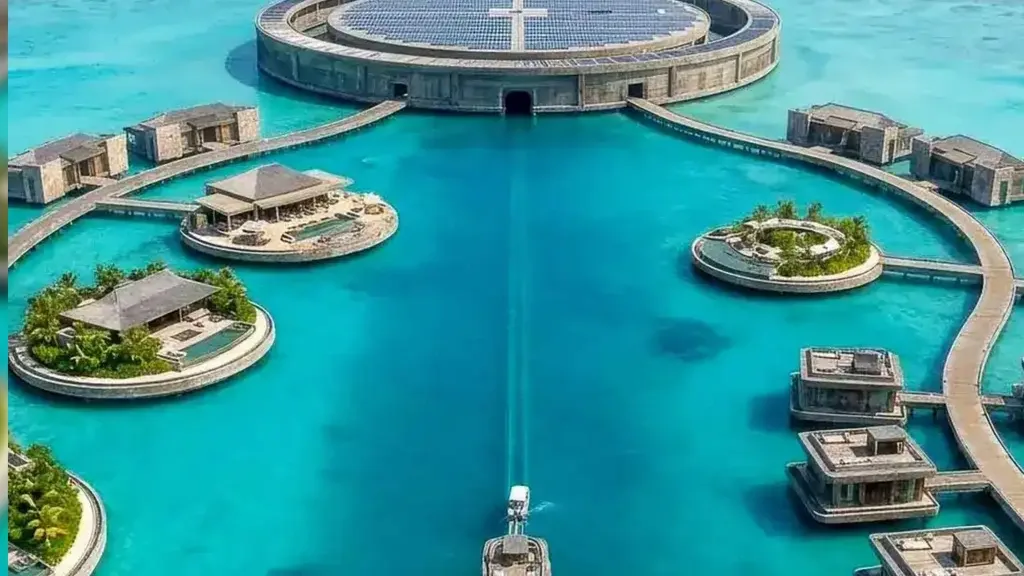
In his remarks regarding development plans, he called for resilience to be directly integrated into core government policies, ranging from infrastructure design to economic strategies. He further noted that the Maldives is already implementing such measures through its third National Determined Contribution (NDC) and urged development partners to provide support in scaling up these vital investments.
Furthermore, noting that the issue of rising sea levels requires continuous global attention, the Vice President urged world leaders to translate their commitments into action, strengthen resilience, and work towards securing a sustainable future.