Efforts to "weaken" petitions: New regulations to allow counter-petitions against existing submissions!
17 އޯގަސްޓު 2026 | ހޯމަ 12:25Funadhoo MP Mamdhooh has proposed an amendment to the Parliamentary Rules of Procedure allowing for the submission of counter-petitions on the same subject, a move critics argue is designed to undermine petitions challenging government policies. Following this proposal, the government submitted a competing petition to counter a public grievance filed against the Council Land Bill. This development has sparked growing concerns that the petition system, a vital mechanism for public expression, is being manipulated to dilute the voices of citizens and restrict their democratic rights.


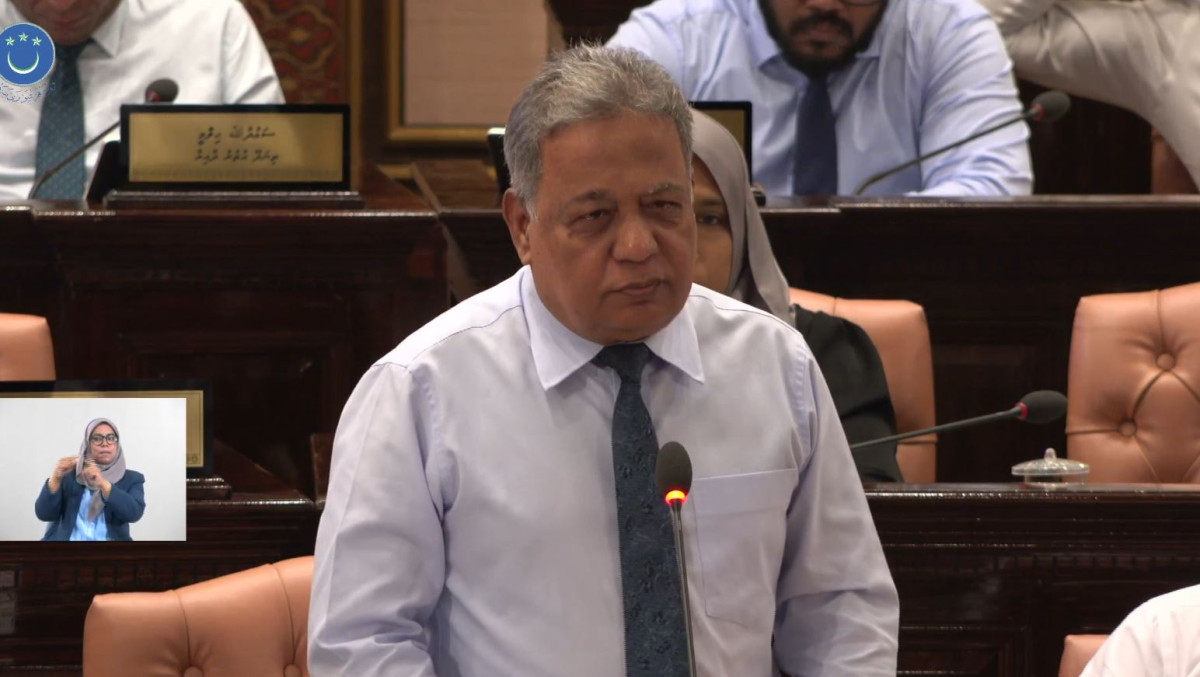
Mohamed Mamdhooh Yoonus, Member of Parliament for the Funadhoo constituency. | People's Majlis
The government has launched efforts to undermine petitions submitted to the People’s Majlis that oppose state policies, seeking to weaken public support for such initiatives.
To facilitate this, Mohamed Mamdhooh Yoonus, the Member of Parliament for the Funadhoo constituency, has proposed a significant amendment to the Standing Orders of the People’s Majlis.
Under the current parliamentary rules of procedure, a matter already addressed in a petition submitted to the Parliament cannot be resubmitted. However, Mamdhooh proposed removing this restriction to allow for the submission of "counter-petitions" on the same subject, potentially enabling government supporters to file petitions that favor the administration's interests.
Many observers believe this is a calculated move by the government to undermine the power of public petitions. By introducing competing petitions on the same subject, the government is accused of intentionally creating "chaos" within the Parliament to ensure these initiatives ultimately fail.
The current unrest stems from a bill proposed by Thulhaadhoo MP Abdul Hannan Aboobakuru, which seeks to grant the government the authority to repossess lands currently under the jurisdiction of local councils. A petition, backed by significant public support, has been submitted in opposition to the bill. The petition calls for the immediate withdrawal of the proposed legislation.
An e-petition submitted to the People’s Majlis calling for the withdrawal of the bill has garnered over 2,140 signatures. Under the regulations of the Parliament, this qualifies as a "Threshold 2" petition, a status achieved once signatures reach 0.5 percent of the Maldivian population.
This has rendered the petition a historic one. It marks the first time a petition has been submitted with the requisite number of signatures to mandate a floor debate in Parliament, effectively becoming the first such petition to require formal deliberation by the legislative body.
After the Petition Committee had already accepted the initial petition and scheduled it for the floor, the government submitted a second petition on the same subject. This second petition, filed by supporters of the People's National Congress (PNC), calls for the bill's passage, arguing that it is essential for facilitating the delivery of basic services.
The original purpose of the petition system, designed to amplify the voices of the people, has been compromised by the government's direct interference. Many allege that this government-led petition, which garnered over 850 signatures, is a "political stunt" orchestrated to undermine public support for the citizens' original petition.
With this amendment, any future petition submitted against the government could be immediately countered by a government-sponsored petition on the same subject, significantly increasing the likelihood of such public grievances being "blocked." As the Parliament's General Purposes Committee reviews the matter, concerns are mounting that passing this change would severely restrict the fundamental right to petition.