Despite President's criticism of past political appointments in fisheries, government makes numerous pre-election appointments
24 ޖުލައި 2026 | ހުކުރު 17:33While President Muizzu advocates for reducing reliance on state-owned enterprises and expanding the private sector, his administration faces mounting public criticism over the decision to downsize corporate staff. Opponents and the general public are expressing deep concern as ordinary employees are being terminated while the number of political appointments continues to rise.

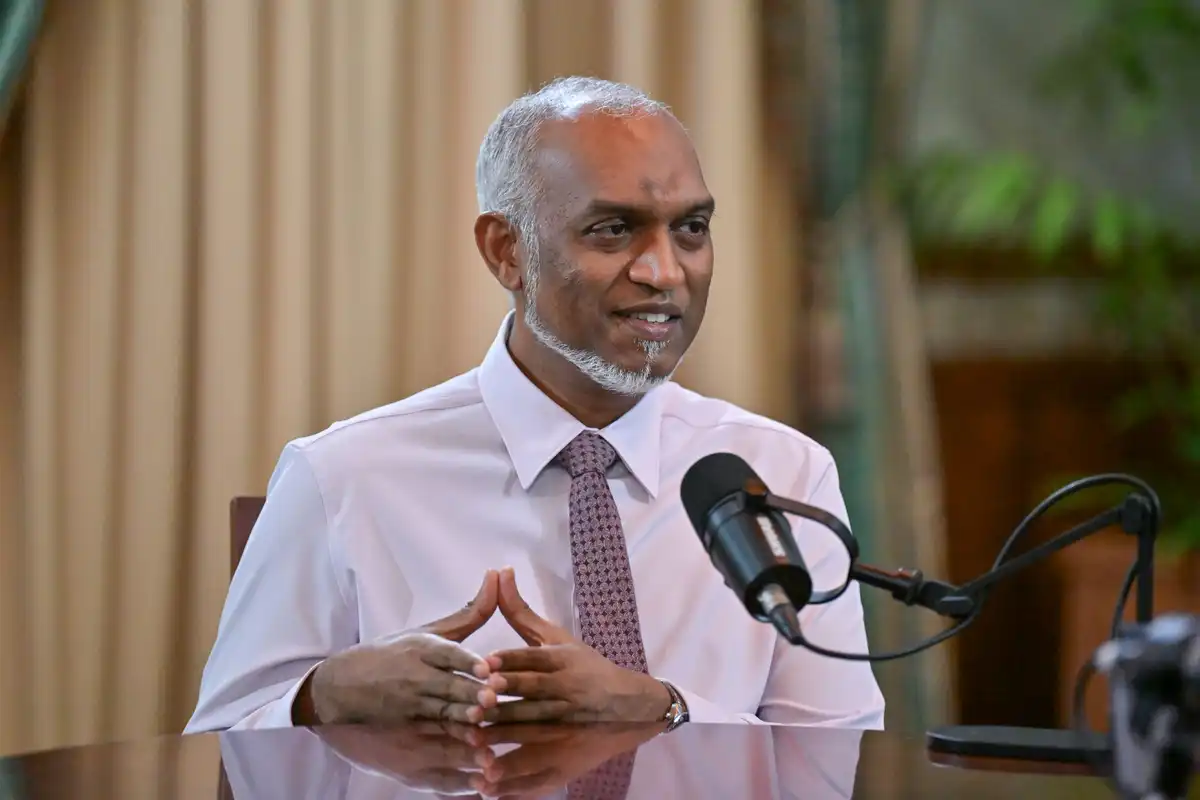
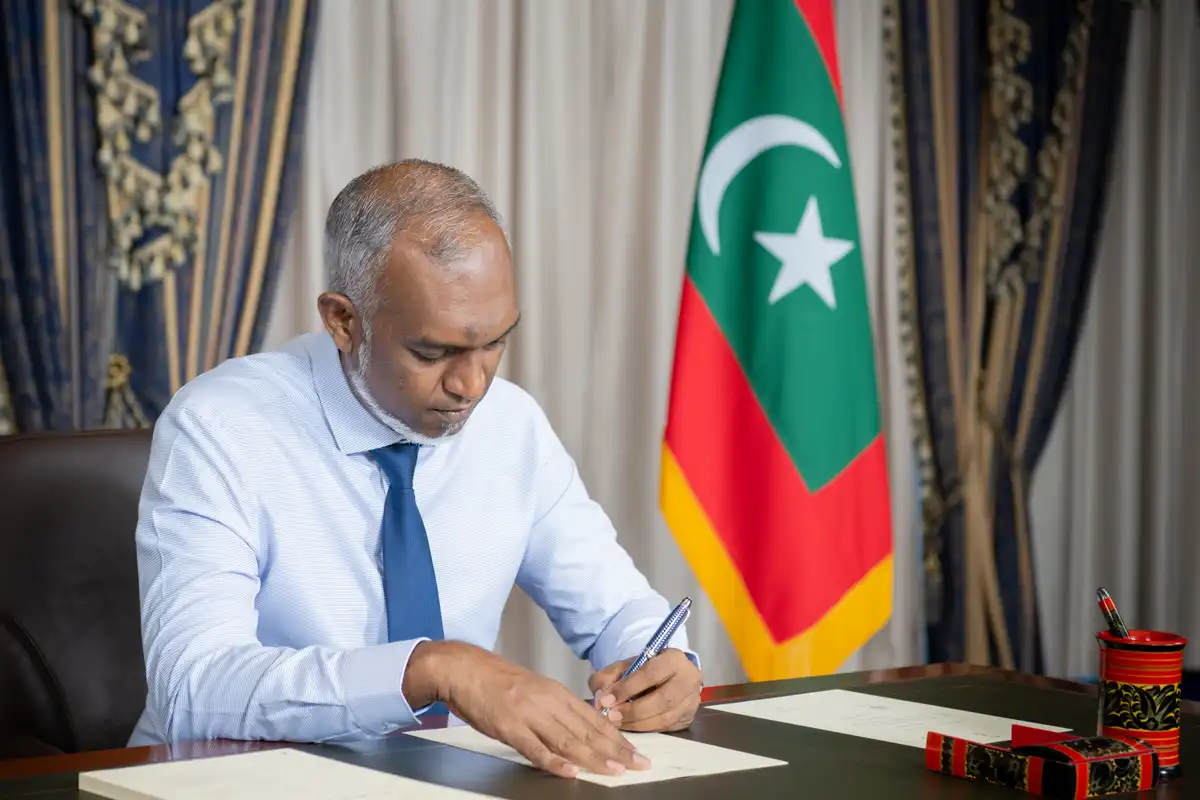
President Muizzu delivers remarks during an episode of "Nation Chat." | Presidents Office
President Mohamed Muizzu has stated that the decline of the fishing industry was caused by the previous MDP administration providing employment at state-owned enterprises, such as Fenaka Corporation, to workers within the sector.
Speaking on the President’s Office’s recurring podcast series "The Pulse," President Muizzu stated that the Maldives' economy can only achieve sustainable growth by significantly expanding the private sector. He noted that if all citizens become reliant on government jobs, it would lead to the stagnation of the private sector and weaken the operational efficiency of state-owned enterprises.
Highlighting the fisheries sector as an example, the President stated that the previous administration's practice of providing mass employment to youth in state-owned enterprises like Fenaka has led to a significant decline in the fishing industry. He noted that efforts are underway to shift the prevailing mindset that government jobs are the easiest career path, which includes "rightsizing" companies and building a more robust workforce. Furthermore, the President emphasized that the government aims to create diverse opportunities for young people working in the private sector.
President Muizzu’s remarks come amid a wave of recruitment at state-owned enterprises, such as Fenaka and RDC, leading up to the parliamentary and local council elections. However, following the government’s significant setbacks in the local council elections and the recent referendum, the administration has faced intense public backlash for terminating junior staff under the guise of "right-sizing" these companies.
While ordinary employees in state-owned enterprises are being dismissed, there is growing public concern over the increasing number of political appointees across various ministries and government institutions.
Significant criticism is being leveled at the government's policies, as these political figures receive substantial monthly salaries ranging from MVR 25,000 to MVR 50,000, with reports suggesting that some remain on the payroll without any active responsibilities. Although President Muizzu assumed office with a pledge to limit the number of political appointees to 700, it is noted that more than 2,000 individuals have been appointed to such positions to date.
Furthermore, the educational qualifications and competence of these appointees have become a subject of widespread public debate and scrutiny.
The main opposition party, MDP, has expressed grave concern over the government's decision to terminate 33 percent of employees at state-owned enterprises (SOEs), a move that reportedly affects more than 14,000 workers. In a circular issued on April 18, the Privatization and Corporatization Board (PCB) instructed SOEs to reduce their workforce as part of broader government measures to cut public spending.
Furthermore, major state firms such as HDC and Fenaka have already introduced voluntary redundancy schemes. Under these programs, employees who choose to resign are being offered a severance package equivalent to four months' salary.