Ordinary SOE employees should only be dismissed after gov't has eliminated wasteful spending and reduced the number of political appointees: Shamheed
24 ޖުލައި 2026 | ހުކުރު 17:32MP Shamheed stated that before dismissing low-level employees from state-owned enterprises, the government must first reduce the number of high-salaried political appointees. While companies have been instructed to downsize staff under the guise of cost-cutting, he questioned the government's true intentions as the number of political employees continues to rise.

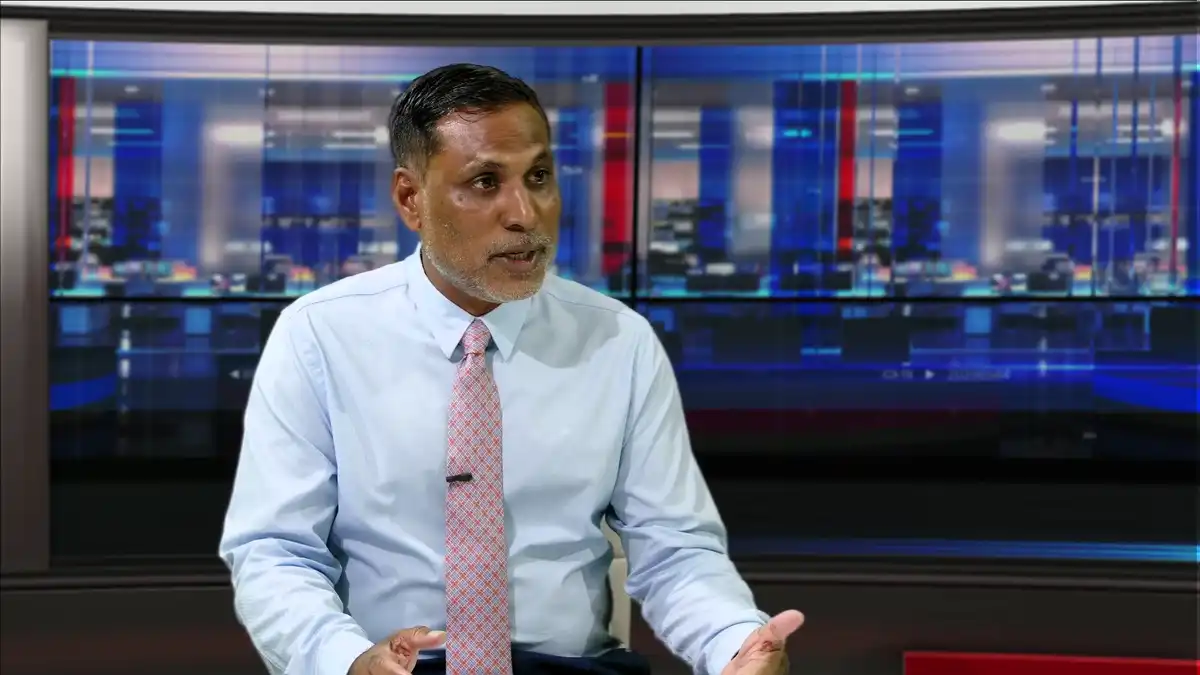
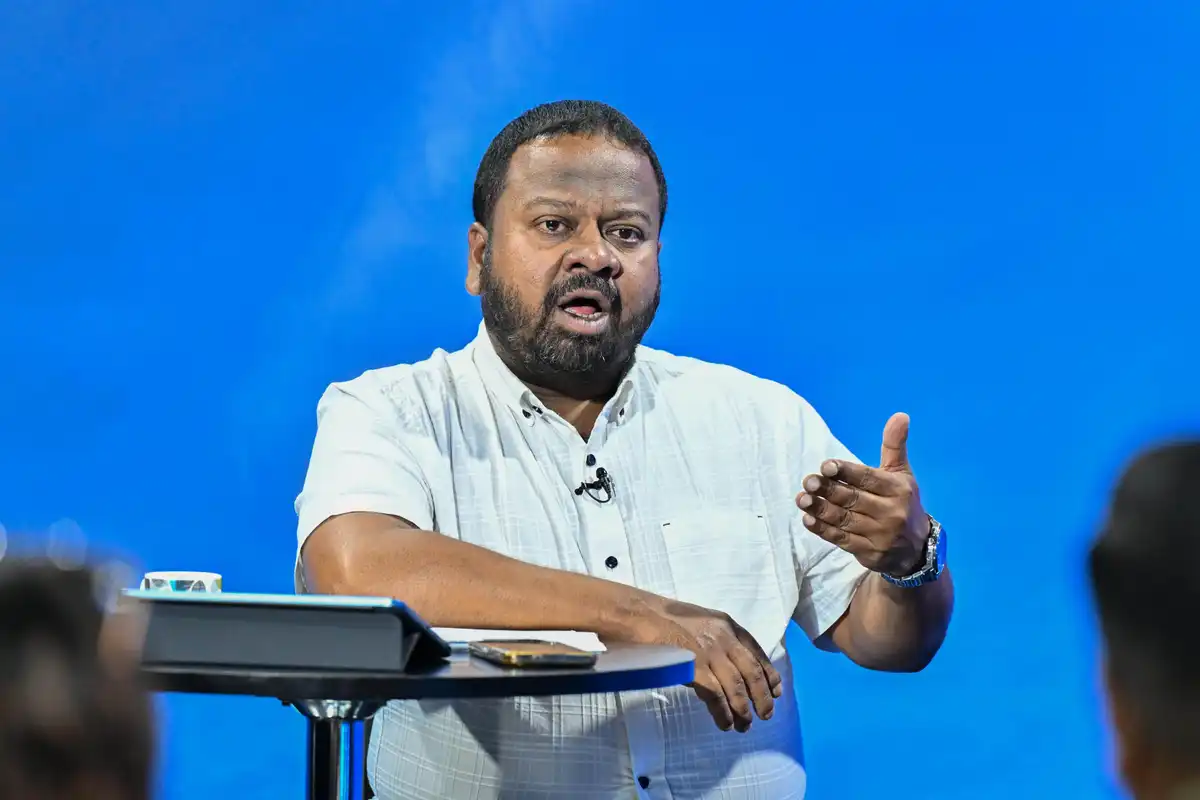
Dr. Ahmed Shamheed, the Member of Parliament for the South Hulhumalé constituency, speaking during an appearance on RaajjeTV’s "Fala Surukhee" program. | Raajje MV
Member of Parliament for South Hulhumalé Constituency, Ahmed Shamheed, has stated that the dismissal of ordinary employees from state-owned companies should only take place after the government has first addressed wasteful public spending and reduced the number of appointed political staff.
Speaking on a talk show broadcast by RaajjeTV, MP Shamheed stated that the current administration justified hiring additional staff for state-owned enterprises, such as Fenaka Corporation and the Road Development Corporation (RDC), by claiming it was necessary to expand their mandates and undertake infrastructure projects. He noted that Fenaka has even been tasked with mosque construction, pointing out that the government has recruited a significant number of employees into these companies under the guise of carrying out such projects.
That policy remains in effect, and the mosque construction contracts are still active. If the reason for dismissing employees was a lack of materials to build these mosques, then why are these projects still listed in the budget and officially signed off by the government on numerous occasions? Fenaka’s primary mandate is the operation of powerhouses; however, that mandate was expanded to include the construction of mosques, funeral homes, schools, and housing units across the islands. These employees were hired specifically to carry out these projects. These individuals did not simply approach Fenaka and demand jobs; they were recruited and employed based on the company's specific requirements to fulfill these tasks.Ahmed Shamheed
Under these circumstances, Shamheed stated that when employees are dismissed, they must be informed that the action is being taken due to a special national emergency. He emphasized that before terminating regular staff, political appointees appointed under Article 115 of the Constitution should be the first to be let go. He further noted that many of these political appointees, who were appointed in large numbers by the current administration, remain idle without any specific duties. Shamheed also highlighted that their salaries are excessively high, with even the lowest-paid among them receiving a monthly salary of at least 25,000 Rufiyaa.
MP Shamheed questioned why the government has resorted to dismissing ordinary workers in the islands while retaining staff appointed under Article 115 of the Constitution. Shamheed further stated that if the dismissal of state-owned enterprise employees were being done in good faith, political appointees should have been the first to be terminated instead of the general workforce.
The main opposition party, MDP, has stated that the government's decision to downsize the workforce of state-owned enterprises (SOEs) by 33 percent will result in the termination of over 14,000 employees. In a circular issued on April 18, the Privatization and Corporatization Board (PCB) instructed SOEs to reduce their staff numbers as part of broader government measures to cut administrative costs. Furthermore, major state corporations such as HDC and Fenaka have already introduced voluntary redundancy schemes. Under these programs, employees who choose to resign are being offered a severance package equivalent to four months' salary.
While ordinary employees are being terminated and families left stranded under the guise of cost-cutting measures, the number of political appointees continues to rise. The government is facing widespread public criticism for this surge in appointments. Despite President Muizzu’s inaugural pledge to limit political positions to no more than 700, reports suggest that over 2,000 individuals have been appointed to political roles to date.