Study reveals high levels of human fecal contamination in Rasfannu swimming area
20 ޖޫން 2026 | ހޮނިހިރު 10:23A study has revealed that the seawater at Rasfannu beach is contaminated due to its proximity to sewage outfalls and poor water circulation. This has led to elevated levels of fecal bacteria, significantly increasing public health risks such as skin diseases and diarrhea. Consequently, it is vital to establish a proper sewage treatment system and ensure that relevant authorities conduct regular water quality testing and maintain transparency with the public.

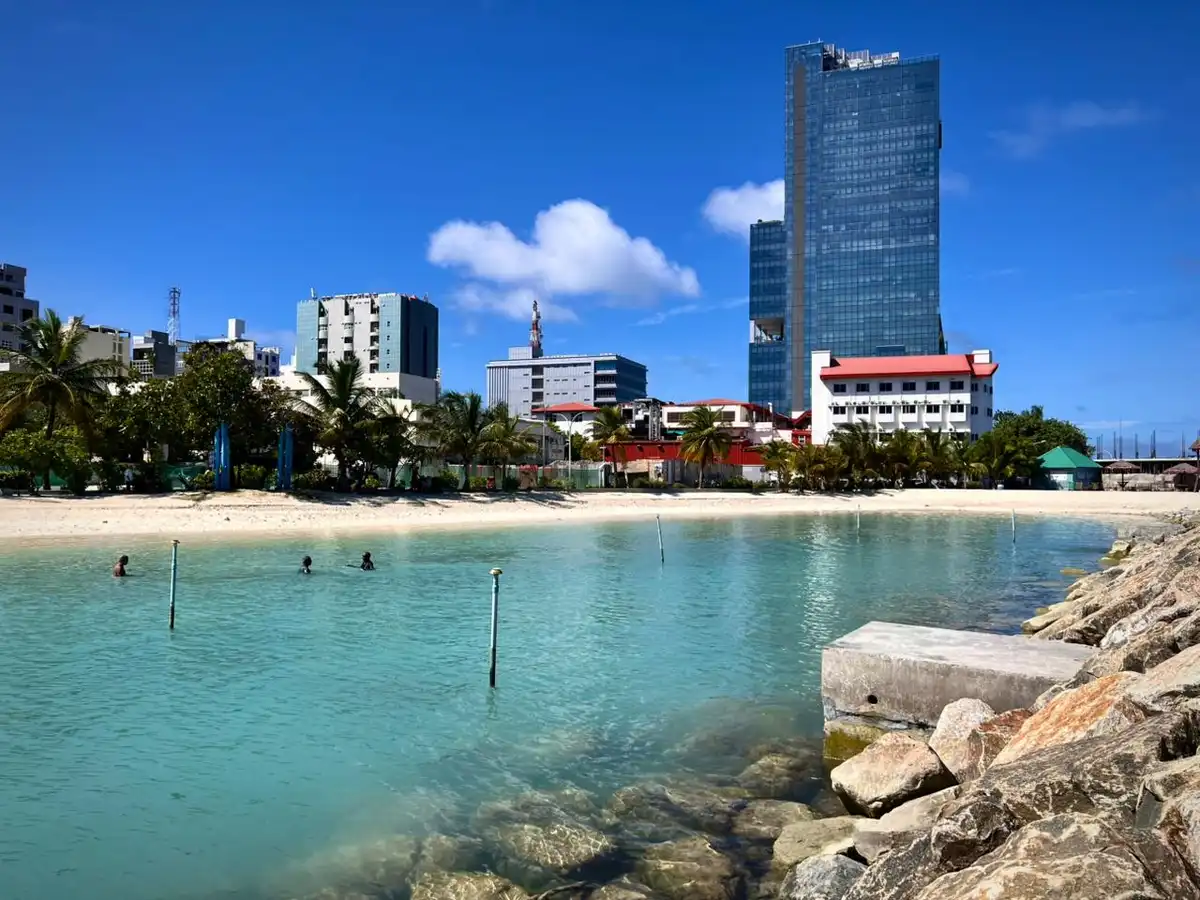
Rasfannu Swimming Area. | Raajje MV
A recent study has revealed that the swimming area at Rasfannu Beach, located on the western side of Malé, has become contaminated with high levels of human fecal matter, posing a significant risk to public health.
A study conducted by marine biology students at the Maldives National University (MNU) has identified two primary reasons for the recurring pollution of the Rasfannu beach area. The findings attribute the contamination to poor water circulation caused by local current patterns and the area's proximity to the outfall pipes of Malé’s sewage system. The research highlights that these factors have caused levels of bacteria, such as E. coli and fecal coliform, to rise significantly above safety standards.
The study highlights that the bacteria found in the area originate from untreated sewage discharged directly from sewer lines, posing significant health risks to beachgoers. It specifically notes that children are at a higher risk of developing skin infections, headaches, and gastrointestinal issues such as diarrhea. The research also references previous incidents where the Rasfannu beach area had to be closed on multiple occasions due to deteriorating water quality since its initial opening.
The study conducted by students from the Maldives National University (MNU) emphasizes the urgent need for a solution, noting that Rasfannu is a vital public space frequented by many families and children for recreation. To address these concerns, the study highlights the importance of exploring structural modifications to improve water circulation in the area. Furthermore, it recommends the establishment of a sewage treatment system to process waste before it is discharged through Male's drainage outfalls.
Furthermore, the study highlighted that the most crucial step in protecting the public from such health risks is for relevant authorities to conduct regular water quality testing at the Rasfannu area and transparently share safety data with the public. To achieve a permanent solution, experts recommend strengthening Malé’s sewerage system and establishing a mechanism to ensure that sewage is treated before being discharged into the sea.