India mandates self-declaration forms for travelers amid Ebola concerns
29 މެއި 2026 | ހުކުރު 12:12Following the World Health Organization's declaration of a public health emergency regarding the Ebola virus, India has mandated that all incoming travelers submit a self-declaration form. As international terminals begin passenger screening processes, the national airline, Maldivian, has urged Maldivian travelers to remain vigilant and comply with these new requirements. The mandatory forms must be submitted upon arrival at India’s health and immigration counters.

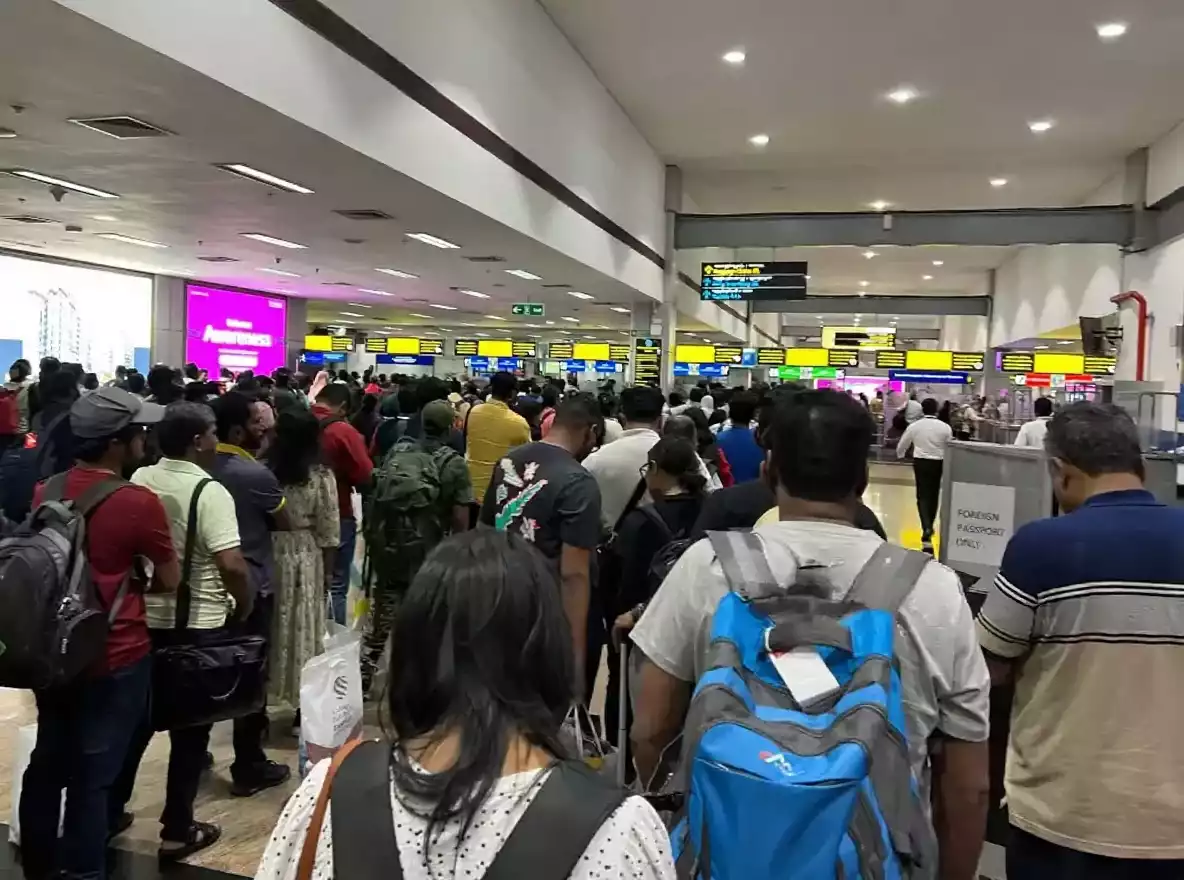
Passengers are seen queuing at passport control at Trivandrum International Airport in Kerala, India. | gettyimages
Following the declaration of a public health emergency regarding the Ebola virus, India has made it mandatory for travelers to submit a self-declaration form upon arrival.
This decision was made following a Standard Operating Procedure (SOP) established for airlines by the Directorate General of Civil Aviation (DGCA). The measure comes in response to the World Health Organization (WHO) declaring a global health emergency due to the Ebola virus outbreak in the Democratic Republic of the Congo (DRC).
Under this SOP, it is mandatory for passengers to complete a self-declaration form detailing their health status.
Under these Standard Operating Procedures (SOPs), passengers traveling from or who have visited countries with active Ebola outbreaks are required to provide details of their travel history and health status via a self-declaration form. Furthermore, thermal scanners must be utilized at international arrival terminals to screen passengers for fever.
The national airline, Maldivian, has brought India's decision to the public's attention. The airline noted that this is a precautionary safety measure and urged all passengers traveling to India to remain mindful of the new requirement.
The self-declaration form is available on the Maldivian website.
Once completed, this form must be submitted to the health and immigration counters upon arrival in India.
As countries worldwide implement precautionary measures in response to the Ebola virus, the Maldives Ministry of Health has stated that it is closely monitoring the situation.
The World Health Organization (WHO) stated that although a public health emergency has been declared, the outbreak does not yet meet the criteria for a "pandemic" as defined under international health regulations.
Ebola is also known as "Ebola Hemorrhagic Fever," a name derived from the high fever and internal bleeding it causes. It is a highly contagious and life-threatening disease that severely weakens the body's immune system. As the virus progresses, it often leads to internal and external bleeding, organ failure, and, in many cases, death.