WHO declares emergency over Ebola; Ministry says situation is being monitored
17 މެއި 2026 | އާދީއްތަ 16:40The World Health Organization has declared a global health emergency due to the rapid spread of Ebola in the Democratic Republic of the Congo and Uganda. As infection rates and fatalities continue to climb, efforts to contain the outbreak are facing significant hurdles, including regional security instability and high levels of cross-border movement.

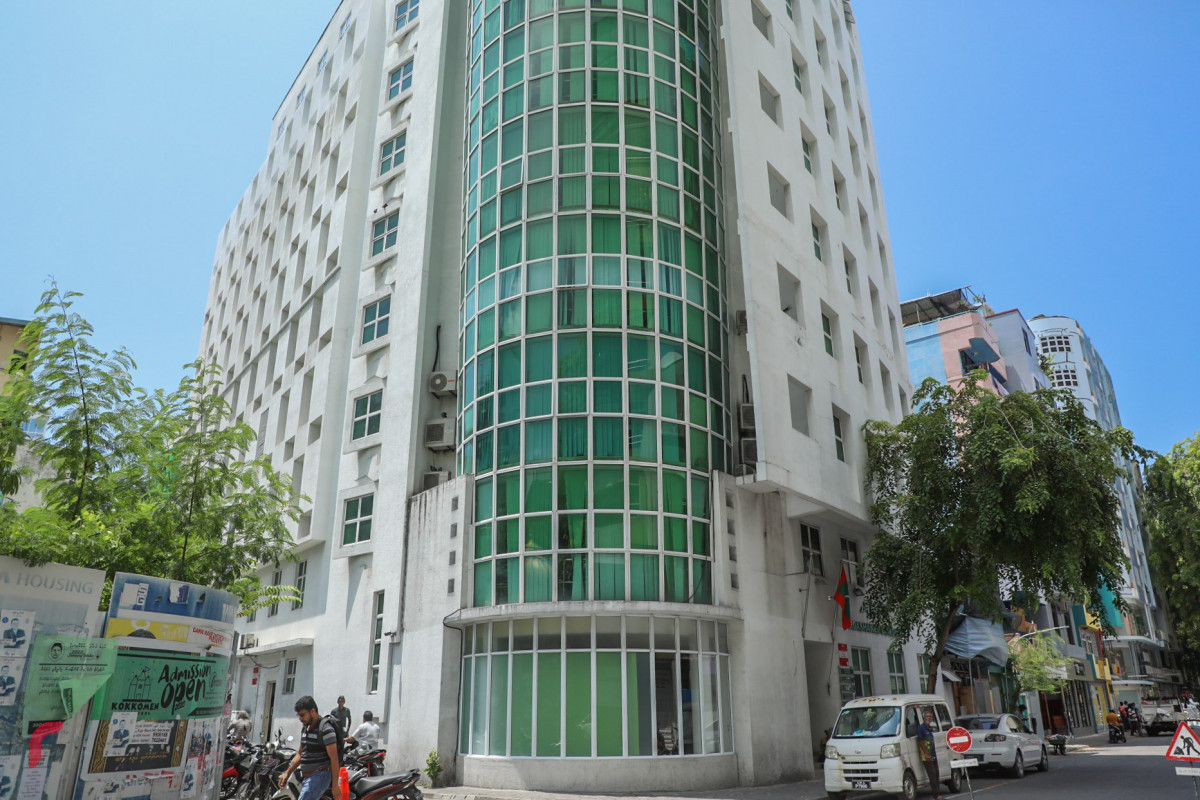
The building housing the Ministry of Health.
The Ministry of Health has announced that it is closely monitoring the situation following the World Health Organization’s (WHO) declaration of the Ebola outbreaks in the Democratic Republic of the Congo and Uganda as a Public Health Emergency of International Concern.
When questioned by the media regarding the matter, the Ministry's media official stated that they are currently monitoring the situation alongside relevant stakeholders. The official further noted that updates will be shared with the media as more information becomes available.
The World Health Organization (WHO) has clarified that despite declaring a public health emergency, the current outbreak does not yet meet the criteria for a "pandemic" as defined under international health regulations.
The Director-General of the World Health Organization (WHO) has taken into account the information provided by the governments of the Democratic Republic of the Congo and Uganda, as well as scientific findings, regarding the risks to human health and the potential impact on international travel. The WHO expressed its gratitude to the leaders of both nations for the priority they have given to controlling the disease and for their commitment to transparency in disclosing the extent of the threat to the global community.
The outbreak has been escalated to an emergency status following an extraordinary surge in transmission rates. As of May 16, 2026, authorities have reported eight laboratory-confirmed cases, 246 suspected cases, and 80 presumed fatalities across three areas within Congo's Ituri Province. Furthermore, the disease has been detected in Kampala, Uganda, involving two individuals who had traveled from Congo. A confirmed case has also been identified in the Congolese capital, Kinshasa.
Another major concern for health experts is the death of four healthcare workers in the affected regions. This is seen as an indication that the disease may be spreading within healthcare facilities. Furthermore, the World Health Organization (WHO) has highlighted significant challenges in determining the actual number of infections and obtaining accurate data from the areas where the disease has spread.
Reports suggest that the current outbreak in Congo could potentially escalate into a crisis similar to the devastating Ebola epidemic of 2018 and 2019. Regional security instability, the urgent need for humanitarian aid, and high levels of population displacement are all factors facilitating the spread of the disease. The situation is further exacerbated by the fact that, unlike other strains of Ebola, there is currently no specific treatment or vaccine available for the Bundibugyo virus.