Minister Shaheem denies allegations of ordering prayer broadcasts to be cut off from loudspeakers
24 މެއި 2026 | އާދީއްތަ 11:00Religious scholar Sheikh Nishan has expressed concern over a directive from the Ministry of Islamic Affairs to disconnect loudspeakers in several Male' mosques, which would prevent the prayers from being heard outside. Emphasizing that broadcasting the prayer serves as a vital spiritual reminder for the public, the Sheikh called on the government to reverse the decision; however, Islamic Minister Dr. Mohamed Shaheem Ali Saeed has since refuted the scholar's claims.


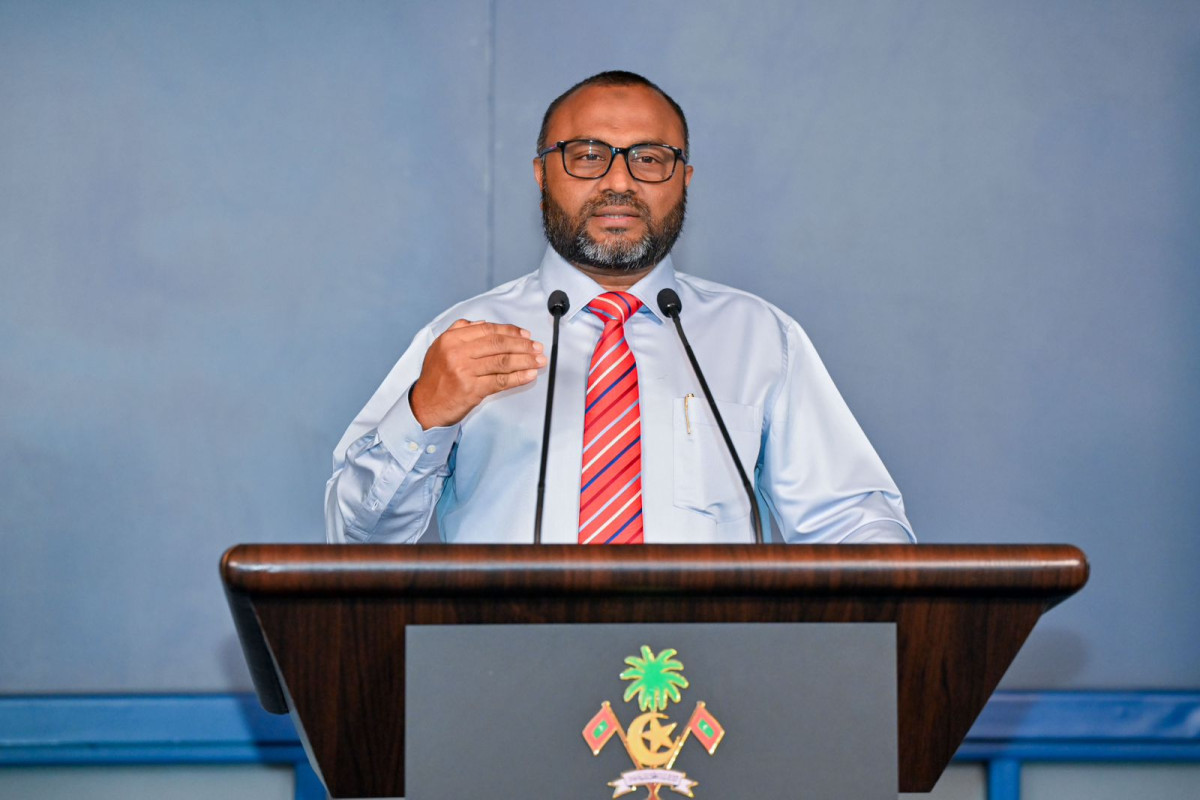
Minister Dr. Mohamed Shaheem Ali Saeed delivers remarks during a ceremony held at the Ministry of Islamic Affairs. | islamic_ministry
Islamic Minister Dr. Mohamed Shaheem Ali Saeed has dismissed claims that the ministry ordered mosques in Malé City to stop broadcasting prayers over loudspeakers, calling the allegations "outright lies." The clarification follows concerns raised by prominent scholar Sheikh Adam Nishan bin Ali Adam al-Maaldheefee, who had urged the ministry to reverse the purported decision.
Minister Shaheem told RaajjeMV that no instructions have been issued to stop broadcasting the sound of prayers through mosque loudspeakers, nor have any imams been summoned to the Islamic Ministry. Minister Shaheem further dismissed claims made by Sheikh Nishan—who alleged that the audio for Maghrib and Isha prayers was cut off on Saturday night—stating that these reports are false.
While Minister Shaheem denied these allegations, Sheikh Nishan stated in a video shared on his official Facebook page on Saturday night that mosques are the houses of Allah and the most sacred places of worship on this earth.
Expressing deep concern over the silencing of these sacred houses of worship, Sheikh Nishan stated that mosque imams had been summoned to the Ministry of Islamic Affairs and instructed to disable the external loudspeakers used to broadcast prayers.
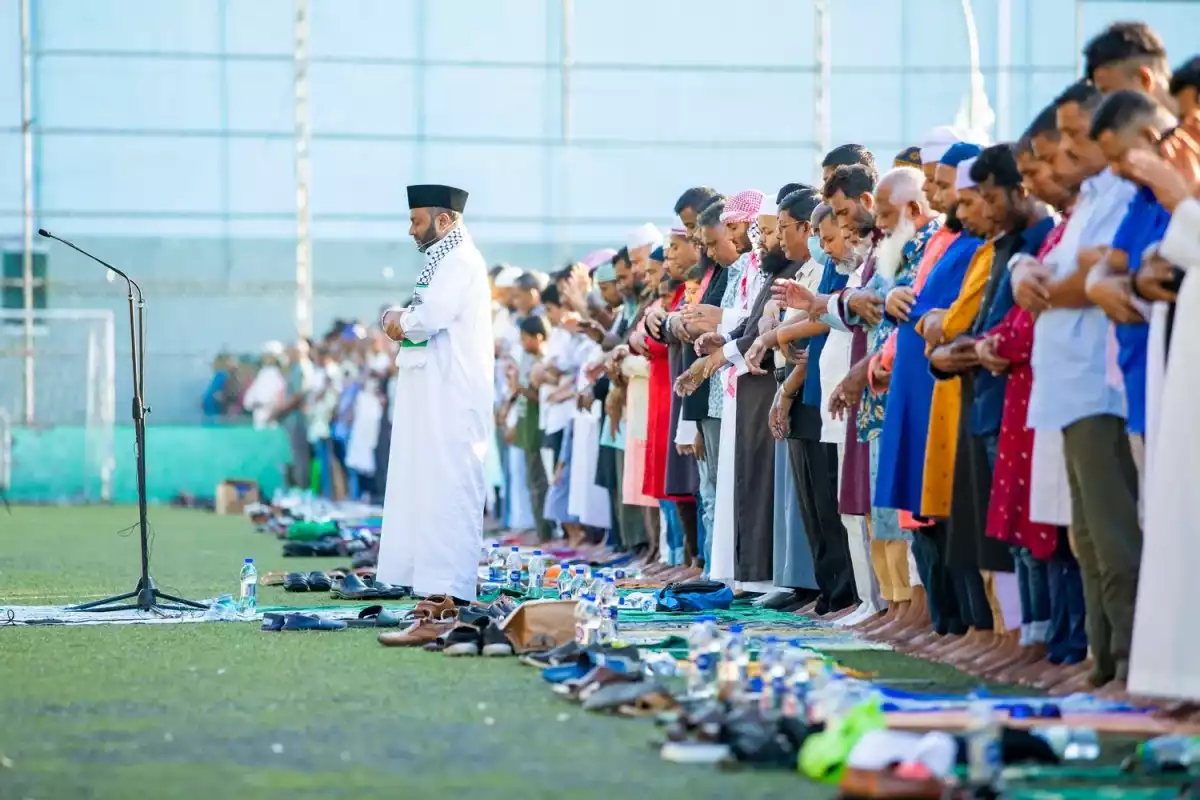
Referring to Masjid al-Furqan, Sheikh Nishan noted that it is one of the largest mosques in Malé, frequented by a significant number of worshippers. He explained that since the mosque is air-conditioned, all doors remain closed, and with the external speakers turned off, neither the call to prayer nor the prayers themselves can be heard from the outside. He further stated that during the Maghrib and Isha prayers on Saturday night, the sound was completely inaudible, even when standing directly next to the mosque's outer walls.
Sheikh Nishan stated that many people have been complaining about being unable to hear the call to prayer and the recitation during prayers, emphasizing that this issue must be resolved promptly.
When prayers are performed in our community, the sound of the prayer reaching those who are preoccupied in their homes, hotels, restaurants, and sports arenas serves as a vital message and a reminder. Diminishing the prominence of this noble symbol of our faith weakens its significance. When we head to the mosque, hearing the prayer allows us to know that it is ongoing and that we can still join it. However, by completely cutting off the external sound of the prayer, that sense of spiritual connection is lost, even when passing right by the mosque. I personally experienced this tonight. I arrived just as the *Iqamah* was being called. Yet, before entering, it was impossible to tell that the *Iqamah* had ended and the prayer had commenced. Even as I reached the outer walls of the mosque, there was no indication that the prayer had started. I initially thought there was a technical issue. It was only when I opened the mosque door and stepped inside that I could hear the recitation. By then, the Imam had already finished Surah Al-Fatiha and was well into the next chapter.The prominent scholar, Sheikh Adam Nishan bin Ali Adam Al-Maaldheefee.
Sheikh Nishan stated that the sound of the call to prayer and the recitation of prayers have been broadcast from Maldivian mosques for generations without any issues. He further questioned the underlying motives behind the sudden move to halt this practice.
Numerous authentic narrations confirm that during the time of Prophet Muhammad (PBUH), the sound of prayers, sermons, and admonitions extended beyond the walls of the mosque. Historical evidence clearly illustrates this practice. For instance, it is documented that some women living near the mosque memorized Surah Qaf in its entirety simply because they heard the Prophet (PBUH) reciting its verses so frequently during his Friday sermons. Furthermore, several companions reported hearing the sound of prayers from the mosque while walking through specific streets in Medina. In another instance, while the Prophet (PBUH) was delivering a lesson inside the mosque and instructed the congregation to sit, a companion who was still outside heard the command and immediately sat down where he was. Such authentic evidence is abundant, and this practice has been upheld across numerous nations throughout the Islamic world.Renowned scholar Sheikh Adam Nishan bin Ali Adam Al-Maaldheefee
Sheikh Nishan stated that modern complaints regarding the noise from the call to prayer and the recitation during prayers are merely excuses and are entirely unacceptable. He described these grievances as an act of disrespect toward Islam. Furthermore, he urged the Ministry of Islamic Affairs and the government to find a swift resolution to this issue and advised against allowing such practices to continue.