ILO warns rising temperatures will cause significant damage to Maldives' economy and labor market
31 އޮކްޓޯބަރު 2026 | ހޮނިހިރު 11:04A study by the International Labour Organization (ILO) reveals that rising global temperatures could result in a $576 million loss to the Maldives' GDP by 2040. With the construction and service sectors projected to lose over 2,400 jobs due to these climatic shifts, the report emphasizes the urgent need for proactive measures to protect the workforce.

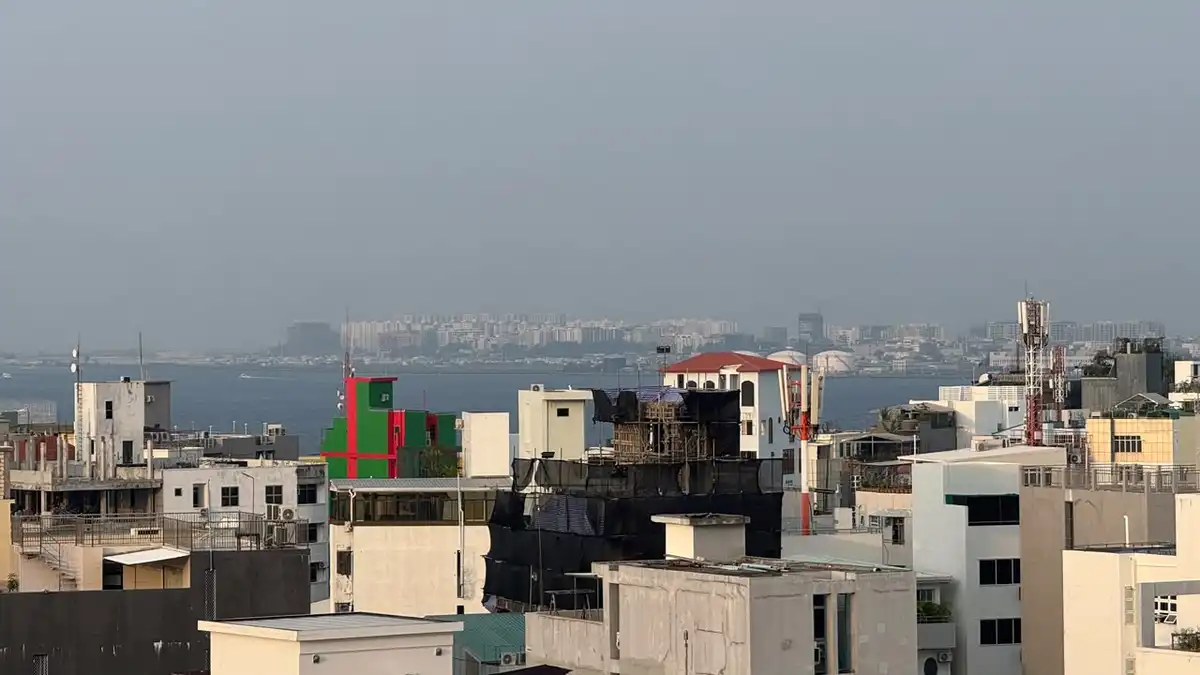
Employees of Maldives Ports Limited (MPL) are currently carrying out the relocation of Male' Commercial Harbor operations to Thilafushi. | Maldives Ports Limited
New research by the International Labour Organization (ILO) reveals that rising global temperatures and workplace heat stress are already adversely affecting workers, productivity, and the economies of the Maldives and Sri Lanka. According to the findings, these negative impacts on the economy and the labor market are projected to intensify significantly over the next decade.
Even if greenhouse gas emissions are reduced, rising temperatures are projected to decrease labor productivity, resulting in a loss equivalent to approximately 147,000 full-time jobs across Sri Lanka and the Maldives by 2040. This figure includes 145,000 jobs in Sri Lanka and 2,400 in the Maldives. Furthermore, based on historical data, the combined annual GDP of both nations is expected to suffer a loss of approximately $26.6 billion by 2040. This comprises a $26 billion hit to Sri Lanka's GDP and a $576 million loss for the Maldives.
These studies indicate that heat stress is not merely a future threat. Due to climate change, rising temperatures in the workplace have already caused significant losses to working hours and GDP in both countries in 2023, compared to the period between 1985 and 2014. In Sri Lanka, the agricultural sector is expected to be the hardest hit by this phenomenon. Furthermore, the service, manufacturing, and construction sectors are also projected to face substantial impacts. In the Maldives, the adverse effects will be most severely felt in the service and construction industries.
"These findings clearly demonstrate that heat stress is already impacting workers, businesses, and the economies of both Sri Lanka and the Maldives. Protecting workers from heat-related risks must be a central component of climate change adaptation strategies," an ILO representative stated.
This study utilizes satellite data and economic modeling to assess the current and future impacts of extreme heat on workplace productivity, employment, and the national economy. As global temperatures continue to rise, protecting workers and supporting businesses in adapting to these changes is essential to achieving a just transition.