Petition filed with Supreme Court seeking a review of the Registrar's decision regarding the Ras Male' case
22 އޮކްޓޯބަރު 2026 | ބުރާސްފަތި 09:32A constitutional challenge has been refiled with the Supreme Court seeking a review of the Registrar’s decision to reject a case alleging that the Ras Male' project agreement is unconstitutional. The petition, submitted by lawyer Ali Hussain, contends that leasing land to a foreign company for 99 years is legally void and remains a matter of significant public concern, asserting that the issue necessitates a formal ruling by the Supreme Court bench.

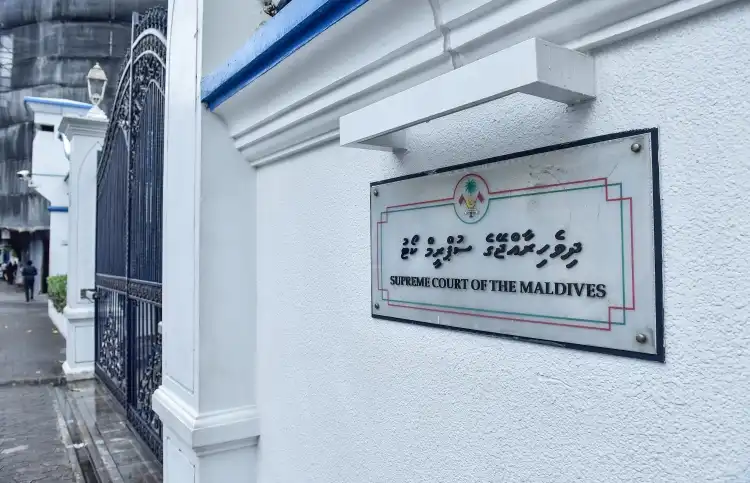
Supreme Court of the Maldives. | Social Media
An appeal has been filed with the Supreme Court seeking a review of the Registrar's decision regarding the Ras Male' case.
This was disclosed in a post on "X" by Ali Hussain, the legal counsel who filed the case. He stated that he has requested the Supreme Court to review the Registrar's decision regarding a constitutional matter of public interest. The case challenges the validity of the "Commercial Terms Agreement" signed between the Maldivian government and Eagle Hills company for the development of Ras Male'.
The Supreme Court dismissed the case filed regarding the Ras Male' project on October 13.
In an interview with a local media outlet, Ali Hussain stated that the Ras Male' agreement case is a matter of immense public concern, representing one of the most significant constitutional challenges ever brought before the Supreme Court. He further asserted that the Registrar does not possess the authority to reject the case.
Ali Hussain stated that a decision on whether to accept the case regarding the Ras Male' agreement must be made only after the bench conducts formal hearings.
The case filed with the Supreme Court contends that the Maldives lacks a legal framework authorizing the state to lease public property to foreign entities for a continuous period of 99 years. The petition further asserts that any agreement to lease land to foreign parties for such an extended duration without explicit legal authority constitutes a direct violation of Article 250 of the Constitution.
Furthermore, the lawsuit challenges the legal validity of clauses within the agreement that grant Eagle Hills the authority to create permanent third-party rights over the land. The case highlights that while Article 251 of the Constitution mandates a maximum limit of 99 years for foreign ownership or leasing of Maldivian land, this agreement effectively facilitates a mechanism through which foreign entities could acquire perpetual ownership interests in the country's territory.
Consequently, the Supreme Court was petitioned to declare the agreement null and void on the grounds that it directly contravenes Articles 250 and 251 of the Constitution. However, the court has dismissed the case.