Scholars’ Association Warns of Resort-Style Regulations in Ras Male' Project
19 އޮކްޓޯބަރު 2026 | ހޯމަ 12:59The Ilmuveringe Gulhun (Scholars’ Association) has expressed grave concern over the development of a designated area in Ras Male' by Eagle Hills, warning that applying resort-style regulations there poses significant religious and social risks. Citing potential threats to the nation’s economic independence and sovereignty, the association has called on the government to review the agreement and halt the project.

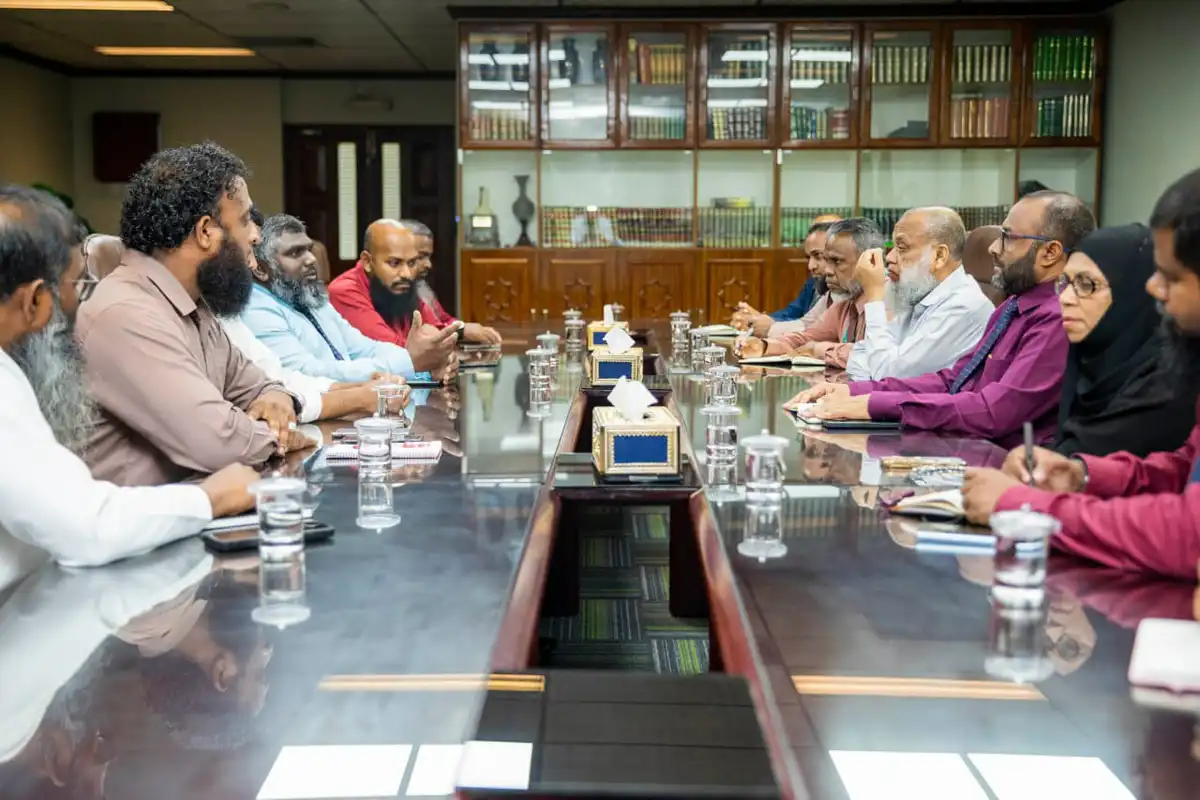
A file photo from a previous meeting held between the Ilmuveringe Gulhun (Scholars’ Association) and Minister Dr. Mohamed Shaheem Ali Saeed. | Ilmuveringe gulhun
The Scholars' Association (Ilmuveringe Gulhun) has stated that the primary religious concern regarding the Ras Male' development by Eagle Hills is not the issue of a temple or a festival—which the Housing Minister has pledged to prohibit—but rather the real danger of permitting tourist resort regulations within a permanent residential environment for Maldivians.
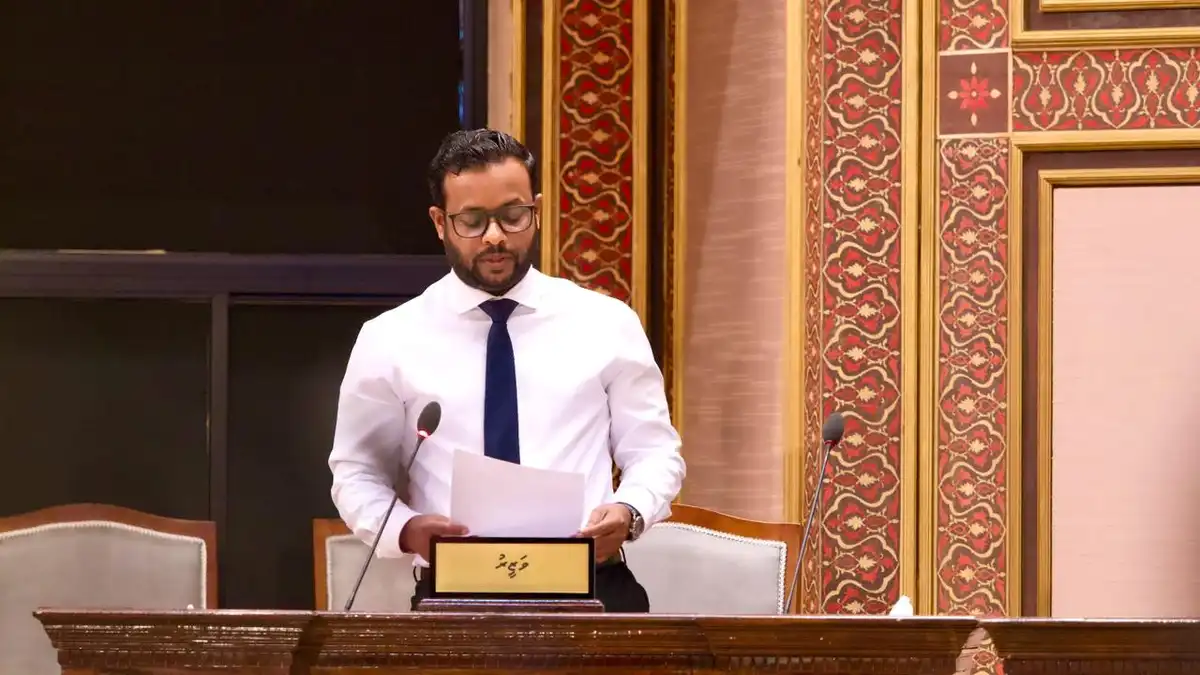
In a report submitted to the government, the Ilmuveringe Gulhun (Association of Scholars) highlighted their primary concern regarding Housing Minister Dr. Abdulla Muththalib’s statement that the designated expatriate zone in Ras Male' would operate under the same regulations as Maldivian resorts. The report noted that this would effectively allow the sale of alcohol and pork in a residential area in close proximity to the capital, potentially opening the door to activities that contravene Islamic moral standards.
The Scholars' Association emphasized that it is unacceptable to implement resort-style regulations in such a permanent residential area—one designed to house a large population of 30,000 people and situated adjacent to the capital, Malé, with unrestricted public access.
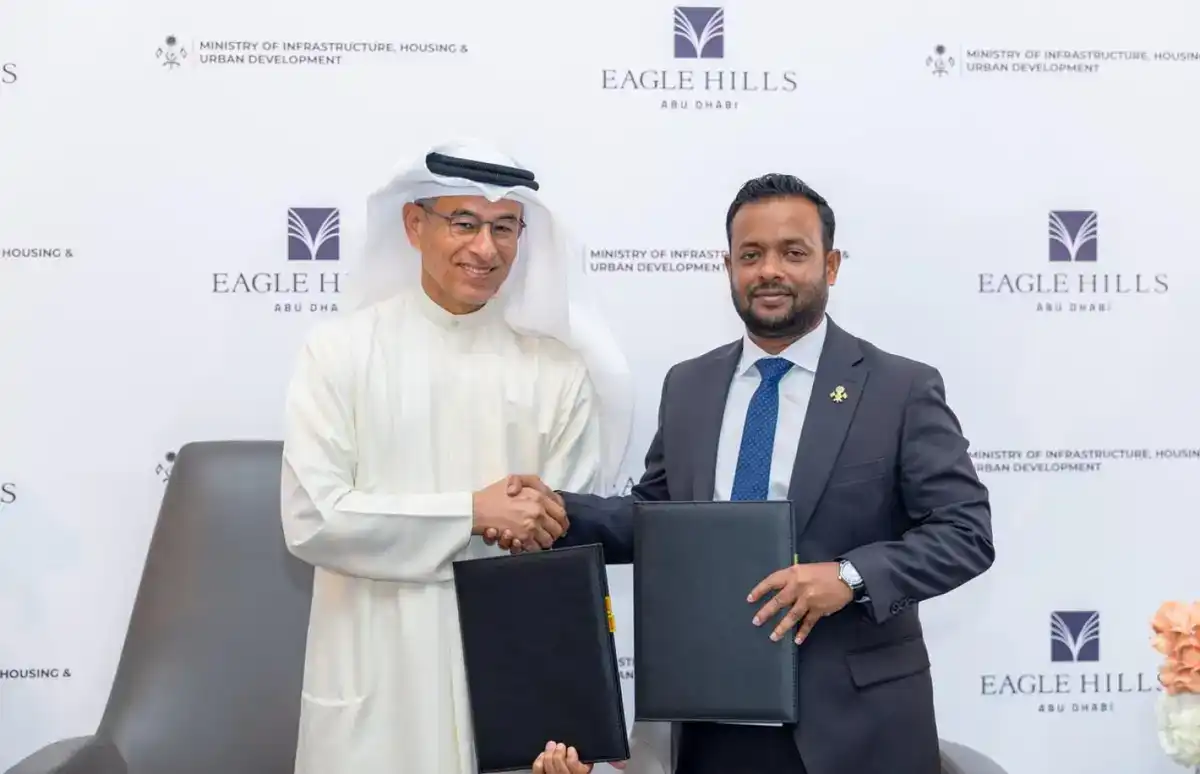
The Scholars’ Association has warned that the government’s agreement with Abu Dhabi-based Eagle Hills poses a significant threat to the Maldives’ sovereignty and religious unity. In a detailed report, the association cautioned that this massive $20 billion project would effectively grant a single foreign entity control over strategic land within the Greater Malé region.
Highlighting potential legal and demographic repercussions, the report notes that leasing land to foreigners for 99 years under this project—with the duration resetting upon every transfer of ownership—is effectively equivalent to granting permanent land ownership to foreign nationals. It further highlights that this matter has been submitted to the Supreme Court, as it allegedly constitutes a direct violation of Article 251 of the Constitution. Furthermore, experts believe that granting five-year resident visas to individuals who invest $250,000 could lead to a significant and adverse shift in the country’s demographic balance, potentially triggering numerous social challenges.
The expert report highlights significant discrepancies in the government's economic projections. While the government claims the project will generate $11 billion in revenue, research indicates that the actual earnings over a 10-year period are likely to range between $5.7 billion and $7.3 billion. Furthermore, the report warns that granting a single company control over an economic force equivalent to 1.6 to 4.0 times the Maldives' GDP would jeopardize the nation's economic sovereignty.
In response to these concerns, the Scholars' Association has submitted 22 recommendations to the government. Among these is a call to immediately halt and review the project, noting that only a Letter of Intent has been signed thus far. The scholars' report further urged the government to prioritize providing housing for Maldivian citizens through Islamic finance principles rather than selling property to foreigners. It also emphasized that Ras Male' should remain an exclusive residence for Maldivians, governed strictly by Islamic principles and moral standards.
Religious scholars are expressing growing concern over the decision to lease a significant portion of Ras Male' to Eagle Hills for a period of 99 years.