Ihusaan leaves little doubt that gov’t sees itself above the law
7 އޮކްޓޯބަރު 2026 | ބުދަ 07:48The government has come under intense scrutiny following the release of Abdulla Ibrahim (Abucha) on parole, who was serving a 12-year prison sentence for drug-related offenses. While the Minister of Homeland Security, Labour and Technology attributed the decision to discrepancies in sentence calculation and legal interpretation, the subsequent dismissal of Parole Board members after the release of a high-risk individual with a substantial criminal record has raised significant public concern and questions

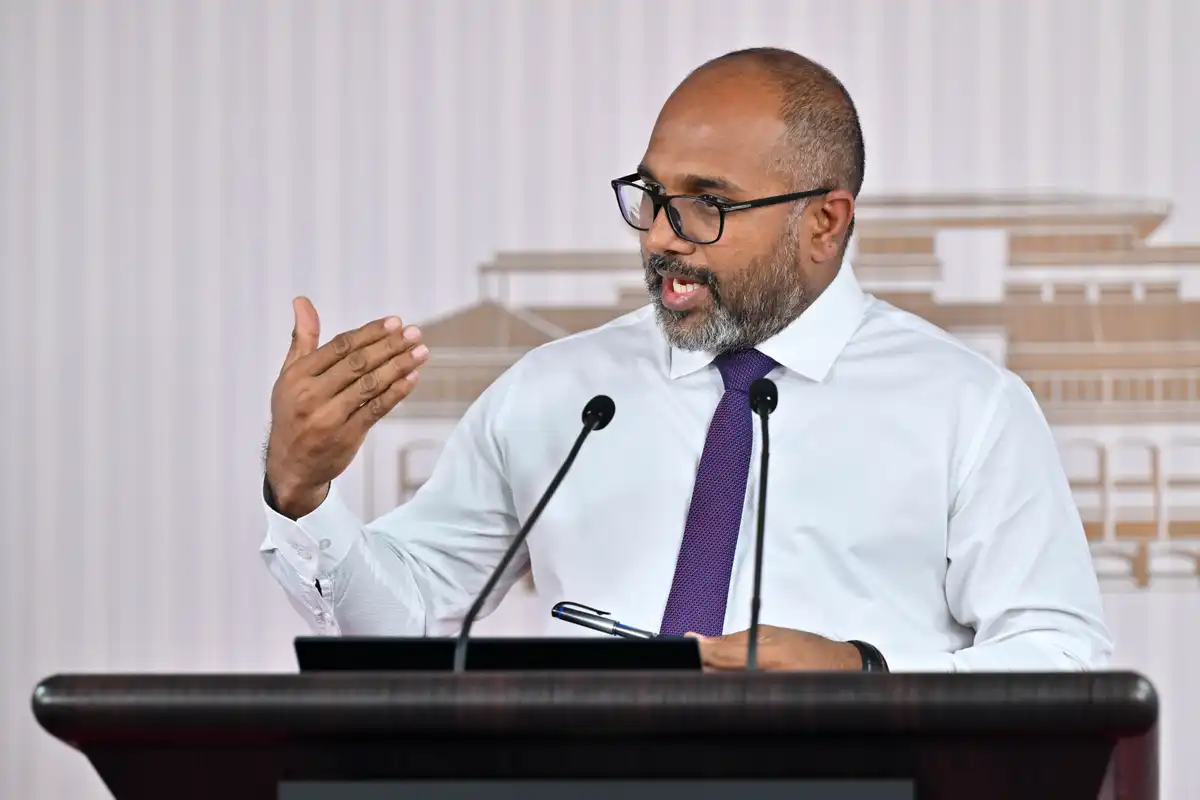
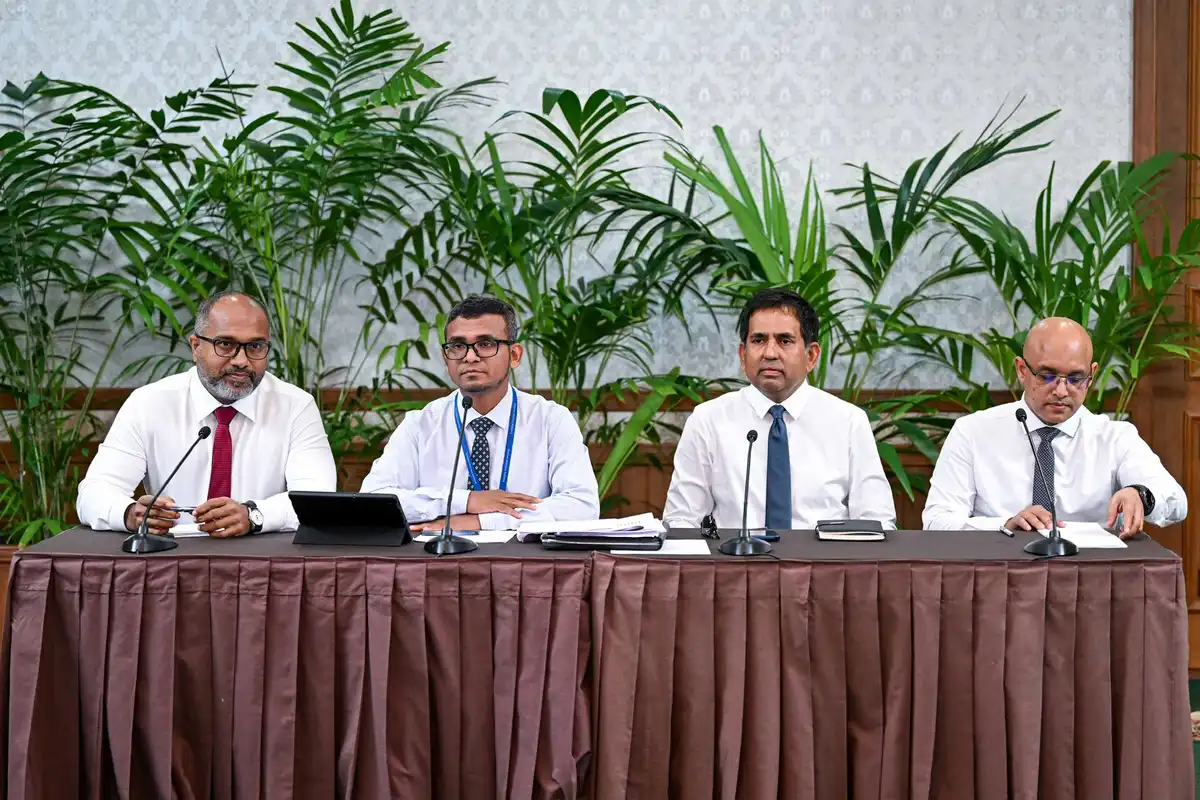
Minister of Homeland Security, Labour and Technology Ali Ihusaan speaking to press | President's Office
Serious doubts continue to surround the authorities over their handling of the conditional release granted to Abdulla Ibrahim, widely known as Abucha and labeled as an Addu City drug kingpin.
A glaring chasm has split between the public assertions made by Minister of Homeland Security, Labour and Technology Ali Ihusan and what really unfolded behind closed doors.
Sacks in the sea and a sweetheart deal
The whole saga traces back to an enforcement maneuver carried out on 3 October 2020, centered on an illicit consignment ferried across the water by dinghy.
Defying law enforcement commands to halt, the suspect hurled sacks packed with illegal narcotics alongside his mobile device straight into the ocean. Officers managed to retrieve the submerged evidence anyway, built an investigative dossier, and slapped him with formal drug trafficking charges.
Fast-forward to May 2025, when a negotiated plea agreement with state prosecutors handed him a prison term of 12 and a half years.
An early release
Statutory provisions under the Parole Act clearly demand that convicts in this category serve no less than half of their court-ordered time, amounting to six years and three months in this specific situation, before becoming eligible for any degree of executive clemency.
However, when the prison gates swung open for Ibrahim, he had chalked up a mere five years and eleven months behind bars, falling well short of the mandatory statutory threshold.
Rewriting legal realities to save face
To cover the tracks, Minister Ihusaan claimed that legislative revisions introduced into the Narcotic Drugs Act during the previous year outright prohibit leniency for individuals guilty of such violations, insisting that these fresh bans reach back retroactively to govern prior sentences.
However, Section 176 of that very same statutory framework makes it unequivocally clear that retroactive burdens cannot be loaded onto anyone for conduct predating the enactment, even as it explicitly permits the backdating of advantages or benefits.
This leaves a glaring suspicion that the minister is issuing illicit calls purely to rescue political reputations.
Are the minister and his circle convinced that ordinary statutes do not bind them, and can an arbitrary decision to enforce new rules against past events ever pass muster simply because authorities label it administrative policy?
A convenient scapegoat, willful blindness
Facing reporters, the minister insisted the Parole Board carried out every required evaluation and grounded its verdict on those determinations.
He even conceded that while the board members were sacked, none of them actually broke the law, writing off the blunder as a harmless muddle over legal clauses.
What remains uncomfortably unanswered is how someone like Ibrahim, saddled with a harrowing history that features gang rape alongside other severe offenses of moral depravity, could ever be cleared by any genuine metric as an individual safe to walk among regular citizens.
The minister sidestepped this dark background entirely, pretending the scandal was nothing more than flawed calendar math and statutory confusion.
Sacrificial lambs to stave off public outrage
The state pushed through the termination of six sitting Parole Board officials, all while the minister himself openly confessed that none of these individuals engaged in unlawful misconduct.
The administration’s excuse that purging them was necessary to showcase its resolve holds no water, particularly because authorities convenient kept silent until investigative reporters blew the lid off the story and fierce public blowback forced their hand.