Parliament Proposal Seeks Review of Maldives Port Development Company
1 އޮކްޓޯބަރު 2026 | ބުރާސްފަތި 15:45The Member of Parliament for the Maavah constituency has submitted a proposal to the Parliamentary Committee on State-Owned Enterprises to investigate the legal procedures and financial framework of a joint venture established by MPL, STO, and HDC. The motion seeks to determine whether the company’s formation adhered to corporate governance principles and to clarify if the allocation of state assets and funds bypassed established accountability mechanisms.

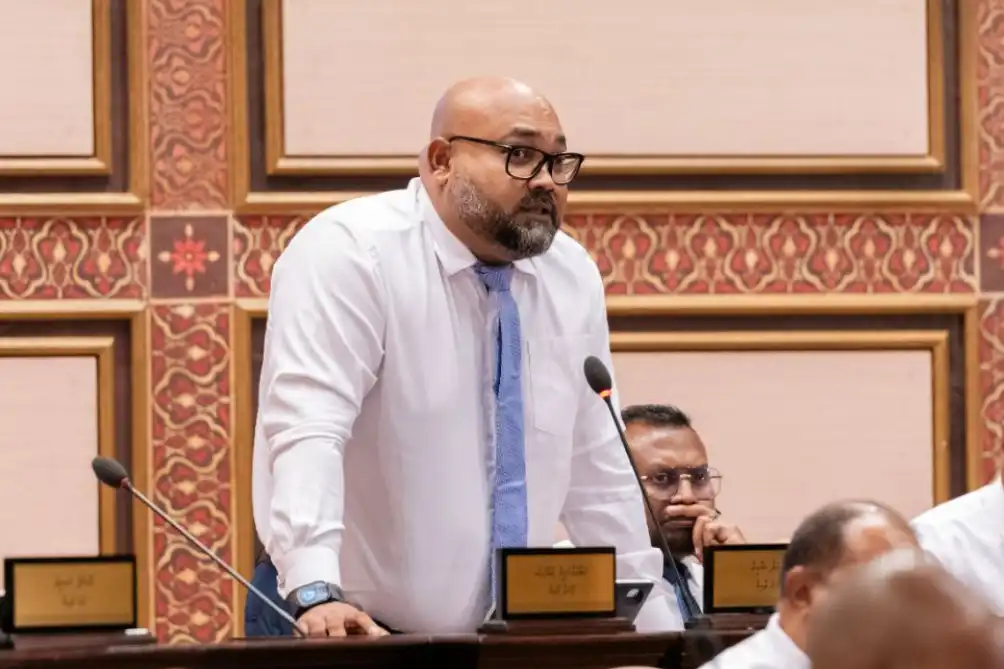
Ahmed Shakir, Member of Parliament for the Maavah constituency. | Social Media
Ahmed Shakir, the Member of Parliament for the Maavah constituency, has submitted a formal letter to the Parliament’s State-Owned Enterprises (SOE) Committee requesting an inquiry into the establishment of Maldives Port Development Private Limited. The request seeks a comprehensive review of the formation, ownership structure, financing, and operational management of the new joint venture, which was established through a partnership between Maldives Ports Limited (MPL), State Trading Organization (STO), and Housing Development Corporation (HDC).
In his letter, MP Shakir stated that the formation of a joint venture by three state-owned enterprises raises significant questions regarding public finance, corporate governance principles, parliamentary accountability, and transparency. He further noted that while the Companies Act may provide the legal framework for establishing such an entity, these are matters that warrant thorough parliamentary oversight.
In his letter, MP Shakir requested an investigation into a total of 11 specific issues. Among these, he questioned the legal procedures followed by MPL, STO, and HDC in the formation and investment of Maldives Port Development Private Limited. The inquiry further seeks to clarify whether the necessary board approvals were obtained from the respective companies and whether the required authorizations were secured from the Privatization and Corporatization Board (PCB), the Ministry of Finance, or any other relevant regulatory bodies.
Furthermore, clarification has been sought regarding whether the establishment of and investment in this company were included in the approved corporate plans of the three shareholder entities. Detailed information was also requested concerning the capital, assets, guarantees, loans, personnel, and other resources contributed or committed by each shareholder. Additionally, the request calls for the disclosure of business benefit assessments and feasibility studies reviewed by the respective boards when deciding to form the company. It further seeks to verify whether the establishment of the entity complied with the Companies Act, the PCB guidelines, financial regulations, and the corporate governance standards applicable to state-owned enterprises.
Furthermore, the request calls for an investigation into the appointment process of the Managing Director and board members, specifically to identify any potential conflicts of interest. It also seeks to determine whether the company's procurement policies for goods and services meet the same rigorous standards as other SOEs and whether the entity falls under the oversight of the PCB and the Auditor General. Additionally, the inquiry aims to establish whether the formation of the company under this specific framework exempts state assets, expenditures, debts, and procurement activities from the standard accountability mechanisms required of SOEs. Finally, the investigation will examine whether creating a new entity through a joint venture of three existing companies contradicts the government's stated policy of streamlining operations and reducing the number of state-owned corporations.
In the letter, which requested the matter be referred to the Parliament's SOE Committee, the member also proposed that sections concerning the expenditure of state funds be forwarded to the Public Accounts Committee for review.
In his letter, MP Shakir requested that if the investigation uncovers any violations of the law, financial regulations, or corporate governance principles, the Parliament exercise its authority to take necessary action and refer the findings to relevant oversight bodies, such as the Auditor General’s Office and the Anti-Corruption Commission (ACC).