Death of dignity as ruling elites demote the constitution below party whims
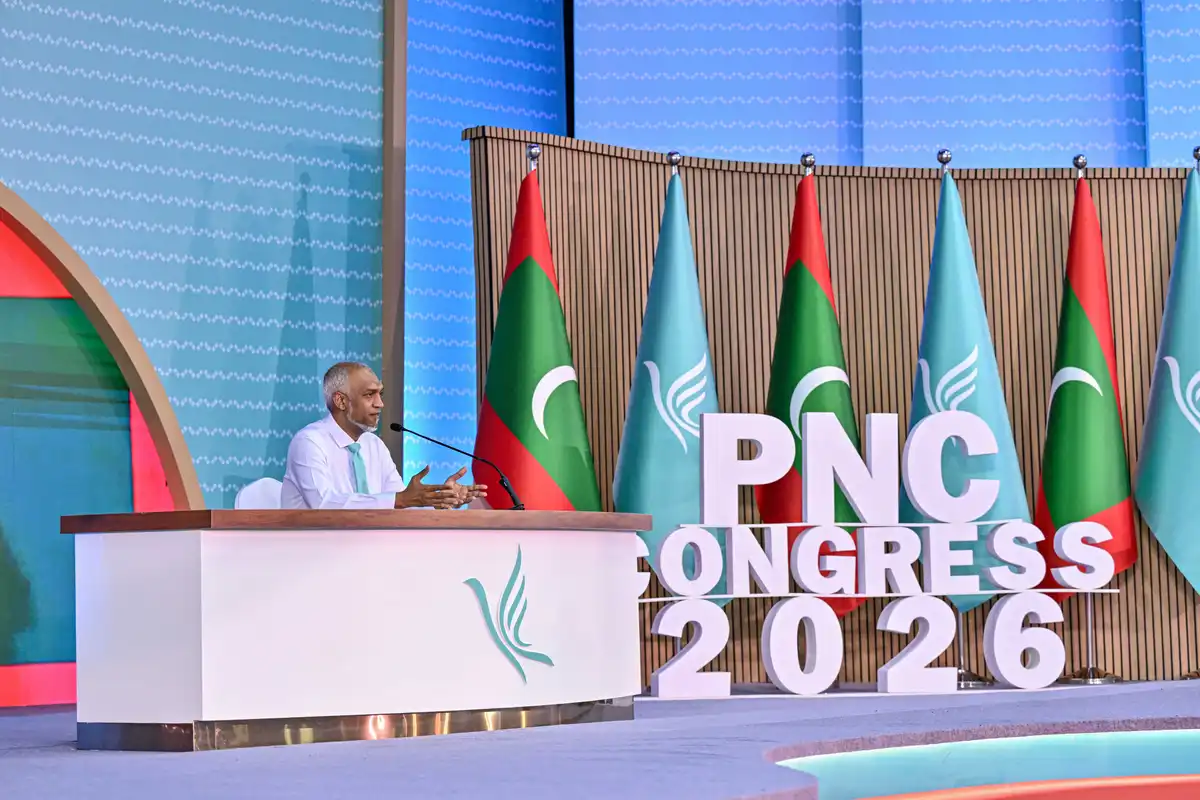
18 ސެޕްޓެމްބަރު 2026 | ހުކުރު 14:43The resolution passed at the PNC Congress to grant the presidential ticket to President Muizzu has drawn widespread criticism, particularly following the Speaker of Parliament's characterization of the move as being on par with a constitutional amendment. Critics view this action as a mockery of constitutional principles, suggesting that the integrity of national institutions is being undermined solely to demonstrate political loyalty to the leadership

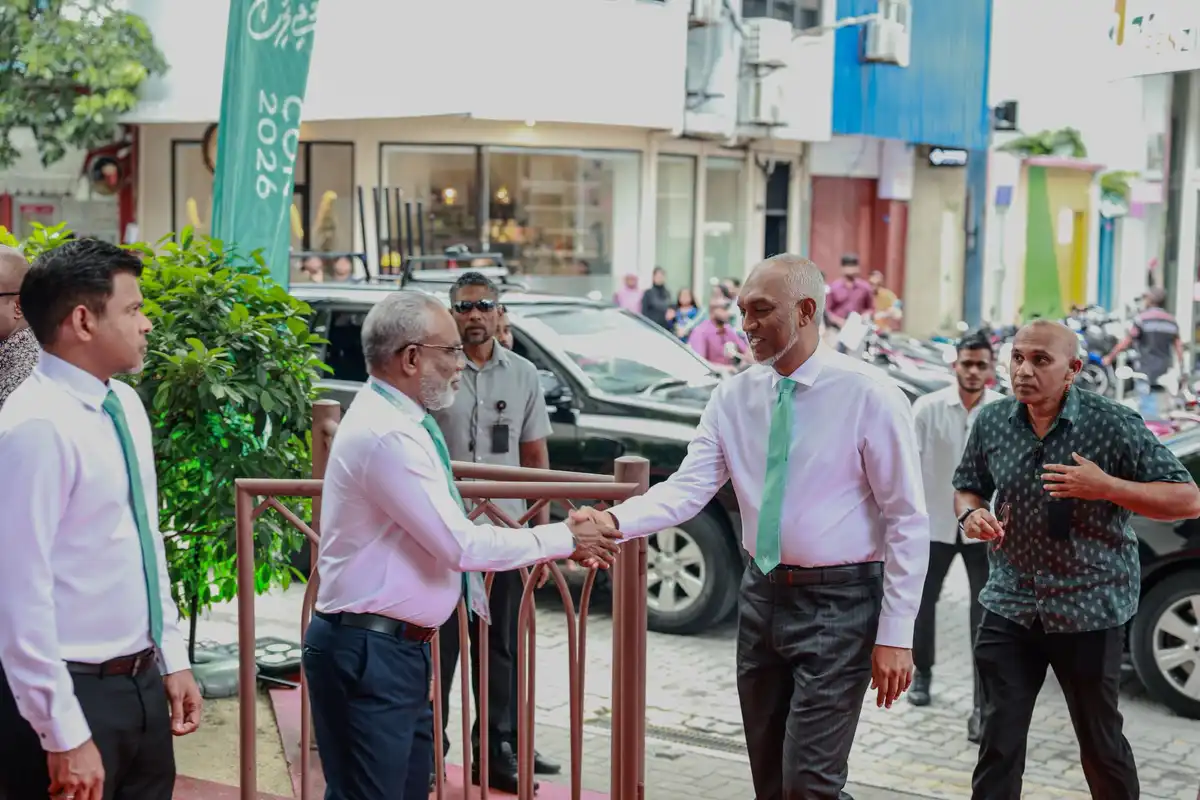
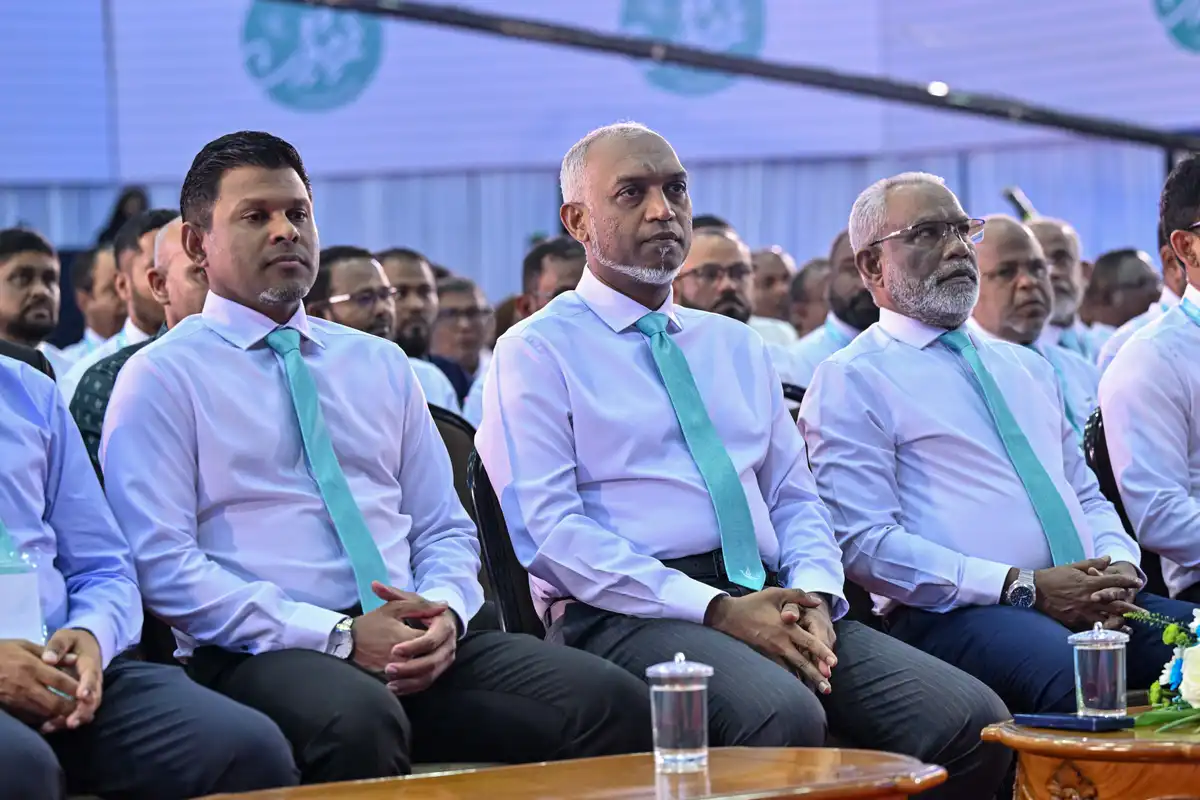
President Dr. Mohamed Muizzu (R) and Speaker of the People's Majlis Abdul Raheem Abdulla (C) | PNC
Anyone tuning in to the recent gathering of the governing People’s National Congress (PNC) was treated to an exhibition of official rhetoric that went far beyond mere eccentricity, collapsing straight into outright parody.
Towering over the spectacle was the sheer gall displayed by Abdul Raheem Abdulla, a figure who concurrently occupies the roles of Speaker of the People’s Majlis and Chairperson of the PNC. His performance crossed every threshold of credulity when he audaciously drew a direct parallel between an unexceptional party declaration, one designed solely to guarantee the 2028 presidential candidacy to President Dr. Mohamed Muizzu without the inconvenience of a primary election, and an actual proposed amendment to the foundational Constitution of the Republic of Maldives.
Examined through any coherent framework of jurisprudence or constitutional governance, drawing such an equivalence is nothing short of nonsensical gibberish, an outright assault on democratic decency, and a blatant mockery of the nation’s fundamental charter. The Constitution stands as the ultimate legal authority governing every citizen and providing the bedrock anchor for all state affairs.
It constitutes the structural blueprint that guides the state, dictates the duties of its leadership, steers its citizenry, and underpins the integrity of the broader governing order. Instituting any revision or formal alteration to this paramount document mandates an arduous, prolonged, and legally safeguarded procedure anchored in democratic ideals, conditioned on securing a massive supermajority among lawmakers within the People’s Majlis.
Setting aside, of course, the regime’s notorious habit of brushing aside established protocols to bend the Constitution to its own whims at a moment’s notice.
However, what stood before the delegates at the PNC congress was completely detached from any formal revision to the nation's supreme text. It was simply an internal party maneuver concocted to hand the presidential slot to one pre-selected politician while stamping out any internal democratic rivalry.
The ruling party is not synonymous with the Maldivian nation as a whole. Consequently, watching the head of the legislature balance such an insignificant factional resolution against the country's foundational law, characterizing it as holding the identical stature of a constitutional revision, strikes a deeply offensive blow against legal academia and established institutional standards. It drags the prestige of the entire legal edifice directly into the gutter.
Adding to the theater was the bewildering excuse manufactured by the legislative head to justify casting his own ballot while running the meeting.
Under basic constitutional rules, the official steering the Majlis holds no voting privilege under normal conditions, retaining the authority to break deadlocks exclusively during tie-breakers concerning constitutional revisions. Yet here was Abdul Raheem, adamantly pushing forward to register his personal tally for an internal party declaration that had already amassed the backing of hundreds of loyalists and was entirely assured of sailing through without a whisper of dissent.
The whole display reeked of an empty, self-serving stunt tailored strictly for individual political preservation.
The growing consensus suggests that Abdul Raheem engaged in this verbal absurdity out of an anxious drive to exhibit unblemished, absolute subservience to President Dr. Mohamed Muizzu, haunted by the dread that the slightest hesitation might trigger doubts in the ruler's mind regarding his loyalty.
This spectacle offers a damning indictment of the structural weakness currently rotting the Maldivian state, highlighting how unchecked executive authority has become completely consolidated at the summit. When top figures of state, up to and including the head of parliament, stoop to irrational, unprincipled arguments merely to curry favor with President Muizzu, the standing and moral authority of the country's institutions are dragged straight through the mud.
In a gathering where participants were already voting by electronic means, the sudden pivot to raising palms in the air was an unmistakable effort to furnish a glaring physical showcase of allegiance for the leader's eyes. Maldivian political history is undeniably littered with sycophants humbling themselves before the throne to cling to power and perks, warping legal principles and factual truth along the way.
But history provides zero precedent for a sitting Speaker of the People’s Majlis lowering the Constitution to the basement tier of a regular political faction's petition. Never before has an executive figure or governing clique behaved with such undisguised authoritarianism or inflicted such reckless violence upon the constitutional framework.
For everyday observers, this charade lays completely bare how far President Muizzu and his inner circle will go to sacrifice legal norms and public interest whenever raw political ambition demands it.