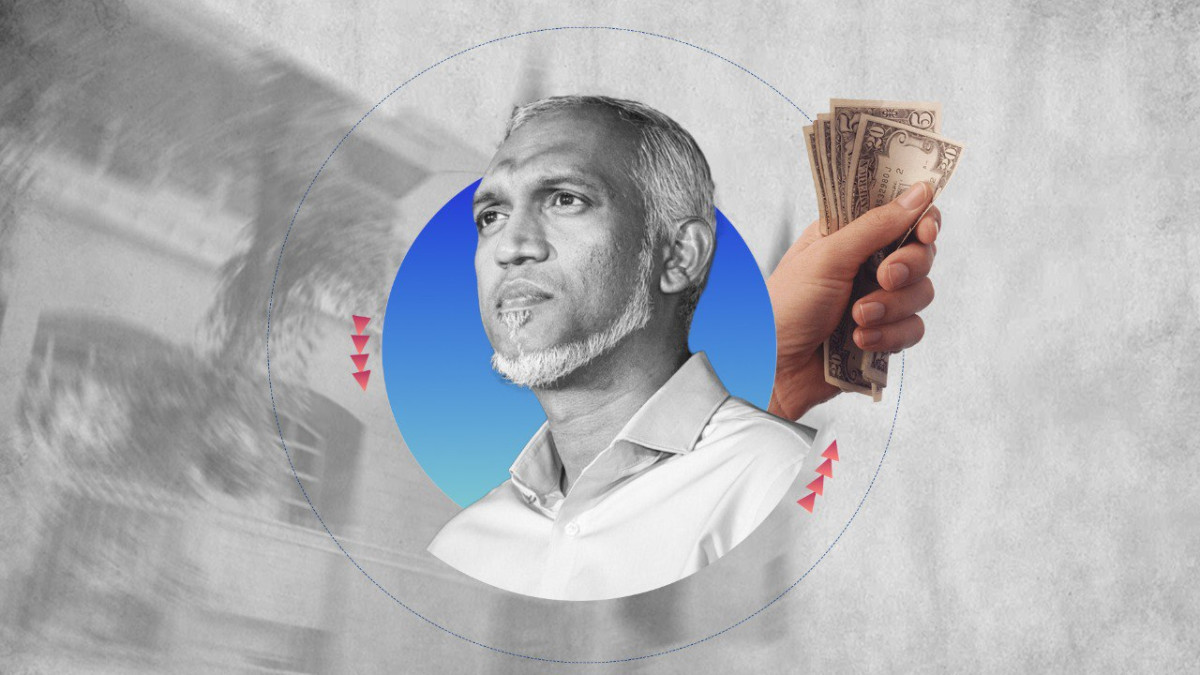
The engineering void: blunders of a leaderless era
31 އޯގަސްޓު 2026 | ހޯމަ 08:25In observance of Engineers' Day, this article highlights the academic and professional expertise of President Dr. Mohamed Muizzu. By addressing the engineering flaws encountered in previous projects, it underscores that if a technical expert of his caliber had assumed leadership earlier, millions of rufiyaa in state budget wastage could have been averted

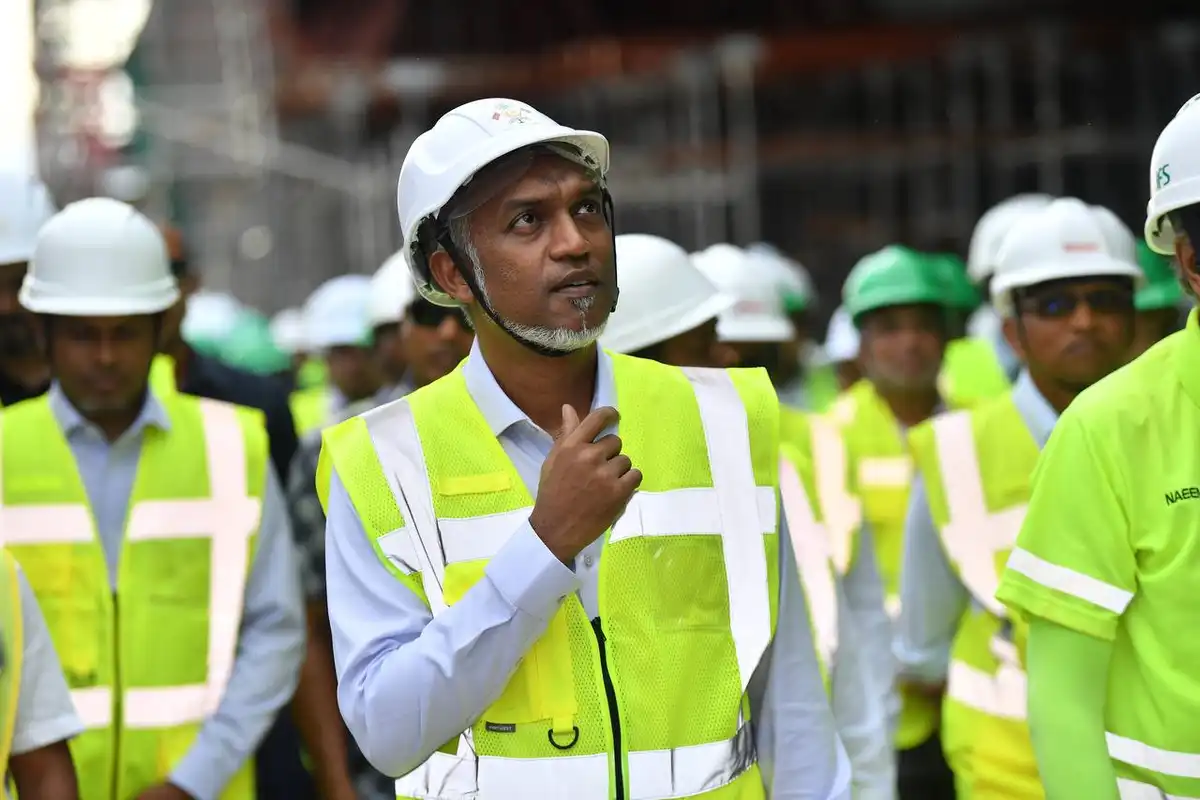
President Muizzu inspects Greater Malé Connectivity – Malé to Thilafushi Link Project | Presidents Office
Our homeland and the surrounding territories are purportedly brimming with boundless euphoria and overwhelming pride as the calendar marks Engineers' Day.
Pausing to examine the exact environment framing this occasion genuinely forces one to reflect on the sheer fortune of possessing citizenship here.
However, this surge of gratification does not simply stem from the spectacle of this date receiving such elaborate recognition for the first time. Nor does it rest strictly on the official address issued by the Head of State, or the mere elevation of the engineering trade above all other disciplines.
Before getting to the absolute core of this euphoria, acknowledgment must be directed toward the state broadcasting apparatus. Their special biographical segment on a notable sector authority brought forth obscure facts previously hidden from the general populace. It was solely through their broadcast that the authentic rationale for merriment became clear: the country is presently under the supreme command of an elite, top-tier technical specialist.
Pedigrees, honors, lingering bitterness
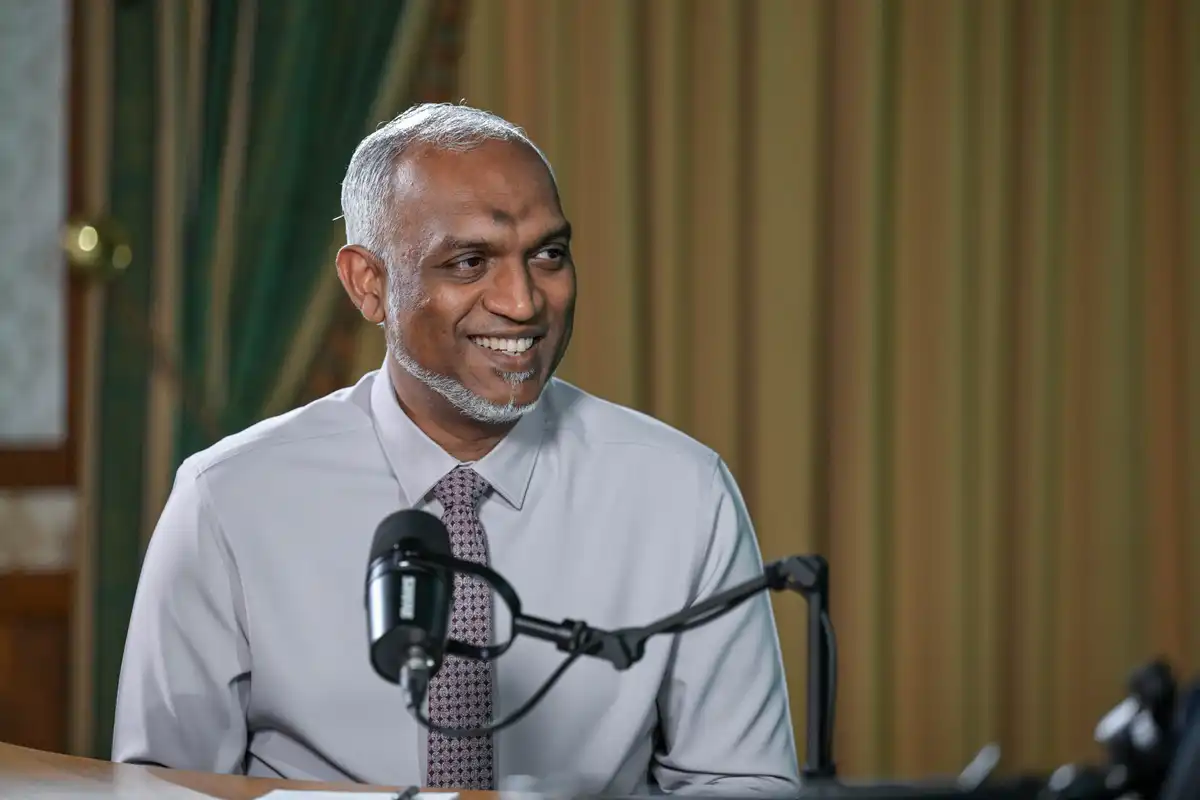
On this dedicated holiday, it is vital to point out that the sitting Head of State, Dr. Mohamed Muizzu, holds formal training as a civil and structural specialist.
His academic trajectory stands exceptionally high, having obtained a First Class Honors Bachelor of Engineering in Structural Engineering from University College London, followed by a Master of Science in Civil Engineering earned at that identical institution.
This specific alma mater holds a reputation as a pinnacle of academic prestige within the United Kingdom and across the globe, an opportunity the current leader secured via a competitive scholarship.
Warm felicitations are undeniably owed to President Dr. Mohamed Muizzu.
However, alongside this apparent delight lurks a bitter sorrow, the nagging realization that such elite stewardship materialized far too late.
A person of these credentials ought to have taken the helm decades ago, leaving us to mourn the protracted timeline it required for Dr. Muizzu to really capture the executive seat.
Coastal mishaps and missing lanes
While retrospective daydreaming will never undo history, the urge to speculate remains irresistible. Had a technical figure of his caliber been wielding ultimate authority back then, no one would have dared tamper with the coastal defense barriers meticulously placed by Japanese specialists following thorough studies, purely to carve out that southern passageway.
That specific waterway has repeatedly wrecked floating vessels and wrought immense destruction upon costly maritime assets.
Had a mind of his caliber presided over the country, that waterway bearing his surname would never have materialized in such a flawed layout.
Similarly, the Sinamalé Bridge stands as a colossal feat of technical craft. Even so, questions persist regarding how it would look had Dr. Muizzu held executive power during its execution.
A leader of his expertise would never have tolerated scrapping the dedicated bicycling corridor sketched into the original blueprints, a short-sighted omission directly fueling the traffic bottlenecks paralyzing commuters today. If only his rule had started sooner.
Truncated domes and flooded pavements
Over on the eastern perimeter, the King Salman Mosque presents an imposing exterior to admire, but deep annoyance persists over how vastly superior it would appear had its domes reached the exact state shown in early architectural concepts.
Those elements were indisputably drafted with rigorous technical precision. An executive holding Dr. Muizzu’s specialized mastery would never have allowed the sanctuary to wrap up construction while ditching those crucial, properly positioned rooftop fixtures.
Meanwhile, municipal drainage attempts intended to conquer the chronic inundation of the capital's streets were launched on an unprecedented scale. In spite of those efforts, local residents were still left trudging through water rising up to their knees. It is impossible to overlook how placing Dr. Muizzu in charge during those initiatives would have safeguarded millions of Maldivian Rufiyaa from vanishing into thin air, sparing the state from repeatedly redoing the identical labor.
Deteriorating tracks and the cost of late leadership
The athletic running circuit on the western shoreline showed equally shameful results, disintegrating into ruin before construction workers even finalized the grounds. Despite devouring MVR nine million siphoned straight out of Aasandha public healthcare reserves, the venture yielded zero enduring stability.
An administration guided by Dr. Muizzu back then would have averted these fiascos completely, eliminating the habit of endlessly rebuilding failed infrastructure thanks to his undisputed technical mastery.
In the final analysis, the clock cannot be turned back, making lingering fixation on yesteryear rather fruitless.
The years slipped away, leaving only futile hypotheses in their wake. However, had Dr. Muizzu occupied top office during those earlier phases, the vast fortunes squandered on botched, duplicate initiatives would still sit safely in state accounts, sparing the population from the catastrophic missteps spawned by a total absence of engineering insight at the top.