State appeals High Court ruling on SJ Construction bid disqualification to Supreme Court
18 އޯގަސްޓު 2026 | އަންގާރަ 08:50The High Court has upheld a Civil Court ruling stating that the government’s decision to disqualify SJ Construction’s bids for several housing projects was in violation of public finance regulations. The court determined that because the Tender Board failed to comply with the findings of the Independent Review Committee, the company retains the legal right to seek compensation for damages incurred.

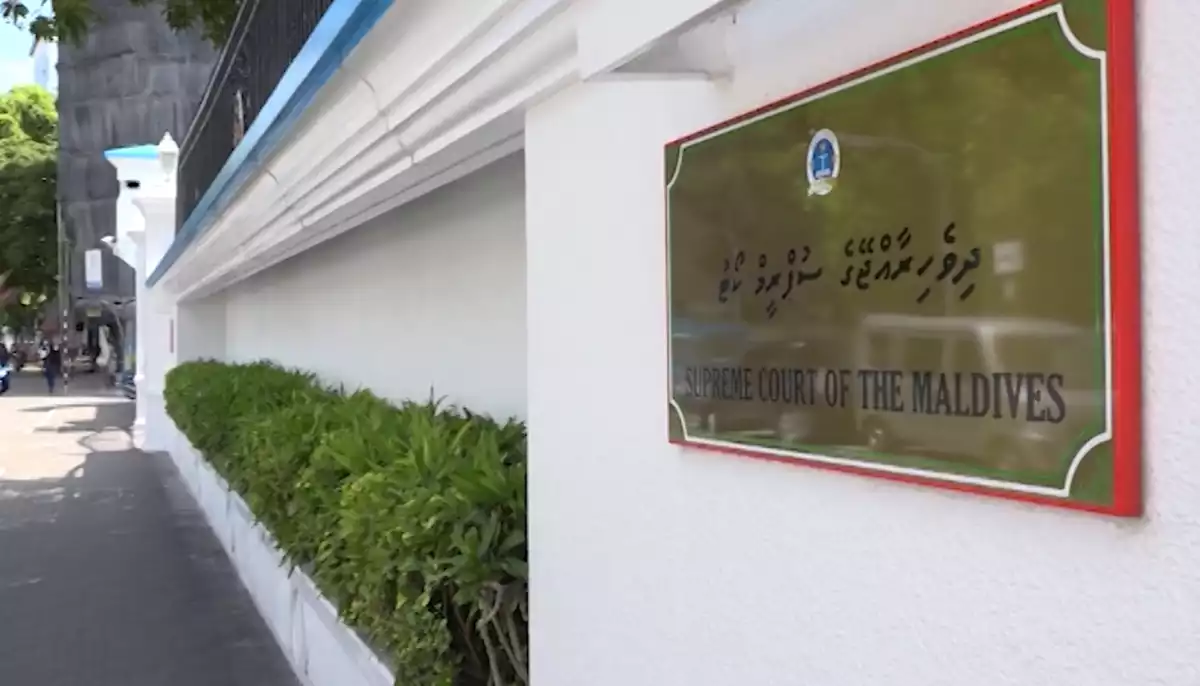
Supreme Court of the Maldives. | RaajjeMV
The State has appealed to the Supreme Court regarding a High Court ruling which upheld that the National Tender Board’s decision to disqualify several housing project bids submitted by SJ Construction was unlawful.
In its ruling on the state's appeal of Civil Court judgments issued in 2022 and 2023, the High Court has upheld that the National Tender Board acted unlawfully in canceling several bids submitted by SJ Construction.
In a unanimous ruling, the presiding bench—consisting of Judge Mohamed Shaneez Abdulla, Judge Diebanaz Fahmy, and Judge Abdul Maaniu Hussain—concluded that there are no legal grounds to overturn the lower court's decision.
This case concerns the bids submitted by a joint venture between SJ Trade Private Limited and SJ Construction for the completion of 100 housing units in HDh. Hanimaadhoo, 100 housing units in HDh. Nolhivaranfaru, and the completion of 64 units along with the construction of 36 new units in Th. Vilufushi. The National Tender Board disqualified SJ's bids, citing a failure to meet "Employer's Requirements" and "Financial Resources Requirements." Additionally, the Tender Board decided at the time not to accept the Letter of Credit submitted by the company as a valid financial resource.
Dissatisfied with the Tender Board's decision, SJ Construction submitted the matter to the Independent Review Committee, which subsequently ruled that the company's bids were valid and met all necessary requirements. The committee determined that although the documentation provided by the Bank of Ceylon was issued prior to the company's name change, it remained a legally valid document. Consequently, the Tender Board was instructed to re-evaluate the bids with SJ Construction’s inclusion. However, the Tender Board disregarded the committee's ruling and proceeded with the decision to award the projects to another party.
Following its review of the case, the Civil Court ruled that the Tender Board’s actions were in violation of the Public Finance Regulations. The court further determined that since the projects proceeded after SJ Construction’s bids were wrongfully disqualified, the company retains the right to sue for damages incurred. In its appeal to the High Court, the State argued that the Review Committee’s decision contradicted the tender documents. The State further contended that enforcing the lower court’s ruling would be challenging, as some of the projects in question have already been awarded to third parties.
The High Court ruled that the National Tender Board does not have the legal authority to overturn decisions made by the Independent Review Committee, which is established under the Public Finance Act and its accompanying regulations. The presiding judges further noted that the prior awarding of a project to another party does not serve as a valid excuse to exempt the state from providing court-ordered remedies. Additionally, the High Court upheld the Civil Court's earlier ruling, determining that the decision affirming the right to seek damages is consistent with the Constitution.
Consequently, the State has now appealed this decision to the Supreme Court.